English
 日本語
日本語 한국어
한국어 français
 Deutsch
 Español
 italiano
 русский
 português
 Türkçe
 العربية


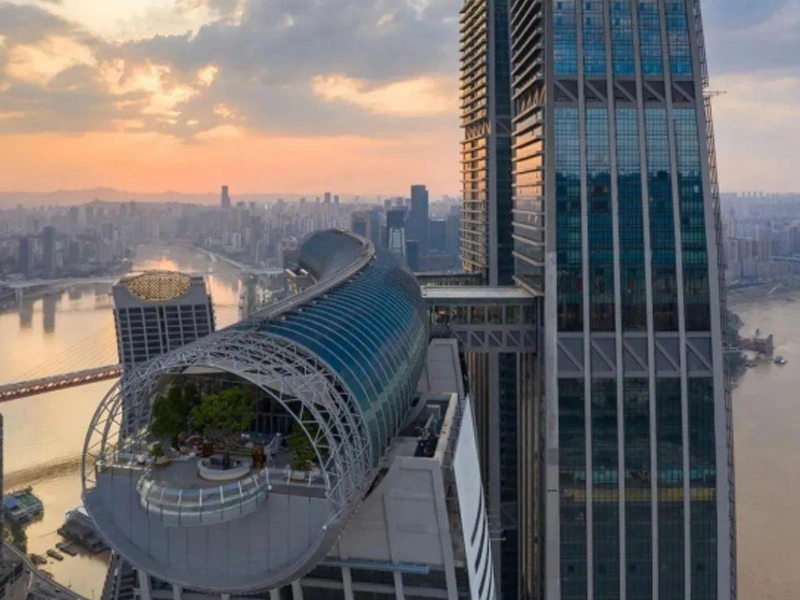
In high-rise building design, every façade component must satisfy two requirements simultaneously: it must perform its functional role reliably under the demanding conditions of elevated installation — wind pressure, thermal cycling, vibration, and weather exposure — and it must do so safely, protecting occupants and maintenance personnel if the component is damaged or fails. For ventilation systems, this dual requirement has historically created a tension between the desire for natural airflow and the concern that operable glass components might not provide the structural reliability and safety performance that high-rise applications demand.
Louver glass — narrow glass blades installed in a louver frame system to provide controllable ventilation, daylight, and privacy — is often questioned by architects, façade consultants, and building contractors precisely because of this concern. The perception that glass louver panels are inherently less stable than fixed glazing, more vulnerable to wind pressure, and more dangerous if broken has led many specifiers to default to aluminum louvers or fixed windows in high-rise applications where natural ventilation would otherwise be desirable. This perception, however, is based on a misunderstanding of what modern tempered louver glass actually is and how it performs compared with ordinary annealed glass.
When glass louver panels are manufactured from properly tempered safety glass with appropriate edge processing — round edge, polished edge, or safe angle polishing — they provide a combination of wind pressure resistance, impact strength, thermal shock resistance, and safer breakage behavior that makes them a genuinely viable and architecturally superior ventilation solution for high-rise buildings. Lanjing Glass supplies louver glass in clear, tinted, reflective, and Low-E options, with typical 5 mm or 6 mm thickness and customized louver widths including approximately 40 mm, 50 mm, and 60 mm, with advanced machinery for grinding small-sized glass for louver applications and the capability to tailor glass louvers to functional and aesthetic requirements. This guide covers the complete picture for architects, contractors, and façade consultants: why louver glass safety concerns are legitimate but addressable, what louver glass and glass louver panels are and how they function, how tempering and edge processing transform louver blades into safer architectural components, how tempered louver glass compares to alternative ventilation options, and what specification and maintenance practices protect louver glass performance over the building's service life. Secondary keywords relevant to this decision — tempered louver glass, high-rise window systems, safety glass louvers, and architectural glass louver panels — are addressed throughout.
The starting point for understanding why tempered louver glass is a safe and appropriate choice for high-rise ventilation systems is a clear acknowledgment of why the safety concerns about glass louvers are reasonable — and a precise explanation of why tempering addresses those concerns in ways that ordinary annealed glass cannot.
The concern that glass louver panels may not be safe enough for high-rise applications is not unfounded — it is based on real performance differences between ordinary annealed glass and properly tempered safety glass that specifiers need to understand clearly. Ordinary annealed glass — the standard float glass used in many low-specification applications — has relatively low impact resistance, breaks into large sharp shards when fractured, and can fail under the wind pressure, thermal cycling, and vibration loads that high-rise façades experience. If ordinary annealed glass were used for louver blades in high-rise applications, the safety concerns would be entirely justified.
The additional concern about the geometry of louver blades — long, narrow strips that are more vulnerable at their edges and ends than full-size glass panels — is also legitimate. The edge and end regions of a glass blade are the most vulnerable points for chipping, cracking, and fracture initiation, and in a louver system where the blades are repeatedly opened and closed, these vulnerable points are subjected to repeated mechanical stress from the operating hardware and clips. Without proper edge processing, even tempered glass louver blades can develop edge damage that initiates fracture under operational stress.
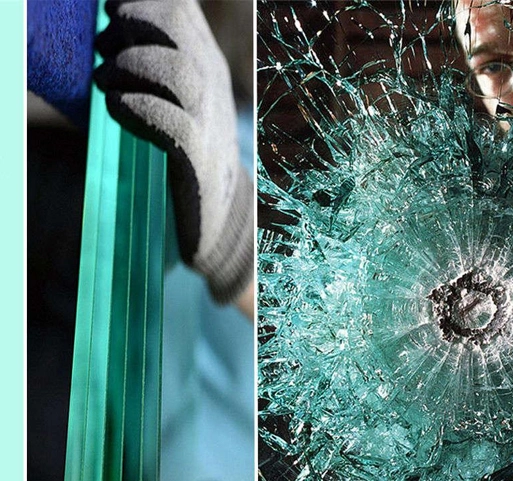
Tempered glass is produced by heating glass to near its softening point and then rapidly cooling it — a process that creates a compressive stress layer on the glass surface and a tensile stress layer in the interior. This stress distribution gives tempered glass significantly higher strength than ordinary annealed glass, and — critically for safety applications — changes its breakage behavior from large sharp shards to small particle-like fragments that are significantly less likely to cause serious injury. Lanjing Glass states that tempered glass has three to five times higher strength than float or annealed glass, and that when tempered glass breaks, it typically breaks into small particle-like fragments rather than large sharp shards — a breakage behavior that is fundamentally safer for building occupants and maintenance personnel.
When tempered glass is combined with proper edge processing — round edge finishing, polished edge treatment, or safe angle polishing — the vulnerability of the blade edges and ends is significantly reduced. Edge processing removes the micro-cracks and surface defects that initiate fracture under stress, smooths the sharp corners that are most vulnerable to chipping during handling and installation, and improves the overall durability of the blade under the repeated operational stress of a louver system.
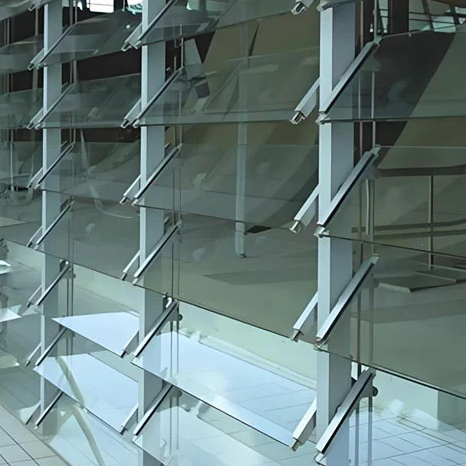
Understanding what louver glass is — and how glass louver panels function as both ventilation components and architectural façade elements in high-rise buildings — is essential context for evaluating the safety and performance requirements that tempered glass must meet.
Louver glass refers to narrow glass blades installed in a louver frame system that can be angled open or closed to control ventilation, daylight, privacy, and rain protection. The blades are arranged in parallel horizontal rows within the louver frame, and when the system is opened, air flows through the gaps between the blades — providing natural ventilation without the full weather exposure of an open window. When closed, the blades overlap or align to reduce rain entry, improve enclosure, and maintain a clean exterior appearance.
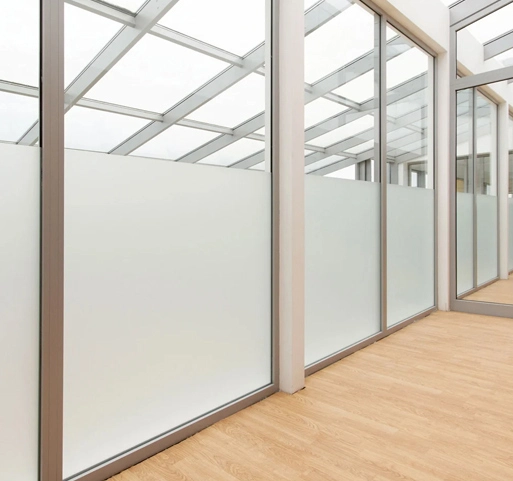
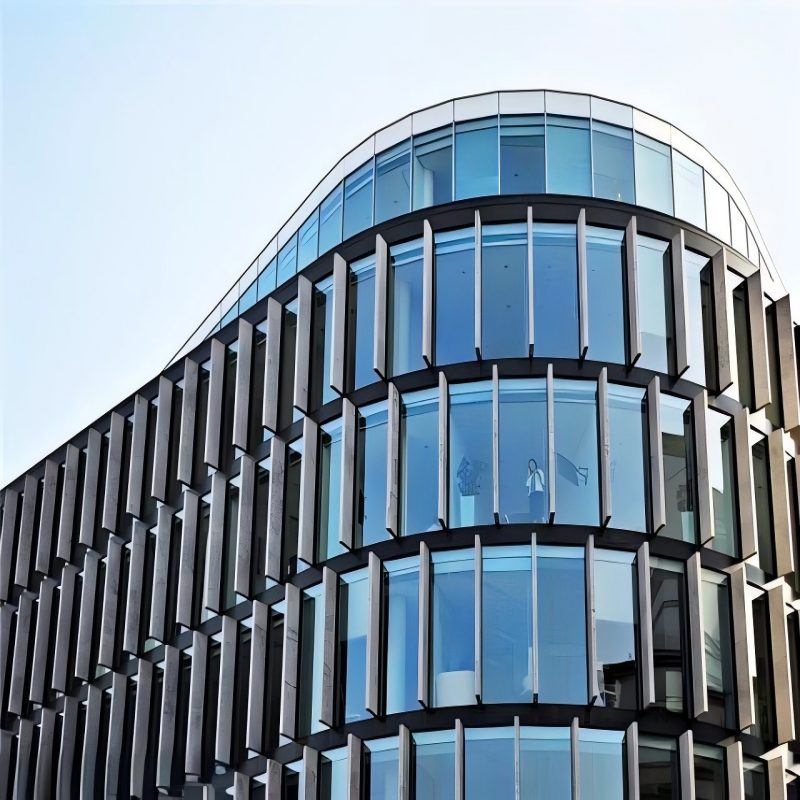
Glass louver panels serve a dual architectural function that aluminum or other opaque louver materials cannot provide: they allow natural ventilation while maintaining the transparency and daylight access that modern architectural design values. In high-rise buildings where natural ventilation is desirable for energy efficiency, occupant comfort, and building code compliance, glass louver panels provide a ventilation solution that is compatible with the transparent, light-filled façade aesthetic that contemporary architecture demands.
Lanjing Glass offers louver glass in multiple visual and functional configurations that allow architects and specifiers to match the louver glass specification to the specific performance and aesthetic requirements of the project:
| Louver Glass Option | Design and Functional Value |
|---|---|
| Clear glass | Maximum daylight transmission and clean architectural appearance |
| Tinted glass | Solar control, glare reduction, and privacy enhancement |
| Reflective glass | Modern façade appearance and solar heat gain reduction |
| Low-E glass | Improved thermal energy performance for climate-controlled buildings |
| 5 mm thickness | Standard louver blade thickness for most applications |
| 6 mm thickness | Increased strength for higher wind-load applications |
| Approximately 40 mm width | Compact blade for fine-pitch louver systems |
| Approximately 50 mm width | Standard blade width for most architectural louver applications |
| Approximately 60 mm width | Wider blade for increased airflow and visual presence |
The technical mechanism by which tempering and edge processing improve the safety performance of louver glass — and why these manufacturing processes are the essential difference between a safe architectural glass louver panel and an ordinary glass blade — is the core technical knowledge that architects and specifiers need to write correct louver glass specifications for high-rise applications.
Higher structural strength for wind pressure resistance is the first and most fundamental safety advantage of tempered louver glass over ordinary annealed glass. High-rise façades experience significantly higher wind pressure loads than low-rise applications — and the wind pressure on an open louver blade, which is exposed to wind on both faces, is higher than on a fixed glazing panel of the same area. Lanjing Glass states that tempered glass has three to five times higher strength than float or annealed glass — a strength advantage that directly translates into better wind pressure resistance for louver blades in high-rise window systems.
Safer breakage behavior for occupant protection is the second safety advantage — and the one that most directly addresses the injury risk concern that makes specifiers cautious about glass louvers in occupied buildings. When ordinary annealed glass breaks, it fractures into large, irregular shards with sharp edges that can cause serious lacerations. When tempered glass breaks, it fractures into small, roughly cuboid fragments — the characteristic "dice" pattern of tempered glass breakage — that are significantly less likely to cause serious injury. For high-rise ventilation applications where a broken louver blade could fall or be displaced, the safer breakage behavior of tempered glass is a critical safety advantage.
Better impact resistance for installation and operational stress is the third safety advantage. High-rise louver installation involves handling narrow glass blades at elevation — a process that creates impact risk from tools, scaffolding, and adjacent components. Once installed, louver blades are subjected to repeated operational stress from opening and closing cycles, vibration from wind and building movement, and thermal cycling from sun exposure and temperature changes. Tempered glass provides better impact resistance than ordinary annealed glass under all of these stress conditions — reducing the risk of blade fracture during installation and operation.
Better thermal shock resistance for façade exposure is the fourth safety advantage. High-rise façades experience significant thermal gradients — direct sun exposure on one face, shade on the other, and rapid temperature changes from weather events and air-conditioning systems. Lanjing Glass states that tempered glass has higher heat and thermal resistance than annealed glass and is less likely to crack under sudden temperature changes — a property that is particularly important for louver blades that are exposed to direct solar radiation and may experience rapid temperature changes when rain falls on a sun-heated surface.
Tempering improves the bulk strength and breakage behavior of the glass blade, but edge processing addresses the specific vulnerability of the blade edges and ends — the points where fracture most commonly initiates in narrow glass components. Lanjing Glass offers multiple edge processing options for louver glass:
Round edge processing removes the sharp corners and edges of the glass blade, reducing the risk of edge chipping during handling and installation and improving the safety of the blade for maintenance personnel who handle the louvers during cleaning and inspection.
Polished edge processing provides a higher-quality edge finish that improves the visual appearance of the blade edge, reduces the micro-cracks and surface defects that can initiate fracture under stress, and supports the premium architectural appearance that high-end façade projects require.
Safe angle polishing addresses the most vulnerable points of the blade — the corners — by removing the sharp angles that are most susceptible to chipping and fracture initiation under impact and operational stress.
Standard ground edge provides practical edge finishing for standard louver blade production, removing the rough edges left by glass cutting and providing a stable, consistent edge profile for louver frame installation.
The selection of the right ventilation system for a high-rise building involves evaluating the safety performance, architectural appearance, ventilation efficiency, maintenance requirements, and total cost of ownership of the available options — and understanding where tempered louver glass provides the strongest combination of safety, aesthetics, and ventilation performance.
Tempered louver glass provides the strongest combination of natural ventilation performance, architectural transparency, safety glass performance, and design flexibility for high-rise buildings where both ventilation and façade aesthetics are important. The combination of tempered glass strength, safer breakage behavior, and multiple glass appearance options — clear, tinted, reflective, Low-E — makes it the most architecturally versatile ventilation solution for modern high-rise façades. The primary specification requirements are correct wind-load design, appropriate glass thickness and blade width selection, compatible frame and hardware, and proper edge processing.
Aluminum louvers provide strong and durable ventilation for mechanical rooms, service areas, and utility spaces where transparency and daylight are not required. They are more opaque than glass louvers and do not provide the architectural transparency that modern façade design values — making them less suitable for occupied spaces where daylight and exterior views are important.
Fixed glass windows provide better weather sealing than louver systems but offer no natural ventilation — requiring mechanical ventilation systems to provide air exchange in occupied spaces. In buildings where natural ventilation is a design goal or energy efficiency requirement, fixed windows cannot provide the ventilation performance that louver systems deliver.
Sliding and casement windows provide larger opening areas than louver systems but require more space for operation, have higher hardware maintenance requirements, and may create wind load concerns on the open sash in high-rise applications.
| Ventilation Option | Transparency | Natural Ventilation | Safety Performance | High-Rise Suitability |
|---|---|---|---|---|
| Tempered louver glass | High | Controlled and efficient | Strong when properly specified | High — with correct wind-load design |
| Aluminum louvers | None | Good | Strong | High — for non-transparent applications |
| Fixed glass windows | High | None | Strong | High — for sealed façades |
| Sliding windows | High | Good | Good | Moderate — hardware maintenance required |
| Casement windows | High | Good | Good | Moderate — wind load on open sash |
Architectural glass louver panels deliver the most value for: high-rise residential buildings where natural ventilation in stairwells, corridors, and service areas reduces mechanical ventilation energy consumption, commercial towers where façade transparency and modern architectural appearance are design priorities, hotels and serviced apartments where bathroom and utility ventilation requires both airflow and privacy, office buildings where natural ventilation in transition spaces supports occupant comfort and energy efficiency, schools and hospitals where natural ventilation in corridors and service areas supports indoor air quality, and modern architectural façade systems where the combination of transparency, ventilation, and safety glass performance is required.
Specifying and procuring tempered louver glass for high-rise ventilation applications requires systematic evaluation of both glass performance specifications and system compatibility — and ongoing maintenance practices that protect louver glass safety and performance over the building's service life.
Before ordering tempered louver glass for high-rise window systems, specifiers and contractors should confirm the following:
Confirm that tempered safety glass is specified — verify that the glass specification explicitly requires tempering rather than ordinary annealed glass, and request tempering certification documentation from the supplier
Confirm the appropriate glass thickness — 5 mm for standard applications or 6 mm for higher wind-load applications — based on the wind pressure calculations for the specific building height and location
Confirm the blade width — approximately 40 mm, 50 mm, or 60 mm — based on the louver frame system design, required airflow, and architectural appearance
Confirm the edge processing specification — round edge, polished edge, safe angle polishing, or standard grinding — based on the safety requirements, handling conditions, and aesthetic standards of the project
Confirm the glass appearance option — clear, tinted, reflective, or Low-E — based on the solar control, privacy, and energy performance requirements of the specific application
Confirm the wind-load design for the louver system — verify that the glass thickness, blade width, frame design, and hardware specification are all consistent with the wind pressure loads calculated for the building height and location
Confirm the frame and clip compatibility with the specified glass thickness — clips and brackets must be designed for the specific glass thickness to provide adequate support and prevent stress concentration at the clip contact points
Confirm the rain protection and sealing requirements — verify that the louver system design provides adequate rain penetration control for the specific exposure conditions
Confirm the length tolerance requirements — narrow glass blades require tight length tolerances for correct fit in the louver frame, and buyers should specify the acceptable tolerance range before production
Request samples before bulk production — verify glass appearance, edge processing quality, and dimensional accuracy on sample blades before committing to full production quantities
Confirm packaging specification for transport — narrow glass blades are vulnerable to edge damage during transport, and adequate protective packaging is essential for maintaining blade quality
Inspect glass blades regularly for chips, cracks, or edge damage — pay particular attention to the blade ends and edges where fracture most commonly initiates
Check clips, brackets, and operating hardware for looseness, corrosion, or wear at regular maintenance intervals — loose hardware can allow blade movement that creates stress concentration and fracture risk
Clean glass surfaces with non-abrasive cleaning tools and approved cleaning solutions — avoid abrasive cleaners or tools that can scratch the glass surface or damage edge processing
Avoid hitting louver blades with cleaning equipment, scaffolding, or maintenance tools — impact damage to tempered glass can initiate fracture even if the damage is not immediately visible
Replace damaged blades immediately — do not continue operating a louver system with cracked or chipped blades, as damaged tempered glass can fracture unexpectedly under operational stress
Lubricate operating hardware according to the frame supplier's maintenance schedule — inadequate lubrication increases operational stress on the glass blades and hardware
Inspect sealing strips for aging, deformation, or detachment — deteriorated sealing strips reduce rain protection and can allow water ingress that accelerates hardware corrosion
Check louver alignment after strong wind events — wind loading can displace blades or distort frames, and misaligned blades create stress concentration that increases fracture risk
Use compatible replacement glass with the same thickness, width, edge processing, and tempering specification as the original installation — incompatible replacement glass can create performance inconsistencies and safety risks
Keep installation records including glass specification, batch numbers, installation date, and maintenance history for each louver system — this documentation supports future maintenance planning and replacement procurement
For high-rise buildings, the choice of ventilation system is not simply a functional decision — it is a safety decision, an architectural decision, and a long-term building performance decision. Louver glass made from properly tempered safety glass with appropriate edge processing provides a ventilation solution that addresses all three dimensions: the structural strength and safer breakage behavior of tempered glass address the safety concerns that make specifiers cautious about glass louvers in high-rise applications, the controllable airflow of the louver system provides the natural ventilation performance that energy efficiency and occupant comfort require, and the transparency and design flexibility of glass louver panels — available in clear, tinted, reflective, and Low-E options — support the modern architectural appearance that contemporary high-rise design demands.
Lanjing Glass supports architectural projects with customizable glass louver panels in different thicknesses, widths, finishes, and edge treatments — with advanced machinery for grinding small-sized glass for louver applications and the capability to tailor glass louvers to the functional and aesthetic requirements of high-rise window systems.
Contact Lanjing Glass today to discuss your high-rise ventilation project requirements, glass thickness and blade width specification, edge processing options, frame compatibility, wind-load requirements, and façade design goals. The Lanjing Glass team can help recommend the right tempered louver glass specification for your project — and provide the samples, technical documentation, and customized processing that a successful high-rise louver glass installation requires.
Q1: What is louver glass and how does it work in high-rise buildings?
Louver glass is a narrow glass blade installed in a louver frame system that can be angled open or closed to control ventilation, daylight, and privacy. In high-rise buildings, glass louver panels provide natural ventilation in stairwells, corridors, bathrooms, and service areas while maintaining the façade transparency and modern architectural appearance that contemporary high-rise design requires.
Q2: Is tempered louver glass safe enough for high-rise window systems?
Yes, when properly specified. Tempered glass has three to five times higher strength than ordinary annealed glass and breaks into small particle-like fragments rather than large sharp shards — providing significantly better safety performance than ordinary glass. Combined with appropriate edge processing and correct wind-load design, tempered louver glass is a safe and appropriate choice for high-rise ventilation applications.
Q3: What edge processing options are available for glass louver panels and why do they matter?
Edge processing options include round edge, polished edge, safe angle polishing, and standard grinding. Edge processing matters because the edges and ends of narrow glass blades are the most vulnerable points for chipping and fracture initiation — proper edge processing removes micro-cracks and sharp corners that can initiate fracture under operational stress, improving both safety and durability.
Q4: What thickness and width options are available for louver glass?
Lanjing Glass offers louver glass in typical thicknesses of 5 mm and 6 mm, with common blade widths of approximately 40 mm, 50 mm, and 60 mm. Thickness selection should be based on wind-load calculations for the specific building height and location, and width selection should be based on the louver frame system design and required airflow.
Q5: What should buyers check before ordering tempered louver glass for a high-rise project?
Buyers should confirm tempering certification, glass thickness and blade width for the wind-load requirements, edge processing specification, glass appearance option, frame and clip compatibility, rain protection design, length tolerance requirements, packaging specification for transport, and sample availability before bulk production commitment.