English
 日本語
日本語 한국어
한국어 français
 Deutsch
 Español
 italiano
 русский
 português
 Türkçe
 العربية
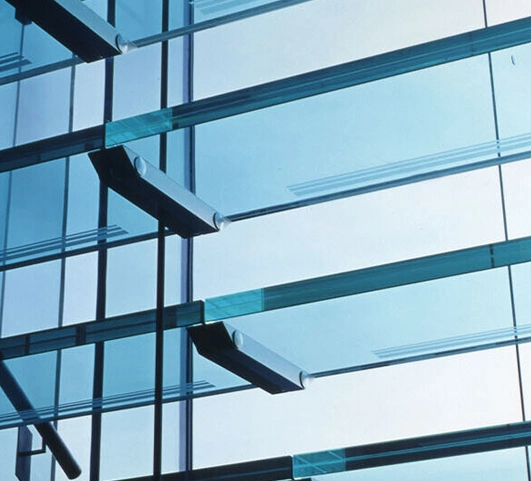


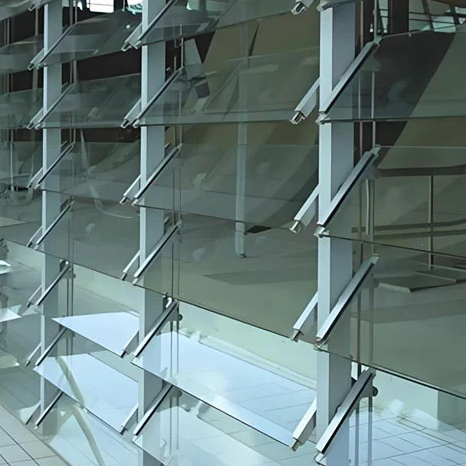
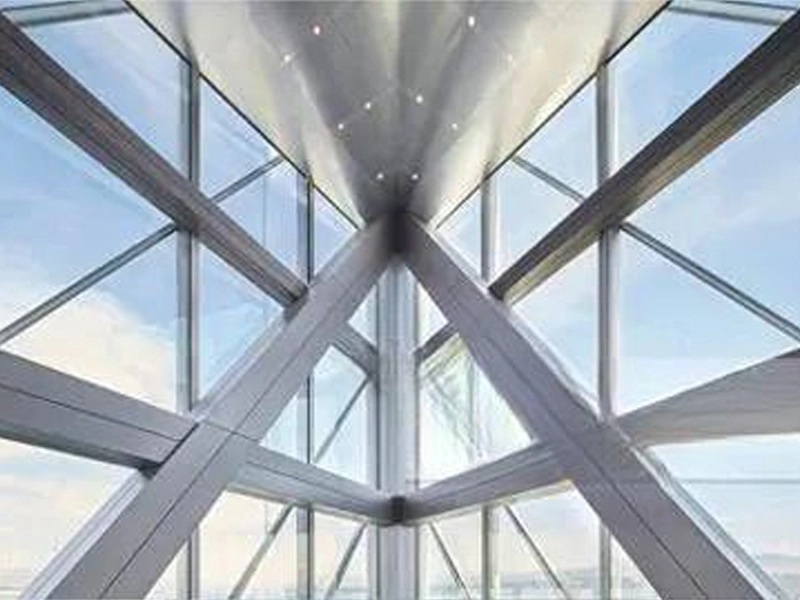
In 2026, glass facades are the defining visual language of modern high-rise architecture. Curtain walls, structural glazing systems, glass balustrades, skylights, and overhead canopies have become standard components of commercial towers, hotels, airports, shopping malls, and public buildings — delivering the transparency, daylight, and premium aesthetic that contemporary architecture demands. But behind the visual appeal of these glass facades lies a safety risk that is invisible to the naked eye, unpredictable in its timing, and potentially catastrophic in its consequences when it occurs at height: spontaneous glass breakage caused by nickel sulfide inclusions trapped inside tempered glass during manufacturing.
Unlike breakage caused by impact, edge damage, or thermal stress — which can be attributed to identifiable external causes and managed through design and installation practices — spontaneous breakage from NiS inclusions can occur months or years after installation, without warning, and without any external trigger. When it occurs in a ground-floor partition or an interior glass door, the consequences are inconvenient and potentially injurious. When it occurs in a high-rise curtain wall panel, a glass balustrade at elevation, or an overhead skylight above a public atrium, the consequences can be fatal — falling glass fragments, emergency facade replacement at height, building owner liability, and serious damage to the project's safety reputation.
Heat soaking is the factory-stage risk-reduction process that addresses this hidden threat directly — and in 2026, as urban building safety regulations become more demanding and facade project specifications become more rigorous, it is increasingly being treated not as an optional quality upgrade but as a non-negotiable safety requirement for high-rise and public-facing glass applications. For architects, facade contractors, developers, and buyers comparing heat soaked glass suppliers, Lanjing Glass offers heat-soaked glass processing designed to reduce spontaneous breakage risk for safety-critical building applications — with in-house heat-soak furnace capability, large-size processing, multiple glass options, and documentation support for high-rise curtain wall projects. This guide covers the complete picture: why NiS inclusions create a spontaneous breakage risk that standard tempered glass inspection cannot detect, what heat soaking is and how it works as a controlled factory-stage risk elimination process, how the heat soaking process components work together to protect facade safety, how heat-soaked glass compares to standard tempered glass for high-rise applications, and what specification and maintenance practices protect facade safety over the building's service life. Secondary keywords relevant to this decision — heat soaking process, spontaneous glass breakage, NiS inclusions in tempered glass, and safety glass for high-rise buildings — are addressed throughout.
The commercial and safety case for heat soaking starts with a clear understanding of why NiS inclusions in tempered glass create a spontaneous breakage risk that is fundamentally different from other glass failure modes — and why this risk is particularly dangerous in high-rise building applications.
Nickel sulfide inclusions are microscopic impurities that form inside glass during the float glass manufacturing process when nickel and sulfur — present as trace contaminants in raw materials or furnace components — combine to form nickel sulfide particles. These particles are typically very small — often less than one millimeter in diameter — and are distributed randomly throughout the glass melt. Most glass panels contain no NiS inclusions, or inclusions too small to cause problems. But a small proportion of panels contain inclusions of sufficient size and location to create a spontaneous breakage risk after tempering.
The reason NiS inclusions become dangerous specifically in tempered glass — rather than in ordinary annealed glass — is the interaction between the inclusion's phase transformation behavior and the internal stress state created by the tempering process. Nickel sulfide exists in two crystal phases: a high-temperature alpha phase and a low-temperature beta phase. During the rapid cooling of the tempering process, NiS inclusions can be "frozen" in the alpha phase rather than completing the transformation to the beta phase. Over time — at ambient building temperatures, the transformation continues slowly — the inclusion expands as it converts from alpha to beta phase. If the inclusion is located in the tensile stress zone at the center of the tempered glass panel, this expansion can generate sufficient local stress to initiate spontaneous fracture of the panel.
The spontaneous breakage risk from NiS inclusions is present in all tempered glass, but its consequences are dramatically more serious in high-rise building applications than in low-rise or interior applications. In a high-rise curtain wall, a spontaneously broken panel can release glass fragments that fall to street level — threatening pedestrians, vehicles, and workers below. Emergency replacement of a broken panel at height requires access equipment, traffic control, and specialized installation teams — creating significant cost, disruption, and safety risk for the replacement operation itself. Building owners face potential liability for injuries or property damage caused by falling glass. Facade contractors may face warranty disputes and reputational damage. And the public safety implications of spontaneous glass breakage in a high-profile building can create lasting reputational damage for the developer, architect, and contractor.
The timing unpredictability of NiS-related spontaneous breakage compounds the risk. Because the phase transformation of NiS inclusions occurs slowly at ambient temperatures, breakage can occur months or years after installation — long after the construction warranty period has ended and when the building is fully occupied and in normal operation. Standard visual inspection of tempered glass panels cannot detect NiS inclusions — they are too small to see and are located inside the glass body rather than on the surface. This is why heat soaking — a factory-stage process that accelerates the NiS phase transformation under controlled conditions — is the only practical method for reducing the spontaneous breakage risk before installation.
Understanding what heat soaking is — and why it functions as a controlled "artificial pre-breaking" process rather than a glass strengthening treatment — is essential for architects, facade consultants, and procurement teams evaluating heat-soaked glass for high-rise safety applications.
Heat soaking is an additional thermal testing process applied after glass has already been tempered. The goal is not to improve the strength or performance of the tempered glass — the glass is already tempered before heat soaking begins. The goal is to expose tempered glass panels to controlled high temperature inside a heat-soak furnace so that panels containing dangerous NiS inclusions are more likely to break in the factory — under controlled conditions, where broken panels can be safely removed from the batch — rather than after installation on a high-rise building, where breakage creates safety risk and costly emergency replacement.
Lanjing Glass describes its heat soaking process as placing tempered glass into a heat-soak furnace for additional heating, with the heating stage ending when the surface temperature of the last glass piece reaches 280°C, while the furnace temperature may exceed 320°C. This controlled thermal exposure accelerates the alpha-to-beta phase transformation of NiS inclusions — the same transformation that causes spontaneous breakage at ambient building temperatures, but occurring over years — compressing it into a controlled factory test period of hours.
The most important conceptual point for B2B buyers to understand about heat soaking is that it does not make risky glass safe — it finds risky glass before it reaches the building. A tempered glass panel containing a dangerous NiS inclusion is not made safer by heat soaking — it is identified as dangerous and removed from the batch when it breaks during the heat-soak test. The panels that survive the heat-soak test are those that either contain no NiS inclusions, or contain inclusions too small or too favorably located to cause spontaneous breakage — and these panels have a significantly lower spontaneous breakage risk after installation than unprocessed tempered glass.
Lanjing Glass states that heat-soaked glass can reduce spontaneous breakage risk to below 0.1 to 0.3 per thousand panels, compared with a stated tempered glass spontaneous breakage rate of around 3 per thousand panels — a risk reduction of approximately one order of magnitude that represents a significant improvement in facade safety confidence for high-rise applications.
In 2026, the regulatory and contractual environment for high-rise glass facades is becoming more demanding in major urban markets. Building codes, insurance requirements, developer specifications, and consultant review processes are increasingly specifying heat-soaked glass for curtain walls, overhead glazing, glass balustrades, and other safety-critical applications — recognizing that the spontaneous breakage risk from NiS inclusions is a known and manageable hazard that responsible facade design should address. For facade contractors and glass suppliers who want to compete for premium high-rise projects in 2026, heat-soak capability and documentation are becoming baseline requirements rather than differentiating features.
The technical mechanism of the heat soaking process — and the clear understanding of what heat soaking can and cannot achieve for facade safety — is the knowledge that architects and facade consultants need to specify heat-soaked glass correctly and communicate its safety value to building owners and developers.
Tempered glass production is the prerequisite stage — the glass must be properly tempered before heat soaking begins. The tempering process creates the internal stress state that makes NiS inclusions dangerous, and it is this stress state that the heat-soak test exploits to identify and eliminate high-risk panels.
Glass loading into the heat-soak furnace requires careful handling and positioning to ensure that all panels are exposed to uniform thermal conditions during the test. Loading racks hold panels in a configuration that allows adequate airflow around all surfaces — ensuring that the temperature distribution across the batch is as uniform as possible.
Controlled heating raises the glass temperature to the target range — with Lanjing Glass's process targeting a glass surface temperature of 280°C — at a controlled rate that avoids thermal shock while achieving the temperature needed to accelerate NiS phase transformation.
Holding period maintains the glass at the target temperature for a defined duration — the period during which dangerous NiS inclusions are most likely to complete their phase transformation and generate sufficient stress to break the panel. The holding time is a critical process parameter that determines the effectiveness of the heat-soak test.
Breakage of defective panels is the intended outcome of the heat-soak test for panels containing dangerous NiS inclusions. These panels break inside the furnace under controlled conditions — where the breakage is safe, the broken glass can be removed, and the batch can continue processing without the high-risk panels.
Controlled cooling reduces the temperature of the surviving panels at a controlled rate that avoids thermal shock and maintains the integrity of the tempered glass stress state.
Inspection and documentation verifies the condition of surviving panels, records the batch processing parameters, and generates the documentation that supports project quality records, consultant review, and building maintenance files.
Heat soaking can reduce the risk of spontaneous glass breakage from NiS inclusions, remove many high-risk tempered glass panels before installation, improve facade safety confidence for high-rise and public-facing applications, support stricter project specifications and consultant requirements, and reduce future replacement and liability risk for building owners and facade contractors.
Heat soaking cannot guarantee zero breakage risk — a small residual risk remains after heat soaking, which is why Lanjing Glass states a post-heat-soak risk of below 0.1 to 0.3 per thousand rather than zero. It cannot prevent breakage caused by impact, edge damage, installation stress, thermal stress, or poor handling — these failure modes require different design and installation measures. And it cannot replace laminated safety glass where local building codes or project specifications require laminated glass for overhead or structural glazing applications.
The selection of heat-soaked glass over standard tempered glass for a specific facade application involves evaluating the spontaneous breakage risk, the consequences of breakage at the specific installation location, the cost difference between heat-soaked and standard tempered glass, and the regulatory and contractual requirements of the project.
| Selection Factor | Standard Tempered Glass | Heat-Soaked Tempered Glass |
|---|---|---|
| Structural strength | High — 3 to 5 times stronger than annealed glass | Same — heat soaking does not change glass strength |
| Breakage pattern | Small fragments — safer than annealed glass | Same — small fragments |
| NiS spontaneous breakage risk | Present — approximately 3 per thousand | Significantly reduced — below 0.1 to 0.3 per thousand |
| Factory screening for NiS | Standard visual inspection only | Additional heat-soak thermal testing |
| Best application | General safety glazing, low-rise, interior | High-rise facades, curtain walls, overhead glazing, public buildings, hard-to-replace locations |
| Upfront cost | Lower | Higher — additional processing cost |
| Risk exposure cost | Higher — spontaneous breakage at height is expensive and dangerous | Lower — high-risk panels removed before installation |
| Project specification value | Basic safety glass compliance | Enhanced safety risk management for premium projects |
Heat soaking is most important — and increasingly specified as a requirement rather than an option — for: high-rise glass curtain walls where spontaneous breakage at elevation creates falling glass risk for pedestrians and vehicles below, glass balustrades and guardrails at height where breakage creates immediate fall risk for building occupants, skylights and overhead glazing where breakage creates falling glass risk for people below, atriums and canopies in public buildings where large numbers of people are present below the glass, structural glazing and glass fins where the glass is a load-bearing component and breakage has structural consequences, and hard-to-access replacement locations where emergency replacement after spontaneous breakage is particularly costly and operationally disruptive.
Industry guidance consistently identifies heat-soak testing as especially suitable for difficult-to-access locations, high elevations, structural glass facades, skylights, atriums, and high-value sealed units — precisely because spontaneous breakage at these locations creates both safety and financial risk that far exceeds the cost of heat-soak processing.
Lanjing Glass offers heat-soaked glass processing for clear, low-iron, tinted, and coated glass, with thickness range from 3 to 19 mm, minimum size of 300 × 300 mm, maximum size of 9500 × 3000 mm, and monthly output of 50,000 square meters — with standards compliance including EN12150, ASTM C1048, GBT15763.4, GBT15763.2, and GBT17841, and applications across curtain walls, glass doors and windows, glass handrails, and glass partitions.
Specifying and procuring heat-soaked glass for high-rise facade projects requires systematic evaluation of both glass performance specifications and supplier capability — and ongoing maintenance practices that protect facade safety over the building's service life.
Before selecting heat soaked glass suppliers and placing production orders, buyers should confirm the following:
Confirm that the supplier has in-house heat-soak furnace capability — not all glass processors have heat-soak furnaces, and outsourcing heat soaking to a third party can create quality control and documentation gaps
Confirm the glass thickness range that the supplier can heat soak — verify that the required thickness is within the supplier's processing capability
Confirm the maximum panel size that the supplier can process — large curtain wall panels may exceed the capacity of some heat-soak furnaces
Confirm the heat-soak standard that the supplier follows — EN 14179 is the most widely referenced standard for heat-soak testing of thermally toughened safety glass
Confirm that the supplier can provide batch-level heat-soak records — documentation showing the processing temperature, holding time, and breakage results for each batch is essential for project quality records and consultant review
Confirm whether the glass type required — clear, low-iron, tinted, coated, or laminated components — can be heat soaked without damaging the coating or interlayer performance
Confirm the edge processing, drilling, and other fabrication requirements — heat soaking should be performed after all cutting and edge processing is complete, as post-heat-soak cutting destroys the tempered glass stress state
Confirm the packaging specification for large facade panels — heat-soaked curtain wall panels require careful packaging to prevent edge damage during transport
Confirm the expected spontaneous breakage risk after heat soaking — request the supplier's stated post-heat-soak breakage rate and verify that it meets the project specification requirement
Confirm whether laminated safety glass is also required by local building codes or project specifications — heat-soaked glass and laminated glass address different safety risks and may both be required for certain applications
Inspect facade panels at regular intervals for cracks, chips, edge damage, or any signs of stress fracture initiation — pay particular attention to panel edges and corners where damage most commonly initiates
Check gasket, frame, and structural sealant condition at each inspection — deteriorated sealing can allow water ingress that accelerates frame corrosion and creates thermal stress in the glass panels
Avoid hard impact during cleaning or maintenance operations — use soft cleaning tools and approved non-abrasive cleaning solutions, and ensure that cleaning equipment does not contact glass edges
Record the pattern and location of any breakage before removing broken panels — breakage pattern documentation can help identify whether the cause is NiS-related spontaneous breakage, impact damage, thermal stress, or edge damage
Replace damaged panels with glass of the same specification — including the same thickness, coating, heat-soak processing, and edge treatment — to maintain consistent facade performance
Keep heat-soak certificates, batch records, and installation documentation in the building maintenance file — this documentation supports future replacement procurement, insurance claims, and regulatory compliance
Inspect areas exposed to concentrated thermal stress — shading patterns from adjacent structures, air-conditioning discharge points, and areas with high solar gain — more frequently than other facade areas
Review facade safety after significant weather events, earthquakes, or building movement — these events can create stress in glass panels that increases the risk of subsequent breakage
Work with qualified facade engineers for high-rise replacement planning — replacing large curtain wall panels at height requires specialized access equipment, installation expertise, and safety planning
In 2026, the question for high-rise facade projects is no longer whether heat soaking is worth the additional cost — it is whether the risk of spontaneous glass breakage from NiS inclusions at height is acceptable without it. For curtain walls, overhead glazing, glass balustrades, skylights, and public-facing facades where spontaneous breakage creates falling glass risk, emergency replacement at height, building owner liability, and serious safety consequences, heat soaking is the only practical factory-stage process that reduces this risk to an acceptable level before installation.
The real cost comparison is not between heat-soaked glass and standard tempered glass — it is between the additional cost of heat-soak processing and the cost of spontaneous breakage after installation: emergency replacement at height, access equipment, traffic control, potential injury liability, and reputational damage. For any high-rise facade project where these consequences are unacceptable, heat soaking is not an optional upgrade — it is a non-negotiable safety specification.
Lanjing Glass supports heat-soaked glass manufacturing with in-house heat-soak processing, large-size capability up to 9500 × 3000 mm, multiple glass type options, monthly output of 50,000 square meters, and documentation support for high-rise curtain wall, handrail, partition, and facade applications.
Contact Lanjing Glass today to discuss your high-rise facade project requirements, glass thickness and panel size, coating type, safety documentation needs, applicable standards, and delivery schedule. The Lanjing Glass team can help ensure that your facade glass specification meets the safety requirements of 2026's most demanding high-rise building projects.
Q1: What is heat soaking and why is it used for high-rise glass facades?
Heat soaking is an additional factory-stage thermal testing process applied to tempered glass after tempering. The glass is heated in a controlled furnace to accelerate the phase transformation of NiS inclusions — causing panels with dangerous inclusions to break in the factory rather than after installation. It is used for high-rise facades because spontaneous breakage at height creates falling glass risk, emergency replacement costs, and liability exposure that make pre-installation risk elimination essential.
Q2: What causes spontaneous glass breakage in tempered glass?
The primary cause of spontaneous glass breakage in tempered glass is NiS inclusions — microscopic nickel sulfide particles trapped inside the glass during manufacturing. These inclusions can be frozen in an unstable phase during tempering and slowly transform at ambient building temperatures, expanding and generating sufficient internal stress to fracture the panel — sometimes months or years after installation.
Q3: Does heat soaking completely eliminate the risk of spontaneous glass breakage?
No. Heat soaking significantly reduces the risk — Lanjing Glass states that heat-soaked glass can reduce spontaneous breakage risk to below 0.1 to 0.3 per thousand panels, compared with approximately 3 per thousand for standard tempered glass — but it does not guarantee zero risk. Proper glass design, installation, framing, handling, and maintenance remain necessary for comprehensive facade safety.
Q4: What types of glass can be heat soaked and what sizes are available?
Lanjing Glass can heat soak clear, low-iron, tinted, and coated glass in thicknesses from 3 to 19 mm, with a minimum size of 300 × 300 mm and a maximum size of 9500 × 3000 mm. Buyers should confirm that the specific glass type and size required for their project is within the supplier's processing capability before placing orders.
Q5: How should buyers evaluate heat soaked glass suppliers for high-rise facade projects?
Buyers should confirm that the supplier has in-house heat-soak furnace capability, can process the required glass thickness and panel size, follows a recognized heat-soak standard such as EN 14179, can provide batch-level heat-soak documentation, can process the specific glass type required without damaging coatings or performance, and has experience supplying heat-soaked glass for high-rise curtain wall and facade applications.