English
 日本語
日本語 한국어
한국어 français
 Deutsch
 Español
 italiano
 русский
 português
 Türkçe
 العربية

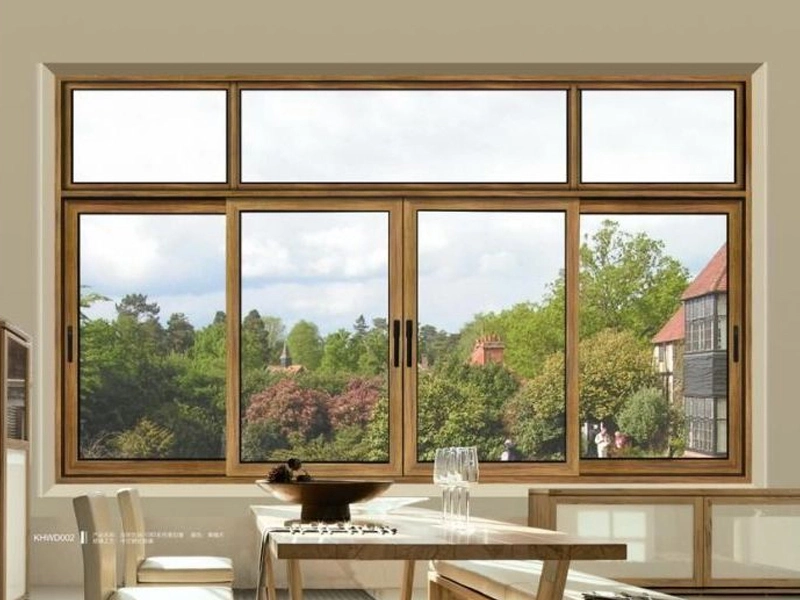
Choosing between tempered glass and heat strengthened glass depends on more than glass strength alone. Architects and facade engineers evaluate safety requirements, structural performance, breakage behavior, building height, glazing location, and long-term maintenance needs before selecting the right solution.
Tempered glass is typically preferred where human safety and impact resistance are the primary concerns, while heat strengthened glass is often selected for large facade systems where controlled breakage behavior and structural reliability are more important. For modern architectural projects, the right choice is determined by how the glass performs throughout its service life rather than by strength values alone.
As buildings continue to feature larger transparent areas and more complex facade designs, understanding the difference between tempered glass and heat strengthened glass helps architects create safer, more durable, and visually optimized glazing systems.
Tempered glass and heat strengthened glass are both produced through controlled thermal treatment. The glass is heated to a high temperature and then rapidly cooled to create compressive stress on the surface. This process improves the glass strength compared with standard annealed glass.
The main difference is the cooling speed and the resulting stress level inside the glass. Tempered glass undergoes faster cooling, which creates higher surface compression and greater mechanical strength. Heat strengthened glass uses a slower cooling process, resulting in moderate compression and a different fracture pattern.
| Comparison Factor | Tempered Glass | Heat Strengthened Glass |
|---|---|---|
| Heat treatment process | Rapid cooling after heating | Controlled slower cooling |
| Surface compression | Higher compression level | Moderate compression level |
| Mechanical strength | Higher impact resistance | Higher than annealed glass but lower than tempered glass |
| Breakage pattern | Small granular fragments | Larger cracks and fragments |
| Main advantage | Safety performance after breakage | Better structural behavior in laminated systems |
| Typical applications | Doors, partitions, railings, shower enclosures | Facades, curtain walls, large glazing systems |
The difference in breakage behavior is one of the most important factors influencing architectural glass selection. Tempered glass is designed to minimize injury risk by breaking into small pieces, while heat strengthened glass is often chosen when maintaining glass integrity after damage is a priority.
Architects commonly choose tempered glass when safety glazing requirements are the main consideration. Its unique fracture pattern makes it suitable for applications where occupants may come into direct contact with the glass.
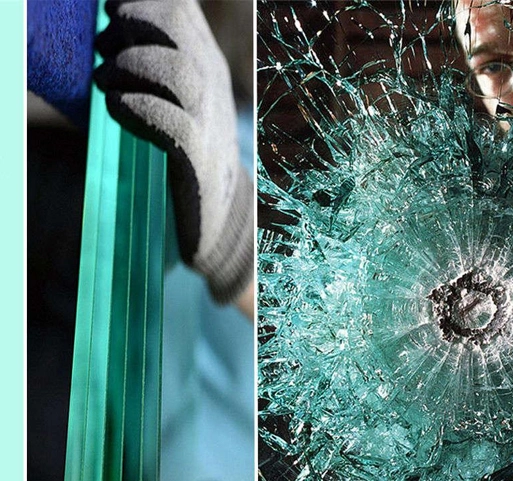
When tempered glass breaks, the internal stress causes the sheet to separate into many small fragments rather than producing large sharp pieces. This characteristic reduces the risk of severe injury in public and residential environments.
Typical applications include:
Glass doors and entrances
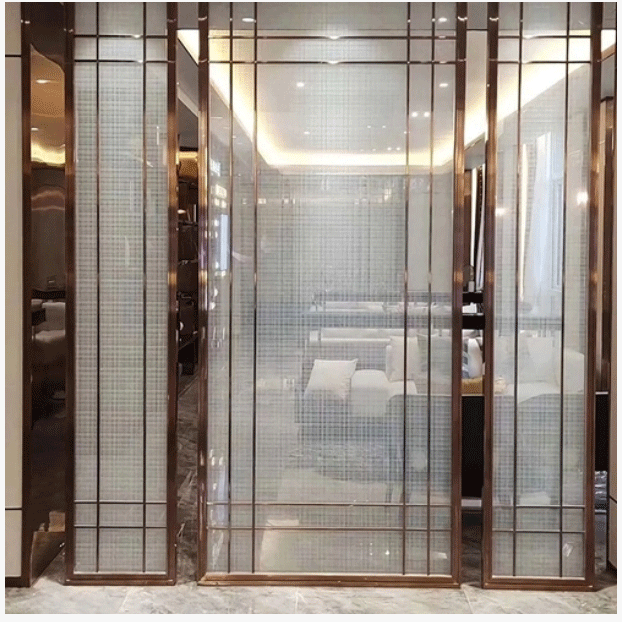
Interior partitions
Shower enclosures
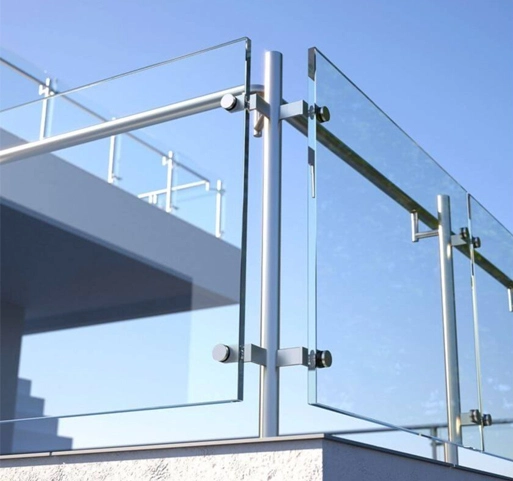
Glass railings
Retail storefront glazing
Furniture and decorative glass
Another advantage of tempered glass is its improved resistance against mechanical impact and thermal stress. Compared with ordinary glass, it can withstand higher loads and temperature variations, making it suitable for demanding daily-use environments.
However, tempered glass also requires careful planning during the design stage. Once the tempering process is completed, the glass cannot be cut, drilled, or modified. All fabrication operations, including edge processing and holes, must be completed before heat treatment.
For projects requiring customized sizes, different thickness options, or additional processing, architects usually work closely with experienced suppliers that provide professional tempered glass manufacturing support.
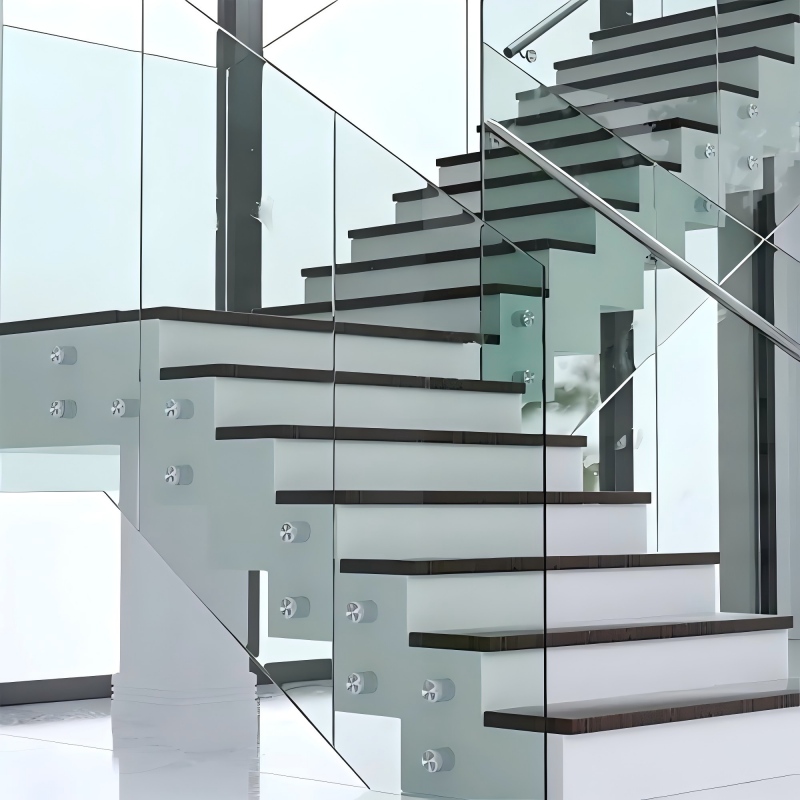
Heat strengthened glass is often selected for applications where architects require improved strength while maintaining a more controlled breakage pattern.
Unlike tempered glass, heat strengthened glass does not immediately break into small particles. Instead, it forms larger cracks and pieces. When combined with an interlayer in laminated glass, these pieces can remain attached, improving safety performance after glass damage occurs.
This makes heat strengthened glass particularly suitable for:
High-rise curtain walls
Structural glazing systems
Large exterior facade panels
Overhead glazing
Laminated architectural glass assemblies
For example, in a commercial tower with a large glass curtain wall, designers must consider not only whether the glass can withstand daily wind pressure but also how the glazing system behaves if accidental damage occurs.
In these situations, heat strengthened laminated glass can provide advantages because the glass is more likely to remain partially retained instead of immediately separating into many fragments.
Yes. Tempered glass generally has higher mechanical strength than heat strengthened glass because it contains a higher level of surface compression created during the cooling process.
However, higher strength does not always mean better performance for every project. Architectural glass selection is based on the complete building system, including structural requirements, safety regulations, facade design, and maintenance considerations.
For example, a glass door in a hotel lobby may require tempered glass because direct human contact and impact safety are the main concerns. A high-rise curtain wall may require heat strengthened laminated glass because maintaining stability after breakage is more important.
The best glass solution is the one that matches the expected risks and performance requirements of the application.
Facade systems represent one of the most challenging applications for architectural glass. Modern buildings increasingly use large glass surfaces to improve natural lighting, energy efficiency, and visual design. At the same time, larger glazing areas create higher requirements for structural performance.
Exterior glazing must withstand continuous wind pressure throughout the building lifecycle. Both tempered glass and heat strengthened glass provide improved strength compared with annealed glass, but the selection depends on glass size, support conditions, and calculated structural loads.
Buildings exposed to strong sunlight can experience uneven temperature distribution across glass surfaces. Heat-treated glass reduces the possibility of thermal breakage, especially in large facade applications.
For tall buildings, glass behavior after damage is a critical design consideration. Heat strengthened laminated glass is often preferred where retaining the glass layer after breakage is necessary.
Architects evaluating facade solutions often consider complete laminated glass systems because combining different glass layers can improve safety, acoustic performance, and structural reliability.
Glass failure behavior directly influences architectural safety strategies. Selecting glass is not only about preventing breakage but also controlling the consequences when breakage happens.
Tempered glass is designed for safety through fragmentation. When accidental impact occurs, the glass breaks into smaller pieces, reducing the chance of serious injury.
Heat strengthened glass focuses more on controlled failure. The larger fracture pattern allows engineers to design laminated systems where the glass remains attached to the interlayer after damage.
| Project Scenario | Preferred Solution | Main Reason |
|---|---|---|
| Office entrance doors | Tempered glass | High safety requirements for frequent human contact |
| Shopping mall partitions | Tempered glass | Safe breakage characteristics |
| High-rise curtain wall | Heat strengthened laminated glass | Better retention after damage |
| Large facade panels | Heat strengthened glass | Suitable for structural glazing applications |
The correct glass selection process begins with understanding the project requirements rather than choosing a material based only on strength ratings.
Professional architects and facade engineers usually evaluate several factors before making a decision:
The purpose of the building directly affects glass selection. Residential buildings, hotels, hospitals, commercial centers, and transportation facilities all have different safety expectations.
Areas with frequent human interaction usually prioritize tempered glass because of its safer breakage pattern. Exterior facade systems often require heat strengthened or laminated solutions because structural performance and glass retention become more important.
The position of the glass within a building also determines the most suitable solution.
Interior applications such as partitions and doors usually focus on impact safety and user protection. Exterior applications must consider additional factors including wind pressure, temperature changes, weather exposure, and long-term durability.
Larger glass panels create greater engineering challenges. As architectural designs move toward floor-to-ceiling windows and oversized facade panels, manufacturers must evaluate glass thickness, support structure, and loading conditions together.
In these projects, choosing between tempered glass and heat strengthened glass requires technical cooperation between architects, engineers, and glass manufacturers.
Many modern buildings do not use single-layer glass. Instead, multiple glass layers are combined with interlayers to improve safety, sound insulation, and structural performance.
Heat strengthened glass is frequently used in laminated facade systems because it provides a balance between strength and controlled breakage behavior.
| Application Area | Recommended Glass Type | Why It Is Selected |
|---|---|---|
| Commercial entrance doors | Tempered glass | Provides safer fragmentation after impact |
| Interior glass partitions | Tempered glass | Suitable for occupied spaces |
| Bathroom enclosures | Tempered glass | Meets safety glazing requirements |
| High-rise curtain walls | Heat strengthened laminated glass | Improves post-breakage stability |
| Large facade glazing | Heat strengthened glass | Better suited for structural applications |
| Overhead glazing | Heat strengthened laminated glass | Helps maintain glass retention after damage |
The choice is not based on one material being universally better than the other. Each glass type provides different advantages depending on architectural requirements.
Architectural glass selection should follow recognized industry standards to ensure safety, durability, and structural reliability.
Important considerations include impact resistance, thermal performance, glass processing quality, and installation requirements.
Internationally recognized references include ASTM standards, building codes, and professional glazing guidelines. These documents provide testing methods and design recommendations for different architectural applications.
Architects should also work with experienced suppliers that understand project-specific requirements and can provide technical documentation, quality inspection, and customized processing support.
Even when the correct glass type is selected, manufacturing quality directly affects final performance.
Heat treatment requires precise control of heating temperature, cooling speed, and stress distribution. Poor processing may result in uneven performance, optical distortion, or reduced durability.
Professional glass manufacturers typically control:
Glass cutting accuracy before heat treatment
Edge processing quality
Surface inspection procedures
Heat treatment consistency
Final product testing
For international architectural projects, suppliers with export experience can also help ensure that products meet regional requirements and project specifications.
Lanjing Glass provides customized heat strengthened glass solutions for architectural projects requiring reliable performance, precise processing, and professional technical support.
The main difference is the level of thermal treatment and the resulting breakage behavior. Tempered glass has higher surface compression and breaks into small fragments, while heat strengthened glass has moderate compression and forms larger cracks that are often used in laminated systems.
For applications involving direct human contact, tempered glass is often considered safer because it breaks into smaller fragments. However, heat strengthened laminated glass may provide better safety performance in facade applications because it can remain attached after breakage.
Heat strengthened laminated glass is commonly preferred for curtain walls because it provides better structural performance and improved glass retention after damage. The final selection depends on building design, local regulations, and engineering calculations.
Not always. Heat strengthened glass can replace tempered glass in some architectural applications, but areas requiring specific safety glazing performance may still require tempered glass. The correct choice depends on application requirements and building standards.
Yes. Both glass types can be used in laminated glass systems. Heat strengthened laminated glass is especially common in large facade projects where controlled breakage behavior is required.
Modern buildings usually combine different glass types according to application needs. Tempered glass is widely used for doors, partitions, and safety glazing, while heat strengthened glass is frequently selected for curtain walls and large architectural facades.
Tempered glass and heat strengthened glass are both important solutions in modern architectural design, but they are developed for different performance requirements.
Tempered glass is the preferred choice when safety glazing and impact resistance are the primary concerns. Heat strengthened glass provides advantages when architects need stronger glazing combined with controlled breakage behavior, especially in laminated facade systems and large-scale architectural applications.
The most suitable glass solution depends on building function, installation environment, structural requirements, and long-term performance expectations. By evaluating these factors during the design stage, architects and engineers can achieve safer, more durable, and visually effective glazing systems.