English
 日本語
日本語 한국어
한국어 français
 Deutsch
 Español
 italiano
 русский
 português
 Türkçe
 العربية

PVB, SGP and EVA are not interchangeable labels for the same laminated glass. Each interlayer family has a different combination of stiffness, adhesion, moisture behavior, acoustic potential, processing conditions, design history and cost. The correct choice depends on what the glass must do after impact, how it will be supported, where it will be installed and what performance must be documented.
This guide is designed for architects, façade consultants, glass contractors, distributors, project procurement teams and product manufacturers. It compares the three interlayers without treating one material as universally superior. It also explains which questions belong to the glass fabricator and which decisions must remain with the project engineer.
Laminated glass is a composite glazing product made by bonding two or more glass plies with one or more polymer interlayers so that fragments can remain attached after breakage.
The interlayer can add safety retention, structural coupling, acoustic damping, color, UV control, decoration or security performance. The final behavior depends on the whole construction: glass type, ply thickness, interlayer type and thickness, temperature, load duration, support, edge condition and fabrication quality.
PVB is the most established architectural and automotive interlayer family. SGP is a high-stiffness ionoplast interlayer used where structural performance and post-breakage stability are priorities. EVA is an ethylene-vinyl acetate interlayer often selected for decorative laminates, mixed materials, patterned or curved glass and applications where moisture resistance or flexible processing is valued.
Lanjing manufactures laminated glass with all three interlayer types. Its published capability includes PVB and EVA thicknesses from 0.38 mm to 3.04 mm, SGP options such as 0.76 mm, 0.89 mm and 1.52 mm, finished sizes up to approximately 13,000 × 3,000 mm and a published laminated-glass output of 20,000 square meters per month. Availability should be confirmed for the exact glass make-up and delivery period.
PVB laminated glass is a safety glazing construction that uses polyvinyl butyral film to bond glass plies under heat and pressure.
PVB has decades of use in automotive windshields and architectural glazing. Standard clear PVB provides reliable fragment retention when the laminate is properly manufactured. Specialized PVB products can add acoustic damping, color, solar control or enhanced security performance.
One of PVB’s main advantages is the breadth of available formulations and design experience. Architects and fabricators can source clear, extra-clear, colored, acoustic and UV-selective options. The material is a practical starting point for windows, façades, partitions, balustrades with appropriate engineering, skylights, canopies, doors and decorative glazing.
Acoustic PVB should be distinguished from standard PVB. Eastman reports that its engineered acoustic interlayer can reduce sound transmission by up to 10 dB compared with conventional laminated glass in a critical frequency range, corresponding to a substantial reduction in perceived loudness. The exact result depends on the glass make-up, insulating unit, framing and test spectrum.
PVB is moisture-sensitive at exposed edges. The laminate design, storage, edge cover, sealant compatibility and drainage should prevent long-term water exposure. This does not mean PVB cannot be used in exterior façades; it means the edge and framing details must be correct.
Buyers looking for a production partner can review Lanjing’s pvb laminated glass manufacturers page, which lists clear, extra-clear, colored, acoustic and UV-selective interlayer choices as well as edge-sealing solutions for humid locations.
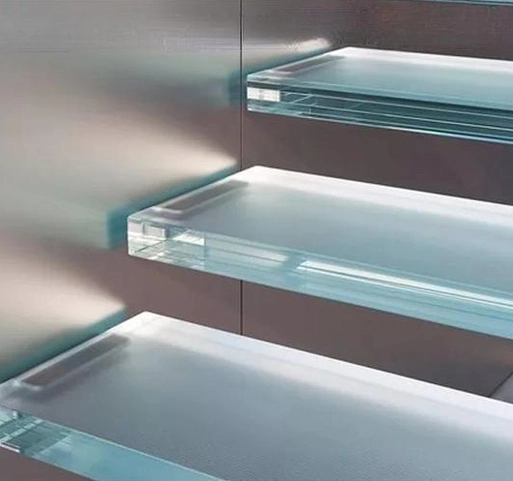
SGP lamination uses a structural ionoplast interlayer that is significantly stiffer and stronger than conventional PVB, allowing laminated glass to act more effectively as a composite under suitable design conditions.
Kuraray states that SentryGlas ionoplast interlayer has five times the strength and one hundred times the stiffness of conventional PVB film. These manufacturer figures explain why SGP is frequently considered for glass fins, large canopies, structural balustrades, bridges, floors, high-load façades and other applications where post-breakage behavior is important.
The higher stiffness can improve load sharing between glass plies, but design values vary with temperature and load duration. Engineers should use the correct material data, design standard and safety factors. A generic statement that SGP “makes glass five times stronger” is misleading because the finished laminate’s capacity depends on glass thickness, supports, holes, edge condition and load case.
SGP also has strong edge stability and clarity in demanding exterior conditions. This can be valuable in open-edge balustrades or exposed structural glass. However, the interlayer does not remove the need for correct edge finishing, compatible sealants and proper drainage.
Cost is the primary trade-off. Lanjing’s published comparison states that SGP interlayer can cost roughly three to five times more than PVB. The finished-glass premium may be lower or higher depending on glass thickness, quantity, processing and design optimization. In some projects, the stiffer interlayer can enable a thinner or more efficient glass make-up, partially offsetting material cost. That possibility must be verified by engineering calculations.
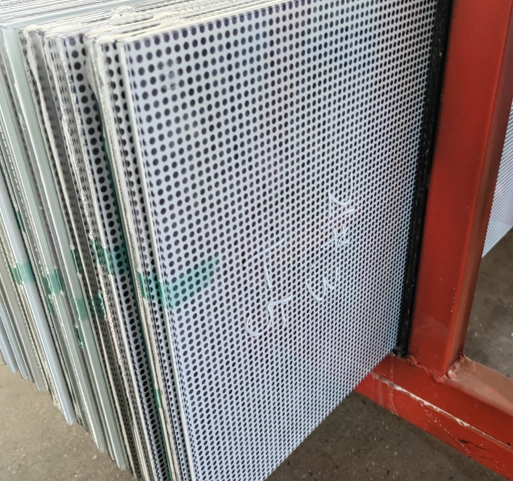
EVA film lamination bonds glass with ethylene-vinyl acetate interlayer and is commonly used where decoration, mixed inserts, patterned surfaces, curved shapes or moisture resistance influence the fabrication choice.
EVA can adhere to glass and certain compatible decorative materials, making it suitable for fabric, mesh, printed films, organic inserts and other visual effects. It is also used for patterned, tempered and curved glass laminates when the selected film and process have been validated.
The term EVA covers different formulations. A film intended for solar module encapsulation is not automatically suitable for architectural safety glass, and a decorative EVA laminate should not be assumed to meet structural or impact standards without testing. Buyers must request the specific product data, certification and process compatibility.
EVA is often described as having good moisture resistance and room-temperature storage convenience. These advantages can be useful in humid environments or for open-edge decorative products. However, thermal performance, UV stability, yellowing and adhesion depend on the formulation and lamination cycle. Samples should be aged or tested when the project has long-term exterior exposure.
Lanjing publishes PVB/EVA interlayer thicknesses from 0.38 mm to 3.04 mm and notes EVA’s use with patterned, tempered and curved glass. Its eva film lamination page can be used to start a discussion about decorative inserts, glass shape and production trials.
A PVB vs SGP vs EVA comparison should evaluate the final glazing function, exposure, support and required documentation rather than choosing by material reputation alone.
| Selection Factor | PVB | SGP Ionoplast | EVA |
|---|---|---|---|
| Primary strength | Versatile safety glazing with broad formulation and standards history. | High stiffness, strength and post-breakage stability for structural applications. | Decorative flexibility, mixed-material adhesion and moisture-resistant options. |
| Acoustic options | Strong; dedicated acoustic PVB formulations are widely available. | Not normally selected primarily for acoustic damping. | Depends on formulation; less established as the default acoustic solution. |
| Exterior edge exposure | Requires careful edge protection and drainage. | Generally strong edge stability and weathering performance. | Often good moisture resistance, but formulation and testing matter. |
| Structural design | Suitable for many safety applications; stiffness is temperature and duration dependent. | Preferred when high composite action and residual capacity are required. | Should not be assumed structural without project-specific data. |
| Decorative inserts | Color films available; insert compatibility must be tested. | Usually selected for structural performance rather than complex inserts. | Common choice for fabrics, mesh, patterns and mixed decorative layers. |
| Typical cost position | Baseline and broadly competitive. | Higher interlayer cost; value must be justified by performance. | Varies widely with film, insert, process and order size. |
| Process sensitivity | Controlled humidity, clean room, de-airing and autoclave cycle are important. | Requires validated lamination process and careful handling. | Vacuum and heating cycle, insert dryness and formulation compatibility are critical. |
This table is a selection guide, not a substitute for structural calculations or required testing. The same interlayer can perform differently in a small framed window and a large point-supported canopy.
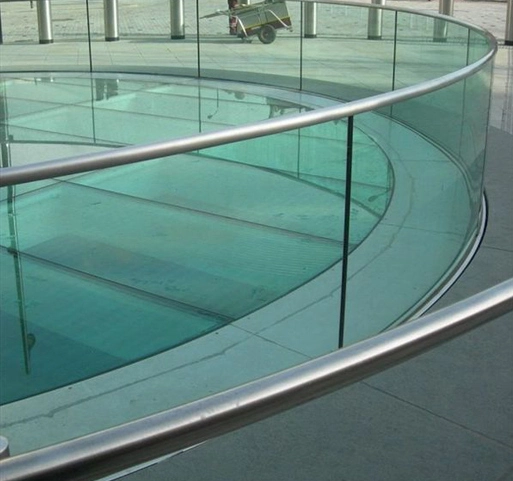
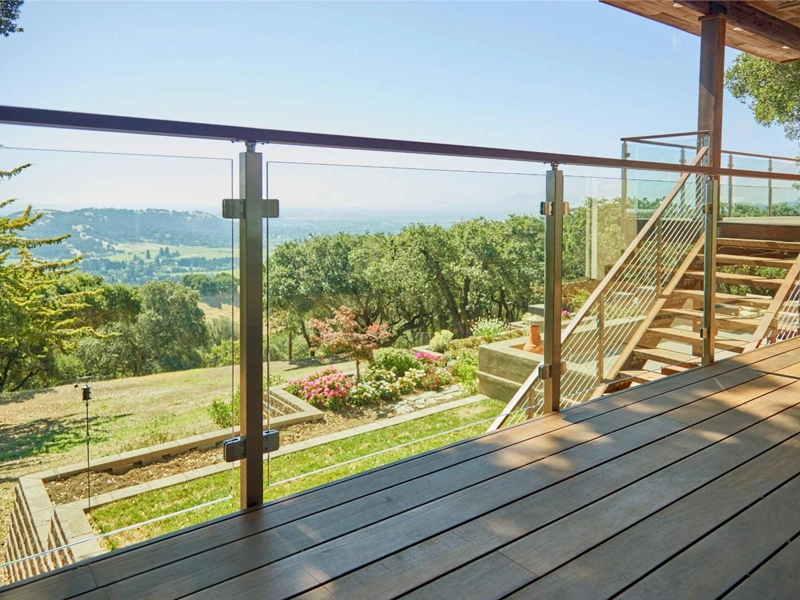
Interlayer selection for glass railings is the decision about how the panel must resist service loads and remain stable after one or more glass plies break.
PVB laminated glass is used in many framed or supported balustrade systems where the design and local code allow it. The interlayer retains fragments and can provide a safe breakage mode. However, temperature and long-duration loads can reduce effective stiffness, so the engineer must use appropriate design assumptions.
SGP is frequently selected for structural or minimally supported balustrades because its higher stiffness and residual performance can improve post-breakage behavior. It is particularly relevant for cantilevered panels fixed only at the base. The exact glass thickness, number of plies, fixing detail and handrail requirement must be engineered.
EVA may be suitable for decorative or framed railing panels where the tested construction meets the required safety standard. It should not be selected solely because it resists moisture. The structural data and certification for the exact EVA formulation must support the design.
For all three options, holes and notches create stress concentrations. Edge quality, heat treatment, interlayer alignment and installation tolerances are critical. Mock-ups and impact tests may be required for unusual systems.
Interlayer selection for overhead glazing defines how fragments are retained and how the laminate carries load before and after breakage in a location where falling glass creates high risk.
PVB is widely used in laminated overhead glazing and can provide effective fragment retention. The specification should consider water exposure at edges, support conditions, glass heat treatment and the required post-breakage period.
SGP is often justified for large panels, point supports, long spans or applications where the broken laminate must retain greater stiffness. Its structural advantages can be especially valuable when access for replacement is difficult or when a falling panel would create severe consequences.
EVA may be used in certain canopy or skylight products when the formulation and completed laminate have suitable test evidence. Decorative transparency or insert compatibility may be an advantage, but structural capacity must be demonstrated rather than inferred.
Heat-strengthened glass is often paired with a structural interlayer in overhead systems because its fracture pattern can support post-breakage behavior better than fully tempered glass in some designs. The final make-up must follow the engineer’s analysis and local code.
An acoustic glass interlayer is a polymer layer engineered to damp vibration and reduce sound transmission through a laminated glazing construction.
Dedicated acoustic PVB is usually the first material considered because suppliers publish tested systems and design tools. The interlayer targets coincidence effects and can improve performance in the human-sensitive frequency range. The final result depends on asymmetric glass thickness, air spaces, secondary panes, frame seals and installation quality.
SGP is not normally selected for acoustic damping alone. Its stiffness can be valuable structurally, but high stiffness does not automatically produce better sound reduction. A project that needs both structural and acoustic performance may use a multi-ply construction or combine different interlayers, subject to fabrication approval.
EVA acoustic performance varies by formulation and laminate. It should be supported by laboratory test data for the exact configuration. Decorative EVA products may provide some damping, but they should not be marketed as acoustic glazing without evidence.
Specify the target metric and spectrum, such as STC, Rw or octave-band values, and identify whether the rating applies to the glass only or the complete window. A glass improvement can be lost through weak frames, vents or perimeter gaps.
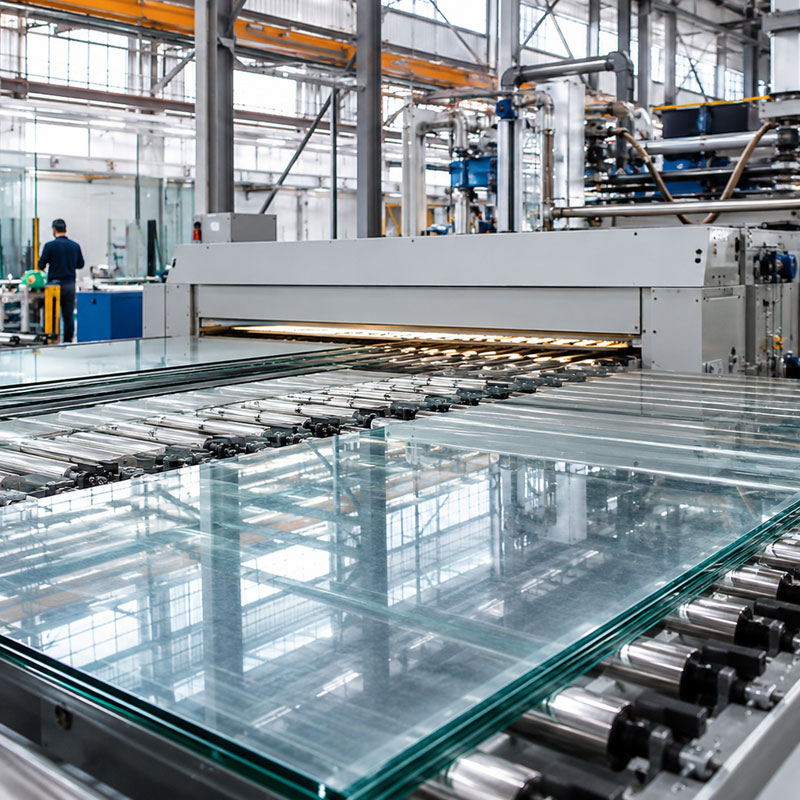
Interlayer selection for humid and coastal conditions evaluates moisture ingress, salt exposure, edge stability, sealant compatibility and long-term appearance.
PVB can perform successfully in exterior glazing when edges are protected and drainage is correct. Open-edge exposure should be minimized unless the selected product and design have validated durability. Lanjing describes applying edge sealant to certain PVB laminates used near the sea or in humid conditions.
SGP is known for strong edge stability and reduced sensitivity to moisture compared with conventional PVB. This is one reason it is used in exposed structural glass and balustrades. However, salt, sealants, setting materials and cleaning chemicals still need compatibility review.
EVA is often chosen for moisture-resistant decorative laminates. The formulation should be verified for outdoor UV and thermal cycling, especially when organic inserts or inks are present. Moisture resistance of the film does not guarantee that every insert or printed layer will remain stable.
For coastal projects, request accelerated weathering, edge stability or project reference data when appearance is critical. Physical mock-ups should include the actual edge detail and sealant, not only a small sealed laboratory coupon.
Laminated glass price is the combined cost of glass plies, interlayer, cutting, edgework, heat treatment, layup, de-airing, autoclaving or vacuum processing, inspection, yield, packing and logistics.
PVB usually provides the most familiar baseline. Clear standard film is broadly available, while acoustic, colored, solar or security formulations cost more. Small orders with many colors or film changes can increase setup and scrap.
SGP carries a higher material price. Lanjing notes that the interlayer can be three to five times the cost of PVB, although the total finished-glass difference depends on the design. Buyers should compare engineered alternatives, not only interlayer price per square meter. A higher-performance interlayer may allow a different glass build-up, support spacing or residual design.
EVA price varies with formulation, thickness, decorative inserts and process complexity. A simple clear EVA laminate may be economical, while a custom fabric, printed film or multi-layer decorative panel can require extensive sampling and manual layup.
Yield strongly affects all three. Large panels, irregular shapes, holes, notches and strict visual zones increase risk. A quotation should state whether replacement for lamination defects is included and how visual acceptance will be judged.
Laminated glass fabrication quality is the control of glass preparation, interlayer storage, clean-room conditions, layup, de-airing, heat and pressure cycles, trimming, inspection and packing.
Contamination can create bubbles, inclusions or visual defects. Poor humidity control can affect PVB handling. Incorrect vacuum or autoclave cycles can cause incomplete bonding. Decorative inserts can release moisture or gases. Edge misalignment can reduce appearance and complicate framing.
Every project should define visual zones and acceptance criteria. A museum balustrade, patterned privacy panel and hidden structural fin do not need the same cosmetic standard. The supplier should inspect under agreed lighting and distance, not an undefined “perfect” requirement.
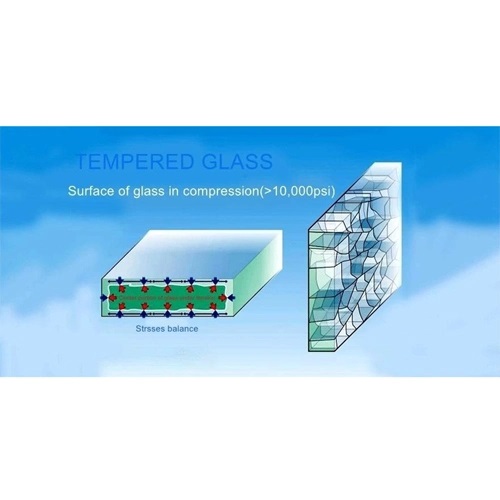
Heat-treated glass requires additional quality control. Roller wave, bow, anisotropy and edge quality can affect the final laminate. If two thick tempered plies must align precisely, post-lamination edge grinding may improve matching, but it adds process cost and must respect the finished design.
Lanjing states that it can grind certain PVB laminated glass after lamination and apply edge sealant for humid environments. Buyers should request sample edges and confirm tolerances before approving production.
A laminated glass specification is a complete statement of glass plies, heat treatment, interlayer type and thickness, dimensions, performance, appearance, edge condition and documentation.
Identify the application, support system, exposure and consequence of breakage.
State each glass ply thickness, glass type, coating and heat treatment in order from exterior to interior.
Name the interlayer family, product or approved equivalent and total thickness.
Define structural, impact, acoustic, security, UV, color or fire performance as applicable.
Provide finished dimensions, holes, notches, edge finish and tolerances.
Define exposed edges, sealants, frits, coatings and compatibility requirements.
Set visual quality zones, color tolerance, bubble/inclusion limits and inspection conditions.
List standards, test reports, calculations, samples, mock-ups and traceability.
Provide quantity, destination, crate limits, installation sequence and spare panels.
Require supplier disclosure of assumptions, exclusions and substitutions.
When SGP is being considered, Lanjing’s sgp lamination page can be used to discuss available film thicknesses, large-panel capability and project suitability.
An interlayer decision guide selects material by defining the required behavior before breakage, at breakage and after breakage.
Choose standard or acoustic PVB when broad safety-glass experience, sound control, color or cost efficiency is the main priority and edges can be properly protected.
Choose SGP ionoplast when structural coupling, residual capacity, open-edge stability or demanding supports justify higher cost and engineering.
Choose EVA when decorative inserts, patterned or curved glass, mixed materials or moisture-resistant processing are central, provided the exact laminate is tested for the required use.
Some projects use more than one interlayer type. A multi-layer security or acoustic construction may combine functions, but mixed systems require supplier validation and design data. The goal is not to maximize the number of layers; it is to satisfy defined performance with a manufacturable and inspectable build-up.
Lanjing offers PVB, SGP and EVA laminated glass within a broader architectural-glass processing operation, allowing the interlayer decision to be coordinated with cutting, tempering, edgework, drilling, insulating and export packing.
The company publishes large finished sizes, multiple interlayer thicknesses and a monthly laminated output of 20,000 square meters. It also describes special processes such as post-lamination edge grinding and edge sealing for humid PVB applications.
A useful supplier discussion should begin with the project function and failure mode, not with a request for the cheapest interlayer. Lanjing can recommend manufacturable options, but structural, code and system decisions should be confirmed by the project engineer and relevant test evidence.
For quotation, send the complete glass make-up, dimensions, quantities, support conditions, exposure, required standards, visual criteria, destination and schedule. Ask for a sample or mock-up when color, edge appearance, decorative inserts or unusual processing are involved.
No. SGP provides much higher stiffness and strength, which is valuable for structural and post-breakage requirements. PVB can be the better choice for standard safety glazing, acoustic performance, colors and cost efficiency. The application and engineering determine the answer.
The ionoplast interlayer costs more than conventional PVB and may require specific processing and documentation. Lanjing notes an interlayer cost multiple of roughly three to five times PVB, but the finished-glass premium depends on design, thickness, size and quantity.
Many EVA formulations have good moisture resistance, which can support humid or open-edge decorative applications. The exact film, insert, UV exposure and thermal cycle still require validation. Moisture resistance alone does not prove structural or safety compliance.
Dedicated acoustic PVB is usually the most established choice. It is engineered to damp sound in critical frequency ranges. The complete glass and frame system must be tested or modeled because interlayer alone does not determine the final acoustic rating.
Yes, suitable formulations can be laminated with tempered glass, but the process, bow, roller wave, edge alignment and required post-breakage performance must be controlled. The exact construction should be approved by the fabricator and engineer.
Provide glass ply types and thicknesses, heat treatment, interlayer type and thickness, dimensions, holes, notches, edges, performance standards, visual criteria, quantity, packing, destination and delivery date.
PVB, SGP and EVA solve different laminated-glass problems. PVB is the versatile baseline with strong safety, acoustic and color options. SGP delivers high stiffness and post-breakage stability for demanding structural uses. EVA offers valuable flexibility for decorative, patterned, curved and moisture-sensitive laminates when the exact formulation is validated.
The best specification begins with the required failure mode, exposure and evidence. Lanjing can fabricate all three interlayer families and help compare practical glass make-ups. The final selection should combine supplier capability, engineering calculations, standards, samples and lifecycle cost rather than relying on a single marketing claim.