English
 日本語
日本語 한국어
한국어 français
 Deutsch
 Español
 italiano
 русский
 português
 Türkçe
 العربية

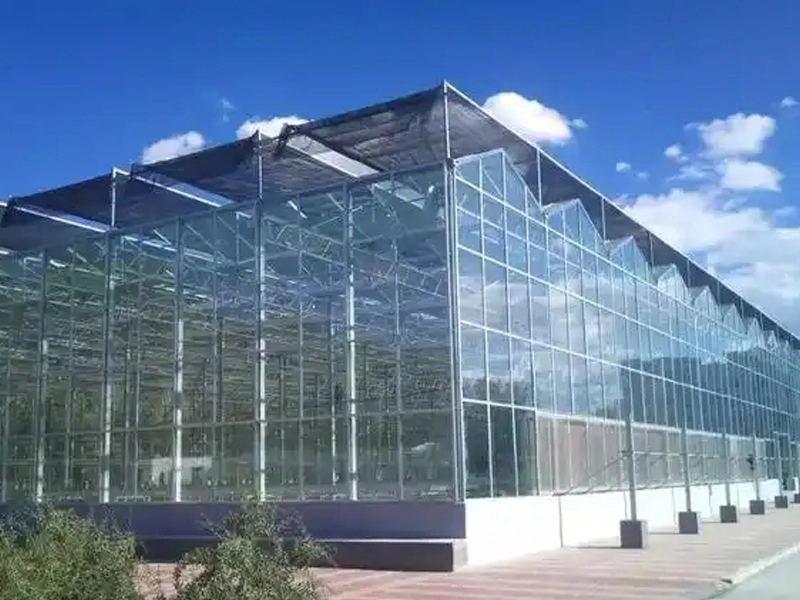
Buying greenhouse glass is not simply a matter of selecting the clearest panel. Commercial growers, greenhouse builders and agricultural project owners must balance crop light demand, structural loading, thermal performance, condensation, safety, panel size, installation method, cleaning and replacement logistics. A panel with excellent laboratory transmittance can still be a poor choice if it is too large for the support system, difficult to replace or unsuitable for the local wind and snow conditions.
This guide provides a project-level method for evaluating greenhouse glass panels for sale. It explains the main glass types, shows how thickness and panel dimensions influence the specification, compares light and insulation priorities, and gives buyers an RFQ checklist that can be used with Lanjing or another qualified fabricator.
Greenhouse glass panels are transparent or coated glazing units used in greenhouse roofs and walls to admit useful solar radiation while protecting crops from outdoor weather.
The glazing is part of a complete environmental system. It influences the amount and distribution of light, heat loss, solar heat gain, condensation behavior, ventilation, structural weight and long-term maintenance. The optimal glass therefore depends on the crop, latitude, greenhouse geometry, climate-control strategy and operating period.
Single-pane tempered glass remains common where high light, durability and easy cleaning are important. Low-iron glass can increase visible transmission by reducing the green tint caused by iron in standard soda-lime glass. Anti-reflective coatings can reduce surface reflection and increase transmitted light. Insulated glass units can improve thermal performance but add weight, framing depth, edge-seal requirements and cost.
Lanjing’s published greenhouse page describes 3 mm, 3.2 mm and 4 mm toughened glass options, low-iron glass, anti-reflective glass and low-e insulated configurations. It also reports up to 97.5% light transmission for an ultra-clear anti-reflective option. Such values should be tied to a specific product, thickness, wavelength range and test method before they are written into a purchase order.
A greenhouse glass project brief is a concise definition of the crop, climate, structure, operational target and procurement constraints that must be satisfied by the glazing.
Begin with the crop and production plan. Leafy greens, vegetables, flowers and young plants may respond differently to total daily light, diffuse light, UV transmission and peak temperature. The greenhouse may operate year-round, seasonally or mainly during low-light winter months. A northern project that needs every available unit of winter light has a different priority from a hot-climate greenhouse where shading and heat rejection dominate the summer strategy.
Next, define the structural system. The frame supplier should provide the approved panel module, support conditions, design pressure, wind zone, snow load, roof slope and allowable glass weight. The glass supplier can fabricate the requested panel, but it should not independently assume structural loads or determine compliance without project engineering data.
Finally, define maintenance and logistics. Consider whether workers can access the roof, how broken panels will be replaced, whether the site is remote, how many spare panels should be stored and what lifting equipment is available. A slightly smaller standard panel may be more economical over the building’s life than a very large custom panel with expensive replacement handling.
Greenhouse light transmission is the percentage of incident light that passes through the glazing into the growing space under a defined test condition.
Higher transmission is generally valuable in low-light conditions, but it is not the only optical property. The angle of incidence, surface dirt, condensation, framing shadows, multiple reflections and crop canopy all affect usable light. A headline transmittance value measured at normal incidence on a clean sample may not describe the annual light delivered to plants.
Standard clear glass often provides a strong balance of cost, availability and light. Lanjing states that low-iron glass can provide roughly two percentage points more light transmission than regular clear glass. The commercial value of that difference depends on the crop, local solar resource, heating cost and production schedule. Buyers should ask whether the increase is measured on the same thickness and whether it applies to a single surface, laminated composition or finished unit.
Anti-reflective treatment can further improve transmission by reducing reflection at the air-to-glass surfaces. The benefit is normally most relevant when winter light is a limiting production factor or when the crop has a high economic return per square meter. Coating durability, cleanability and repair strategy should be evaluated together with optical gain.
University greenhouse guidance notes that wide-pane glass is preferred where high winter light levels are required. This supports the general principle that glazing and framing geometry should be optimized together; reducing unnecessary framing can be as important as selecting a higher-transmission glass.
A greenhouse glass comparison evaluates optical performance, insulation, durability, weight, cost and maintenance under the project’s actual climate and crop requirements.
| Glass Option | Main Strength | Main Trade-Off | Best-Fit Conditions |
|---|---|---|---|
| Clear tempered glass | Good light, familiar fabrication, easy cleaning and broad availability. | More iron tint and slightly lower transmission than low-iron glass. | General commercial greenhouses with balanced budget and performance. |
| Low-iron tempered glass | Higher clarity and potentially more plant-available light. | Higher material cost; benefit varies with climate and crop. | Low-light regions, high-value crops and projects focused on winter production. |
| Anti-reflective glass | Reduced surface reflection and high transmission. | Coating cost, handling and long-term cleaning requirements. | Projects where incremental light has measurable production value. |
| Low-e insulated glass | Lower heat transfer and improved winter thermal control. | More weight, cost, framing depth and edge-seal complexity; light may be lower. | Cold climates, controlled environments and areas with high heating costs. |
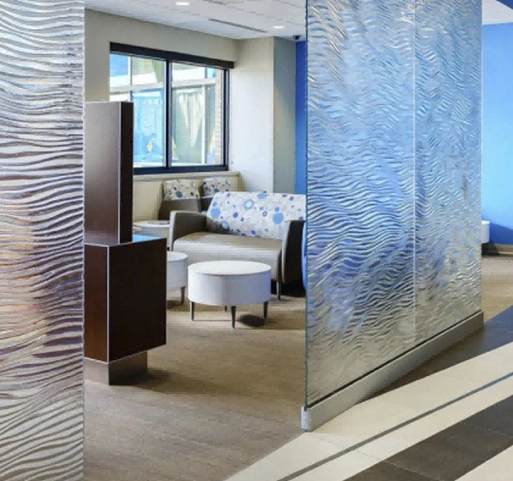
| Diffuse or patterned glass | More even light distribution and reduced sharp shadows. | May reduce direct transmission or complicate cleaning depending on surface. | Crop systems that benefit from diffuse light and deeper canopy penetration. |
Lanjing publishes sample insulated configurations with visible light transmission around 80–82% and summer U-values around 1.16–1.38 in the units used on its page. These values should not be mixed with single-glass transmission numbers. U-value, R-value, solar heat gain and VLT describe different aspects of performance and require consistent units and test conditions.
A project should compare whole options: for example, a high-transmission single pane with a separate energy screen versus an insulated unit with lower transmission but lower winter heat loss. The correct answer may depend on energy prices, crop value, operating hours and greenhouse controls.
Greenhouse glass thickness selection is the engineering decision that matches glass strength, panel size, support spacing, design load and handling requirements.
Lanjing lists 3 mm, 3.2 mm and 4 mm tempered greenhouse glass and gives recommended maximum sizes of approximately 1800 × 1200 mm for 3 mm and 3.2 mm glass and 2000 × 1800 mm for 4 mm glass. These are supplier recommendations, not substitutes for project-specific structural calculations.
Thicker glass is heavier and usually costs more to transport and install, but it can allow a different panel module or provide more tolerance to handling. Thinner glass reduces weight and may fit standardized greenhouse systems, yet it can be more flexible and may require closer support. The frame manufacturer’s approved glazing schedule should be the starting point.
Tempering improves strength and produces a safer break pattern than annealed glass, but it does not make every size suitable for every load. Holes, notches, edge damage, support conditions and thermal stress influence performance. All fabrication should be completed before tempering because tempered glass generally cannot be cut or drilled afterward.
Buyers should send a panel schedule showing every size, quantity, edge condition and hole/notch. The supplier should confirm whether the proposed dimensions fit its tempering furnace and quality controls. Lanjing states that its architectural glass operation includes cutting, edge processing and tempering equipment, which can support a coordinated panel package.
Greenhouse glass safety planning defines the glazing type, break pattern, retention method, access control and replacement process needed to protect workers, visitors and crops.
Tempered safety glass is often selected because it is stronger than annealed glass and breaks into relatively small fragments. However, tempered glass can still fall from roofs and walls after breakage. The project designer should determine whether laminated glass, safety film, screens or other retention measures are required in entrances, public areas, overhead zones or maintenance routes.
Nickel sulfide inclusions can contribute to rare spontaneous breakage in tempered glass. Heat-soak testing may be specified for critical applications, although it adds cost and does not eliminate all breakage causes. The decision should be based on project risk, panel location and replacement consequences.
Edge protection is essential. Chipped edges and improper setting blocks can create stress concentrations. Frames must allow thermal movement and avoid glass-to-metal contact. Installation manuals should state gasket compatibility, bite, clearances and fastener torque. These are system details that require coordination among the greenhouse supplier, glazing contractor and glass fabricator.
Replacement stock is a practical safety measure. Buyers should order spare panels for unique sizes and record the exact glass type, coating orientation and tempering mark. A broken low-iron AR panel should not be replaced with ordinary clear glass if optical uniformity matters across the roof.
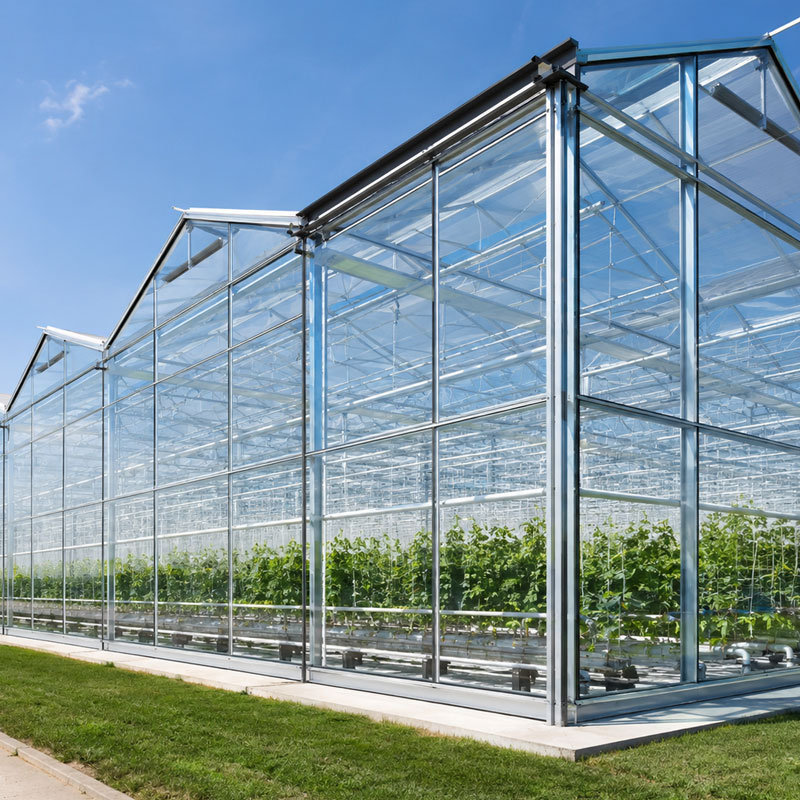
Greenhouse thermal performance is the way the glazing and environmental-control system manage heat loss, solar gain, surface temperature and condensation.
Single glass has high light transmission but relatively low insulation. University guidance cites approximate R-values of 0.9 for single glazing and 1.4 for double glazing in a greenhouse context. Exact values vary with the system, air space, coatings, framing and calculation method. Buyers should request whole-system data rather than using a generic number as a guarantee.
Insulated glass can raise the interior surface temperature in cold weather and reduce heat loss, which may lower condensation on the room-side surface. It also adds edge seals that must perform in a humid environment. Warm-edge spacers, sealant compatibility, drainage and frame design affect service life.
Energy and shade screens provide another route to control heat. A retractable screen can reduce nighttime heat loss or daytime solar load while allowing full transmission when conditions are favorable. This flexibility may outperform a permanently darker glazing in climates with large seasonal changes.
Condensation cannot be solved by glass alone. Humidity, ventilation, heating distribution, roof slope and drainage determine whether water forms and where it flows. A steep roof can help moisture run down the glazing, while anti-drip treatments or proper gutters can prevent droplets from falling on crops.
Evaluating greenhouse glass suppliers means comparing the same panel schedule, optical requirement, safety treatment, quality tolerance, packing standard and delivery scope.
Start with product evidence. Ask for transmittance data tied to thickness and coating, tempering capability, maximum dimensions, quality standards and sample panels. Confirm whether the quotation includes edge seaming, logo marking, hole processing, coating protection and crate packing.
Then review project evidence. A supplier should be able to explain how it controls panel identification, coating orientation and size sorting. Large greenhouse packages can contain hundreds of similar panels, so labeling and packing sequence can save significant site labor.
Lanjing’s greenhouse glass panels for sale page presents clear, low-iron, anti-reflective and insulated options. Buyers should use the page as a starting point and request a project-specific submittal rather than assuming every published value applies to every size.
Supplier location and export experience also matter. Glass is heavy, fragile and sensitive to improper crate handling. The quotation should identify crate dimensions, gross weight, loading method, container utilization, moisture protection and the party responsible for unloading.
Greenhouse glass shipping design is the method of grouping, separating, restraining and documenting panels so they reach the job site safely and can be installed efficiently.
Panel sequences should follow the installation plan. Crates can be grouped by greenhouse bay, elevation or size so that contractors do not open every package to find one panel. Each panel or bundle should carry a durable label that matches the drawing schedule.
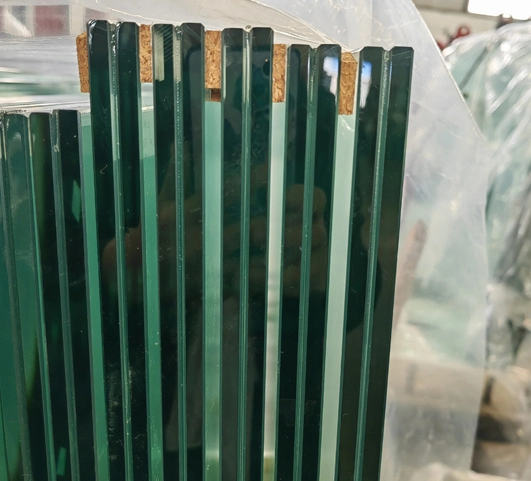
Glass-to-glass contact should be prevented with compatible separators. Crates should support the glass at the correct angle, protect edges and resist container movement. Oversized crates need a confirmed forklift or crane plan at the destination. A crate that is safe at the factory can become a site problem if it cannot pass through the gate or be lifted by available equipment.
Replacement stock should be packed separately and clearly identified. The quantity depends on project size, panel uniqueness and local availability. Standard rectangular panels may need a lower spare percentage than custom triangles, curved corners or coated pieces with long lead times.
A greenhouse glass RFQ checklist is the set of project data a fabricator needs to recommend glazing, calculate yield and quote the complete delivered package.
Project location, altitude and expected operating season.
Crop type and priority: maximum winter light, diffuse light, heat retention or balanced performance.
Approved structural loads and frame supplier’s panel schedule.
Glass type: clear, low-iron, anti-reflective, diffuse, laminated or insulated.
Thickness, finished dimensions, quantity, holes, notches and edge finish.
Tempering, heat-soak testing, laminated retention or other safety requirements.
Minimum VLT, U-value, solar or coating performance with test method.
Marking, coating orientation, panel numbering and crate sequence.
Destination, Incoterm, unloading limit, required delivery date and partial shipment plan.
Spare-panel quantity, replacement packaging and documentation.
The best quotation request includes drawings and a spreadsheet cutting list. Buyers who need a general safety-glass option can compare the panel schedule with Lanjing’s tempered glass capability before choosing a low-iron or coated upgrade.
Greenhouse glass lifecycle cost is the combined expense of purchase, freight, installation, energy, cleaning, breakage, replacement and production impact over the service period.
A low-priced panel can become expensive if dimensional inconsistency slows installation or if replacements are unavailable. A premium low-iron or anti-reflective panel may be justified where additional winter light increases crop output, but the business case should use local production data rather than a generic percentage.
Cleaning frequency affects effective transmission. Dust, mineral deposits, algae and condensation residues reduce light. The selected coating must tolerate the site’s cleaning chemicals and tools. Access systems, roof slope and water quality should be considered when estimating maintenance.
Energy cost can support insulated glass or screens in cold climates, while ventilation and shading may dominate in hot climates. A whole-greenhouse model that includes glazing, screens, heating, cooling and crop value is more reliable than selecting the panel with the highest single performance number.
An experienced architectural glass fabricator can help translate the panel schedule into manufacturable sizes and packing, but the greenhouse engineer and grower should define the project’s structural and crop-performance targets.
Lanjing combines architectural glass fabrication with clear, low-iron, anti-reflective, laminated and insulated glass processing for project-specific greenhouse packages.
The company states that it has operated in glass processing since 2008 and has cutting, CNC, tempering, laminating, insulating and heat-soak facilities. Its published greenhouse information covers common 3–4 mm tempered panels, low-iron options, anti-reflective glass and low-e insulated units.
For a commercial project, Lanjing can review the panel schedule, recommend manufacturable dimensions, prepare samples and quote export crates. Buyers should ask for the exact transmittance, coating, dimensions, standards and inspection documents for the proposed configuration.
To obtain a useful quotation, send the greenhouse location, frame schedule, glass type, thickness, panel sizes, quantities, safety treatment, optical target, destination and delivery date. The response should clearly separate standard glass, coating upgrades, processing, packing and freight.
The correct thickness depends on panel size, support spacing, wind and snow load, roof slope and local code. Lanjing commonly lists 3 mm, 3.2 mm and 4 mm tempered options, but the greenhouse structural engineer should approve the final schedule.
Low-iron glass can provide higher clarity and modestly higher transmission. It is most valuable in low-light climates or high-value crops where incremental winter light has measurable economic value. A local crop and energy model should support the decision.
Anti-reflective glass can increase transmitted light by reducing surface reflection. Buyers should also evaluate coating durability, cleaning compatibility, optical uniformity and whether the additional light justifies the project cost.
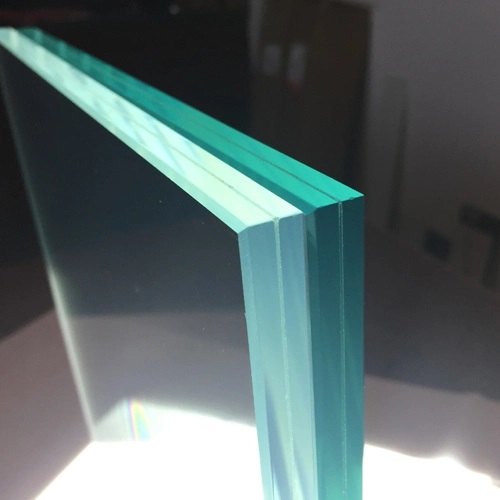
Tempered glass offers higher strength and a safer break pattern than annealed glass. Laminated glass can retain fragments after breakage. The required combination depends on overhead risk, public access, code and the greenhouse system design.
Yes. Insulated glass can reduce heat loss and improve interior surface temperature, but it is heavier, more expensive and requires appropriate frames and edge-seal design. It is generally evaluated for cold climates or tightly controlled growing environments.
Send the project location, panel schedule, glass type, thickness, dimensions, quantity, safety treatment, optical or thermal targets, marking, crate sequence, destination and required delivery date.
The best greenhouse glass is the panel package that delivers useful light, structural compatibility, thermal control, safety and maintainability for the actual crop and climate. Clear tempered glass is a strong baseline, while low-iron, anti-reflective and insulated options should be justified through measurable project needs.
Buyers should coordinate the grower, greenhouse frame supplier, structural engineer and glass fabricator before placing an order. A complete panel schedule and performance brief allows Lanjing to quote the right material, reduce cutting and packing errors, and prepare spare panels for long-term operation.