English
 日本語
日本語 한국어
한국어 français
 Deutsch
 Español
 italiano
 русский
 português
 Türkçe
 العربية

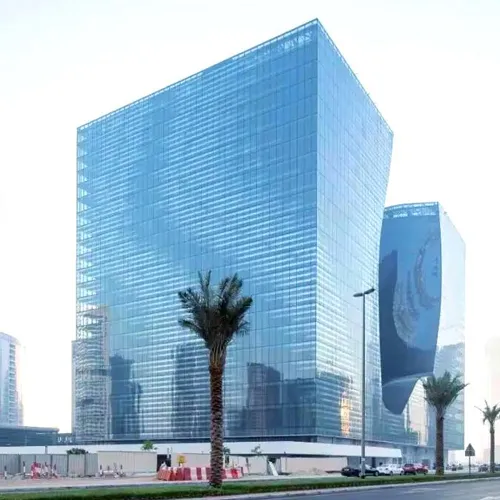
Most glazing budget overruns don't start with the wrong glass. They start with the wrong question.
The question teams ask is: "PVB or SGP?" The question they should ask is: "What are the load conditions, edge exposure, post-breakage requirements, and span dimensions—and which interlayer satisfies all of them at the lowest total project cost?"
In 2026, that distinction matters more than ever. Tighter budgets, shorter lead times, and stricter optical acceptance mean that specifying pvb laminated glass with the wrong interlayer thickness or inadequate edge detail creates delamination complaints and haze reports that erase every unit-price saving. Specifying SGP when PVB would have performed equally well wastes 20–40% of the interlayer budget.
This guide gives you the framework to choose correctly—and the specification parameters that allow pvb laminated glass suppliers to quote accurately without three rounds of back-and-forth.
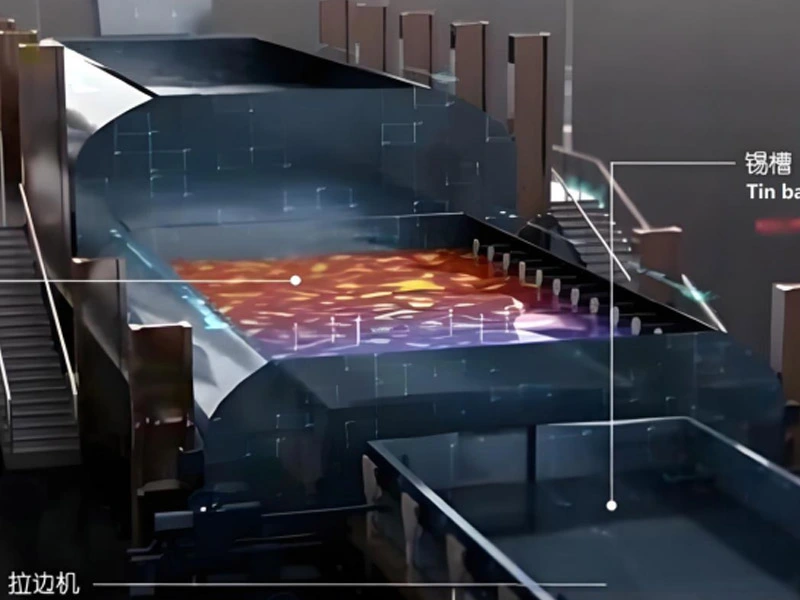
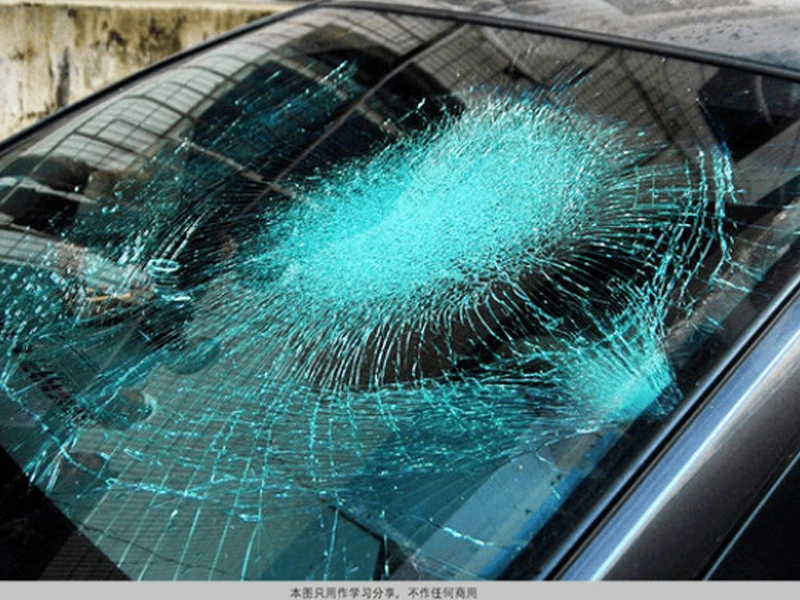
PVB laminated glass is produced by bonding two or more glass plies with a pvb film for laminated glass interlayer under heat and pressure in an autoclave. The PVB film adheres to both glass surfaces, creating a composite unit that holds glass fragments together after breakage rather than scattering them. This fragment retention is the core safety function—and it is what differentiates laminated glass from tempered glass in impact and post-breakage performance.
The same bonding mechanism that provides safety performance also delivers:
Acoustic attenuation: the viscoelastic PVB interlayer dissipates sound energy; acoustic-grade PVB with optimized damping layers provides measurable STC/Rw improvement
UV filtering: standard PVB absorbs over 99% of UV radiation below 380nm, protecting interiors and occupants
Fragment containment: in overhead, sloped, and railing applications, fragment retention after breakage is a code requirement that PVB lamination satisfies
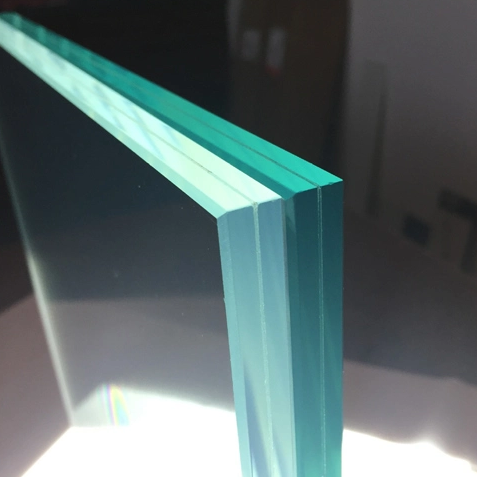
PVB film for laminated glass is globally available, processed by most laminated glass fabricators with standard equipment, and priced significantly lower than SGP (SentryGlas) interlayer at equivalent thickness. For the majority of building glass applications—vertical infill glazing, interior partitions, acoustic upgrades, and standard safety glazing—PVB provides compliant performance at the lowest total cost.
SGP interlayer is stiffer than PVB by approximately 100× at ambient temperature. This stiffness provides two specific advantages:
Structural composite action: SGP laminated glass deflects less under load for the same build-up, or can achieve the same deflection with a thinner/lighter build-up—relevant for large-span structural glazing, canopies, and floors
Edge stability in exposed conditions: PVB is moisture-sensitive at the edge—prolonged exposure to humidity without adequate edge sealing produces progressive delamination from the edge inward; SGP is more tolerant of edge exposure and high-humidity environments
| Condition | PVB | SGP |
|---|---|---|
| Standard vertical glazing, framed | Preferred | Unnecessary |
| Acoustic performance target | Acoustic PVB | No advantage |
| Large span, tight deflection limit | May require thickness increase | Enables thinner build-up |
| Edge-exposed or wet environment | Requires good edge sealing | More tolerant |
| Overhead or structural load-bearing | Evaluate post-breakage requirement | Often specified |
| Budget-constrained program | Lower cost | 20–40% premium |
Match the interlayer to load, edge exposure, and post-breakage requirement—not to brand preference or default specification.
An RFQ for pvb laminated glass that omits key parameters produces quotes that are either over-specified (paying for performance not needed) or under-specified (discovering gaps at installation). Include all of these parameters.
| Parameter | Example | What It Determines |
|---|---|---|
| Ply thickness | 6mm + 6mm / 8mm + 8mm | Structural performance, weight, cost |
| Glass heat treatment | Annealed / HS / Tempered | Strength, breakage pattern, code compliance |
| Number of plies | 2 (standard) / 3 (enhanced) | Post-breakage retention, acoustic, bullet-resistance |
| Total laminate thickness | 13.52mm (6+1.52+6) | Frame pocket depth, gasket selection |
Interlayer type: standard PVB, acoustic PVB, colored/tinted PVB, or SGP
Interlayer thickness: 0.38mm (standard minimum), 0.76mm (improved acoustic/safety), 1.52mm (enhanced post-breakage), 2.28mm+ (structural)
PVB film for laminated glass grade: confirm whether the quoted film meets the safety classification and acoustic performance required by the project specification
Haze limit: maximum percentage haze measured per EN ISO 14782 or equivalent—define numerically, not as "acceptable quality"
Distortion standard: acceptable optical distortion in reflected and transmitted light, referenced to viewing distance and lighting condition
Zone-based defect limits: vision zone (maximum scratch dimension, maximum dig dimension, maximum count per area) vs edge zone (typically relaxed where framing covers)
Edge finish: seamed, ground, or polished—each has different appearance and edge strength implications
Corner treatment: square, safety chamfer, or full radius
Holes and cutouts: position tolerances from reference edge, minimum edge distances, countersink dimensions if required
Label/orientation markings: confirm requirement for face identification marks and installation zone references
This is the most commonly omitted parameter in pvb laminated glass RFQs—and the one most responsible for delamination problems:
Edge exposure: is the glass edge framed and sealed, partially exposed, or fully exposed to weather?
Humidity and temperature: interior climate-controlled vs exterior; maximum sustained temperature in service
Sealing plan: what sealant type and width is specified at the glass edge? This determines the effective moisture barrier and directly affects delamination risk for PVB builds
Safety class: applicable standard (EN ISO 12543, ANSI Z97.1, or project-specific)
Acoustic target: STC or Rw value, if specified
UV filtering requirement: percentage UV transmission limit
Span and deflection: for structural or semi-structural applications, provide span dimensions, design load, and maximum allowable deflection
The single most effective cost-control decision in pvb laminated glass specification is using the minimum pvb film for laminated glass thickness that meets the application's safety, post-breakage, and acoustic requirements—not defaulting to a thicker interlayer "for safety."
| Interlayer Thickness | Appropriate Application | When to Avoid |
|---|---|---|
| 0.38mm | Standard safety glazing, interior partitions | Acoustic requirements, long spans |
| 0.76mm | Improved post-breakage retention, moderate acoustic | Demanding acoustic specs |
| 1.52mm | Enhanced safety, acoustic applications | Over-specified for standard infill |
| 2.28mm+ | Structural, blast, high-acoustic targets | Adds significant cost; use only where required |
Acoustic-grade pvb film for laminated glass uses a soft damping interlayer between standard PVB layers to improve sound attenuation—typically by 2–5 Rw points compared to standard PVB at the same glass build-up. This improvement is real and measurable, but it only delivers value when the project has a defined acoustic performance target. Specifying acoustic PVB on a project with no acoustic requirement pays a 15–25% interlayer premium for no measurable benefit.
Confirm whether the project specification includes an acoustic performance target before selecting acoustic PVB. If the target is defined, verify that the proposed build-up—glass thickness + interlayer type—achieves the required Rw or STC value, not just that acoustic PVB is included.
Colored and tinted pvb laminated glass requires batch-level color consistency management. PVB film color can vary between production lots from the film manufacturer. For projects with multiple panels visible simultaneously—curtain wall, display, partition—all panels should be produced from the same film lot, or color tolerance must be defined and agreed before production begins. Discovering color variation after installation is expensive to remediate.
Panels that arrive on site without clear face identification, orientation marks, and installation zone references create sorting labor and increase the risk of incorrect installation. A panel installed with the wrong face outward in a coated build-up, or in the wrong position in a numbered sequence, may require removal and reinstallation. Specify labeling requirements in the purchase order—not as a verbal request after delivery.
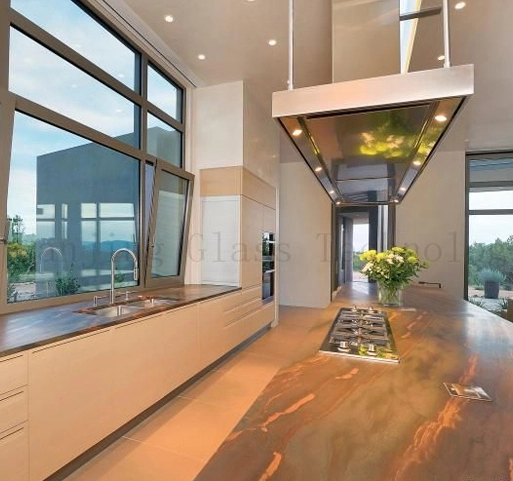
Windows and curtain wall infill Standard vertical glazing where the edge is framed and sealed, deflection requirements are met by the glass thickness, and post-breakage fragment retention is the primary safety requirement. PVB laminated glass at 6+6 or 8+8 build-up with 0.76mm interlayer covers the majority of these applications within budget.
Acoustic glazing upgrades Hotels, offices, and roadside buildings where the project specifies a minimum Rw improvement over standard double glazing. Acoustic pvb film for laminated glass in a laminated build-up provides predictable acoustic improvement with documented performance data—often the most cost-effective acoustic glass solution for these applications.
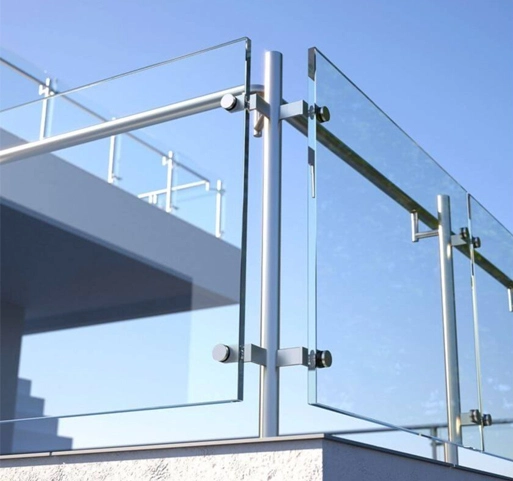
Interior partitions and balustrades Applications where the glass is fully framed or has structural edge support, post-breakage fragment containment is the primary safety requirement, and deflection under lateral load is within standard thickness tables. PVB provides compliant performance at the lowest material cost.
Large panels and long spans with deflection limits For panels with spans above 3m or projects with tight deflection limits (façade engineering requirements, high-wind zones), SGP's higher stiffness can achieve the deflection target with a thinner or lighter build-up than PVB would require. The material cost premium may be offset by reduced glass thickness and lower structural support requirements.
Edge-exposed or high-humidity environments Applications where the laminated glass edge will be exposed to weather, condensation, or elevated humidity without effective edge sealing. Swimming pools, wet areas, external canopies, and glass floors in outdoor environments are typical cases where SGP's edge stability reduces delamination risk significantly compared to standard PVB.
Post-breakage load retention requirements Overhead glazing, structural glass floors, and glass elements required to retain load-bearing capacity after breakage of one ply benefit from SGP's stronger adhesion and higher residual stiffness in the broken state. For these applications, the SGP premium is justified by the safety case and may be required by the project's structural engineer.
Step 1: Define application and structural role Is the glass infill (load carried by frame) or structural (glass carries load)? Infill glazing almost always points to PVB; structural applications require deflection and post-breakage analysis to confirm interlayer selection.
Step 2: Confirm size, span, load, and edge exposure These four parameters together determine whether PVB is adequate or whether SGP's higher stiffness and edge stability are required. Run the deflection calculation before specifying interlayer—not after.
Step 3: Choose interlayer and lock build-up Select pvb film for laminated glass type and thickness based on confirmed requirements. Lock the complete build-up: ply thicknesses, heat treatment, interlayer type and thickness, and any coating or tint specification.
Step 4: First-article approval with measurement report Before releasing full production, require a first-article sample with dimensional measurements, laminate thickness verification, haze measurement, and visual inspection under defined conditions. Retain the approved sample for ongoing production comparison.
| Risk | Root Cause | Prevention |
|---|---|---|
| Delamination complaints | Edge exposure without adequate sealing + standard PVB | Define edge exposure conditions in RFQ; specify SGP or improve sealing where required |
| Optical rejection (haze) | Contamination during lamination, moisture exposure | Require haze limit in specification; request batch measurement records |
| Fit issues at installation | Tolerance not specified; panels not labeled | Define dimensional tolerances; specify orientation marks in PO |
| Color variation across panels | Multiple PVB film lots in one order | Require single-lot supply for all panels visible simultaneously |
| Acoustic target not achieved | Acoustic PVB specified without build-up verification | Confirm Rw or STC value achievable with the proposed build-up before ordering |
The most expensive pvb laminated glass project outcome is a remake—returning panels that fail optical acceptance or a delamination complaint that requires panel replacement after installation. Both are preventable with a complete specification and a first-article approval process.
In 2026, the right choice between pvb laminated glass and SGP is rarely obvious from product descriptions—it comes from matching the interlayer to the actual load conditions, edge exposure, post-breakage requirements, and budget constraints of the specific project.
For the majority of safety and acoustic glazing applications, pvb laminated glass is the cost-efficient, proven choice. SGP should be reserved for designs that genuinely require higher stiffness or tougher edge conditions—not applied as a default upgrade that adds cost without adding necessary performance.
The fastest path to the correct recommendation is a complete RFQ: build-up, edge exposure, span and load, optical requirements, and quantity. Submit those parameters and the right interlayer specification follows directly from the technical requirements rather than from guesswork.
Visit the product page and submit your operating conditions, quantity, size or specifications, target performance indicators, and current problems to receive a matched build-up recommendation and pricing:
View PVB laminated glass options and request a quote
Q1: What is PVB laminated glass?
PVB laminated glass is a safety glass product made by bonding two or more glass plies with a polyvinyl butyral (PVB) interlayer under heat and pressure. After breakage, the PVB interlayer holds glass fragments together, maintaining a barrier and reducing injury risk from scattered glass. It also provides UV filtering (over 99% of UV below 380nm), and acoustic-grade versions offer measurable sound attenuation. It is the most widely used laminated glass construction for building applications, transportation glazing, and interior partitions.
Q2: PVB film for laminated glass vs SGP—what's the practical difference?
PVB film for laminated glass is cost-effective, widely available, and performs well in framed applications with controlled edge exposure. SGP (SentryGlas) interlayer is approximately 100× stiffer than PVB at ambient temperature, which provides structural composite action in large-span or load-bearing applications and stronger edge stability in exposed or high-humidity environments. For most standard vertical glazing, acoustic, and safety applications, PVB is the appropriate and more economical choice. SGP is justified when the structural analysis requires higher stiffness, post-breakage load retention is critical, or edge exposure conditions exceed what adequate PVB edge sealing can reliably manage.
Q3: How do I estimate ROI or payback for upgrading from PVB to SGP?
The ROI case for upgrading to SGP from pvb laminated glass should be evaluated against specific project conditions: if SGP enables a thinner glass build-up that reduces structural support requirements, the material cost savings elsewhere may offset the interlayer premium; if SGP prevents a redesign triggered by deflection non-compliance at the structural review stage, the avoided rework cost typically exceeds the interlayer cost difference; and if SGP's edge stability reduces the probability of delamination replacement in an exposed application, the reduced lifecycle maintenance cost supports the upgrade. For standard infill glazing in a controlled environment, the SGP premium rarely has a positive ROI case.
Q4: Do we need to modify frames or installation details when switching interlayers?
Switching between pvb laminated glass and SGP at the same glass build-up typically does not change the total laminate thickness—so frame pocket dimensions remain the same. However, several details should be confirmed: gasket selection may need review if the total laminate thickness changes due to a different glass thickness combination; edge sealing specification is particularly important for PVB builds in exposed conditions (inadequate sealing is the primary delamination driver); and tolerance stack-up should be verified if the project switches from PVB to a thicker SGP interlayer at the same nominal build-up designation.
Q5: What parameters should I provide for selection and quoting of PVB laminated glass?
To receive an accurate build-up recommendation and quotation for pvb laminated glass, provide: application type (façade infill, partition, overhead, railing, structural); glass sizes and spans; glass heat treatment requirement (annealed, heat-strengthened, or tempered); required build-up or ply thickness range; PVB or SGP preference if already determined; edge exposure and sealing plan; optical and cosmetic acceptance criteria (haze limit, defect zone standards); holes and cutouts drawings with position tolerances; coating, tint, or frit requirements; acoustic performance target if applicable; quantity and delivery timeline; and current problems with existing supply (delamination, haze complaints, color variation, distortion, or budget overrun).