English
 日本語
日本語 한국어
한국어 français
 Deutsch
 Español
 italiano
 русский
 português
 Türkçe
 العربية
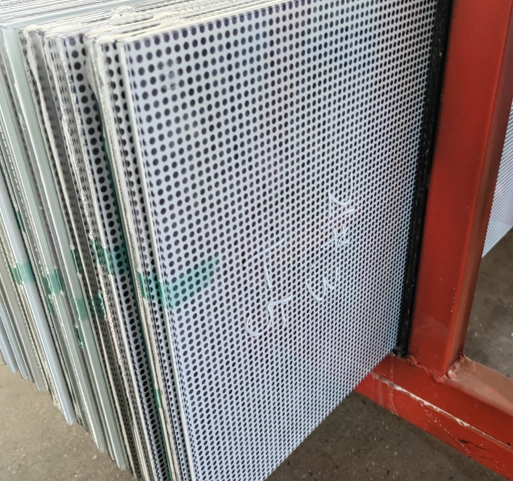
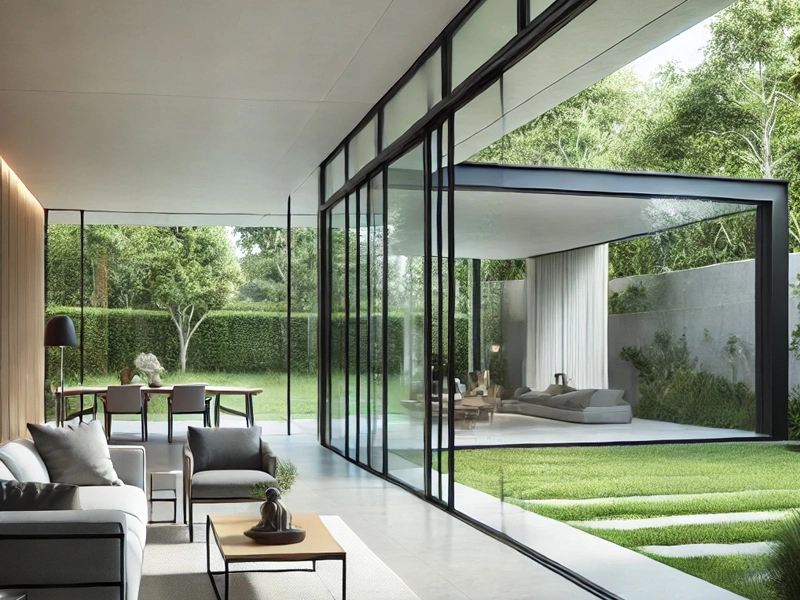

The glass arrives. The installation crew is on site. The frame is ready.
Then someone holds a radius template against the first panel and the gap is 8mm. The second panel has a chip at the corner. The third has optical distortion visible from three meters. The crate labels say "Panel A" on four panels that are not the same size.
This is not a hypothetical. It is the scenario that plays out on curved glass projects when the RFQ specified thickness and radius but left tolerance, inspection method, and acceptance criteria undefined. In 2026, with tighter project schedules and higher visual quality expectations across architectural, retail, and transportation applications, this gap between "glass ordered" and "glass that installs" is where project budgets get destroyed.
The answer is not finding a better curved glass fabricators by luck. It is specifying measurable tolerances, defining inspection methods, and building an acceptance workflow before the order is placed. This guide shows you exactly how.
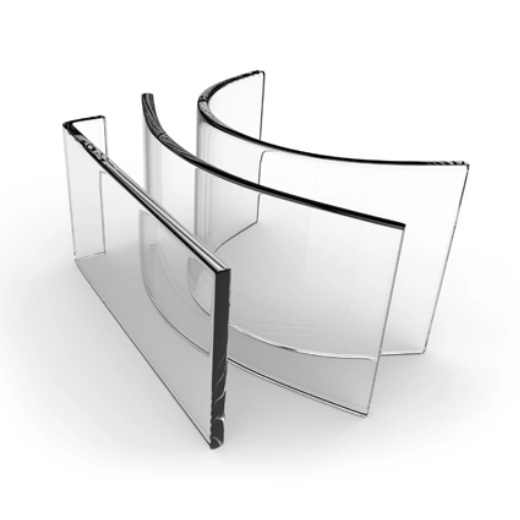
Understanding the forming process is the fastest way to understand which specifications matter most and why process capability questions belong in your supplier evaluation.
Gravity bending The glass sheet is placed on a mold and heated in a furnace. Gravity causes the glass to sag into the mold profile. This method produces gentle curves and is cost-effective for large-radius architectural applications. Mold accuracy and surface condition directly determine radius repeatability—a worn or inaccurate mold produces radius drift across a production batch.
Press bending Male and female molds press the heated glass into the required profile under controlled force. Produces tighter radii and more consistent curvature than gravity bending. Used for transportation and complex architectural profiles. Tooling cost is higher, but dimensional repeatability is better.
Hot-bent (roller bending) Glass is bent over a series of heated rollers or forms. Suitable for cylindrical curves and long-radius applications. Roller condition and spacing affect waviness—irregular roller surfaces create optical distortion that is visible in reflected images.
After forming, glass is typically tempered (thermal or chemical), heat-strengthened, or assembled into laminated builds. Each subsequent process step can introduce additional dimensional variation if not controlled.
Mold accuracy and wear A mold that has processed several hundred panels without reconditioning develops surface wear that introduces radius drift and local waviness. Buyers should ask curved glass fabricators how mold condition is monitored and at what interval molds are reconditioned or replaced.
Uneven heating and cooling Thermal gradients during the bending cycle produce differential forming across the panel. In tempered curved glass, uneven quench also produces optical anisotropy—the iridescent stress pattern visible in polarized light. This is a characteristic of tempered glass, but its intensity varies with process control quality.
Edge processing after bending Grinding, polishing, drilling, and cutting operations on curved glass introduce mechanical stress at the edge. On tempered glass, edge damage that extends into the compression layer can cause spontaneous breakage. Edge processing quality is directly related to the tooling condition and operator practice at the fabricator.
A drawing with nominal dimensions but no tolerance callouts is not a specification—it is an invitation for the fabricator to apply their own internal standards, which may not match your installation requirements. Define all of these before issuing an RFQ to curved glass fabricators.
| Parameter | What to Define | Measurement Method |
|---|---|---|
| Nominal radius (R) | Target radius ± tolerance | Radius template or 3D scan |
| Arc length and chord length | Nominal + bilateral tolerance | Steel tape or 3D measurement |
| Overall size | Height × width ± tolerance | Diagonal measurement confirms squareness |
| Bow and warp | Maximum deviation from nominal surface | Surface gauge at defined measurement grid |
| Edge lift | Maximum lift at corners vs central plane | Reference surface + gap gauge |
| Twist | Maximum diagonal difference | Defined measurement points at corners |
Specify the measurement method alongside the tolerance—a tolerance without a defined measurement method cannot be consistently enforced.
Distortion limits: define the maximum acceptable distortion in reflected images, referenced to viewing distance and lighting condition (daylight vs artificial, direct vs oblique)
Zone-based defect limits: vision-critical zones (center of panel, eye-level in architectural applications) should have stricter acceptance criteria than edge zones that will be covered by framing
Acceptable defect types: scratches, digs, inclusions, bubbles—define by maximum dimension and maximum count per defined area, not by subjective description
Edge finish specification: seamed (OGS), ground, or polished—each produces a different appearance and edge strength profile
Chamfer dimensions: specify width and angle where chamfering is required
Hole positions and tolerances: ± tolerance from reference edge, not from nominal center
Edge distance minimums: minimum distance from hole center to panel edge (critical for tempered glass to prevent edge breakage)
Countersink depth and diameter: specify if countersinks are required for flush hardware
Tempering specification: fully tempered to applicable standard (EN 12150, ASTM C1048, or equivalent)
Laminate build: glass thicknesses, interlayer type (PVB, SGP, EVA), interlayer thickness, allowable laminate offset
Coating requirements: Low-E coating position (surface 2/3/4), AR coating, frit pattern, tint—specify coating type, position, and performance requirement
Packaging failures are a major source of curved glass damage in transit. Specify:
Separator material between panels (foam, felt, or silicone pads—not paper that can trap moisture)
Crate design: A-frame vs horizontal, maximum stack height, edge protection
Panel labeling: part ID, orientation (top/bottom, inside/outside face), revision level, and installation zone reference
Shipping orientation: upright vs flat for the radius and panel size combination
Inspection is not a supplier responsibility that buyers can assume is being performed correctly. For curved glass orders where site rework is expensive, the inspection plan should be defined by the buyer, confirmed with the fabricator, and verified before crating.
Radius verification The most critical dimension on any curved glass panel is the radius. Verification options:
Radius template: a physical template cut to the nominal radius profile. Gap between template and glass surface measured at multiple points across the panel width and length. Simple and fast for production checking; requires a well-made template for each radius.
3D scanning: portable 3D scanner produces a point cloud of the panel surface; software compares actual surface to nominal CAD model. More accurate than templates for complex profiles; requires equipment and software.
Theodolite or laser measurement: used for large architectural panels where hand tools are impractical.
Require the fabricator to provide radius measurement records per batch—not just a single sample measurement for the order.
Overall dimensions and diagonal check Measure height, width, and diagonal at the panel's reference edges. Diagonal measurement confirms squareness—a panel that is correct in height and width but has a twisted or skewed geometry will not fit the frame correctly.
Laminate alignment For laminated builds, measure the offset between the two glass plies at all four edges. Excessive offset at the visible edge is a cosmetic defect; excessive offset at the framing edge can compromise the structural performance of the laminate.
Backlit inspection: position the panel in front of a uniform light source and inspect for inclusions, bubbles, scratches, and distortion from the front face. Define the minimum light level and uniformity requirement.
Reflected image check: inspect the panel in reflected light (fluorescent tube reflection or structured pattern) at the specified viewing distance. Distortion that deforms the reflected image is more visible in this condition than in transmitted light and is the most relevant check for architectural applications.
Orientation matters: inspect the panel in its installed orientation—vertical panels viewed at distance may pass when inspected horizontally on a rack but show distortion in use.
Chip inspection at all edges and corners: use a defined maximum chip dimension and count limit, not subjective judgment
Micro-crack screening after tempering: inspection under strong raking light or with dye penetrant for edge-adjacent micro-cracks that can initiate breakage
Coating uniformity: visual inspection under defined lighting for streaks, thin spots, and coating damage; abrasion resistance check if the coating will be exposed to cleaning during installation
QC inspection records: actual measurements (not just pass/fail) for radius, overall dimensions, and defect counts
Tempering traceability: furnace batch number, processing parameters, and test fragmentation record
Lamination traceability: interlayer lot number and processing record for laminated builds
Packing list mapped to part IDs: every panel identified and confirmed against the order before crating
For high-value orders or programs where site rework costs are significant, a third-party pre-shipment inspection confirms curvature, dimensions, optical quality, and packing before the crates are sealed and exported. The cost of a pre-shipment inspection is typically recovered by preventing a single panel rejection at the installation site.
Fit-up tolerance in a curtain wall or skylight frame is the tightest in any curved glass application. Panels that are 5–8mm out of radius tolerance require forced-fit installation that stresses both the glass and the framing system, or field modification that introduces breakage risk. Optical quality in daylight—visible distortion in reflected sky and building imagery—is immediately apparent to building occupants and cannot be corrected after installation. First-article approval with full measurement report before production commitment is essential for this application.
Cosmetic defect control in retail and museum display curved glass must be defined at the zone level: the central vision zone of a display case has zero tolerance for visible scratches, digs, or optical distortion; the edge zone covered by framing has relaxed acceptance criteria. Without zone-based acceptance criteria, fabricators apply a single standard across the panel that may either reject acceptable panels or accept panels with defects in the vision zone.
Hole and cutout accuracy in curved glass for transportation applications is critical because hardware mounting points must align with fixed structures. A hole that is 3mm from its specified position prevents hardware installation without modification. Laminated safety builds for these applications require interlayer traceability documentation for compliance purposes. Vibration exposure requires confirmation that all edges are free of micro-cracks that could initiate fatigue breakage.
Schedule-driven hospitality installations have no tolerance for field rework. A panel that arrives damaged, out of tolerance, or incorrectly labeled creates a delay that cascades through the entire fit-out schedule. Correct crate labeling with installation zone references and orientation marks allows the installation crew to work directly from the crate without additional sorting or measurement—which is where fit-up problems are typically discovered in poorly managed deliveries.
The tolerance stack-up between the curved glass panel, the gasket, and the frame determines whether the specified glass tolerance will produce a reliable installation. Calculate the full stack-up before finalizing the glass tolerance specification:
Glass radius tolerance: ± how much can the radius vary before the gasket compression is insufficient or excessive?
Gasket compression range: what compression range does the gasket accommodate?
Frame tolerance: what is the frame's fabrication tolerance at the glass pocket?
If the stack-up analysis shows that the glass tolerance needs to be tighter than the fabricator can reliably achieve, the solution may be a more accommodating gasket design rather than a tighter glass spec—which may be unachievable at acceptable yield.
First-article approval (FAA) Before releasing the production order, require a first-article sample with a full measurement report covering radius at multiple locations, overall dimensions, edge quality, hole positions, laminate offset, and optical inspection results. Retain a physical golden sample at both your facility and the fabricator for ongoing production comparison.
Pilot batch before full production For complex programs with tight tolerances or large quantities, a pilot batch of 10–20 panels allows process capability to be confirmed before full production commitment. Yield from the pilot batch is the best predictor of production yield.
| TCO Factor | High Process-Control Fabricator | Low Process-Control Fabricator |
|---|---|---|
| Production yield (panels per order) | High—fewer remakes | Lower—more remakes add lead time and cost |
| Installation labor | Lower—consistent fit reduces adjustment | Higher—out-of-tolerance panels require modification |
| Damage rate | Lower—defined crating and edge protection | Higher—transit damage from inadequate packaging |
| Rework at site | Rare—tolerances confirmed before shipping | Common—fit issues discovered at installation |
| Documentation for compliance | Complete—available on request | Incomplete—traceability gaps |
The unit price difference between a well-controlled and a poorly-controlled curved glass fabricators is typically 10–20%. The cost difference when remakes, installation rework, and schedule delays are included often exceeds 50% of the original order value.
Sourcing curved glass from China is cost-effective in 2026—but only when the RFQ includes measurable tolerances, defined inspection methods, and packaging standards that protect installation yield from factory to site. The best curved glass fabricators make quality predictable through documented curvature measurement, repeatable process control, and batch traceability that supports first-article approval and production confidence.
The specification work happens before the order is placed. Define the tolerances, confirm the inspection plan, require the documentation, and validate with a first-article before committing to full production—and the gap between "glass ordered" and "glass that installs" largely disappears from the project risk register.
Visit the product page and submit your operating conditions, quantity, key specs, target metrics, and current problems to receive a recommended build, tolerance plan, and pricing:
View curved glass options and request a quote
Q1: What is curved glass?
Curved glass is glass that has been thermally formed into a specified radius or curve through gravity bending, press bending, or roller bending processes. After forming, it is typically tempered, heat-strengthened, or assembled into laminated builds depending on the safety and performance requirements of the application. It is used in architectural facades, skylights, retail displays, transportation interiors, marine applications, and industrial equipment covers where a continuous curved profile is required for aesthetic, structural, or functional reasons.
Q2: Curved glass vs flat glass with segmented panels—what's the tradeoff?
Curved glass provides a continuous aesthetic surface with no visible joints, fewer framing elements, and in some designs reduced leak paths compared to segmented flat panels. It requires tighter process control and inspection, has higher unit cost, and longer lead time for custom profiles. Segmented flat panels are typically lower cost and easier to replace if damaged, but introduce visible joints, additional framing complexity, and potential seal points at each joint. The decision depends on aesthetic requirements, structural design, budget, and the replacement strategy if a panel is damaged in service.
Q3: How do I evaluate ROI or payback for using curved glass in a project?
The ROI case for curved glass versus flat segmented alternatives is built on four factors: design value (aesthetic and brand impact of a seamless curved surface, which may command premium pricing in retail or hospitality applications); structural efficiency (curved panels can eliminate framing elements and reduce the total system weight and cost); performance (fewer joints reduce leak paths in weather-exposed applications); and installation labor (fewer panels to handle and fewer joints to seal, when the panel count is reduced by using larger curved units). The payback calculation must include the higher unit cost of curved glass against these system-level savings.
Q4: Do we need to modify our frame or gasket system for curved glass?
In most cases, yes—at minimum, a tolerance stack-up review is required to confirm that the frame's glass pocket geometry, gasket compression range, and glass radius tolerance are compatible. Frames designed for flat glass with tight pocket tolerances may not accommodate the radius variation of curved glass without modification. Gasket selection must account for the curved panel's contact geometry, which differs from flat glass compression behavior. Early coordination between the glass specification and the frame system design—before either is finalized—is the most cost-effective approach to ensuring a reliable installation.
Q5: What information should I provide to get an accurate quote and tolerance proposal from curved glass fabricators?
To receive an accurate quotation and tolerance plan from curved glass fabricators, provide: glass type and nominal thickness; nominal radius (R) and allowable tolerance; overall dimensions (height × width); quantity and delivery schedule; tempering or lamination requirement (build-up specification); edgework requirements (seamed, ground, polished) and chamfer dimensions; hole and cutout drawings with position tolerances and edge distances; coating requirements (type, position, performance specification); optical and cosmetic acceptance criteria (zone-based defect limits and viewing distance); installation orientation; packaging requirements; and current problems with existing supply (radius drift, optical distortion, chip damage, delivery damage, or labeling errors).