English
 日本語
日本語 한국어
한국어 français
 Deutsch
 Español
 italiano
 русский
 português
 Türkçe
 العربية
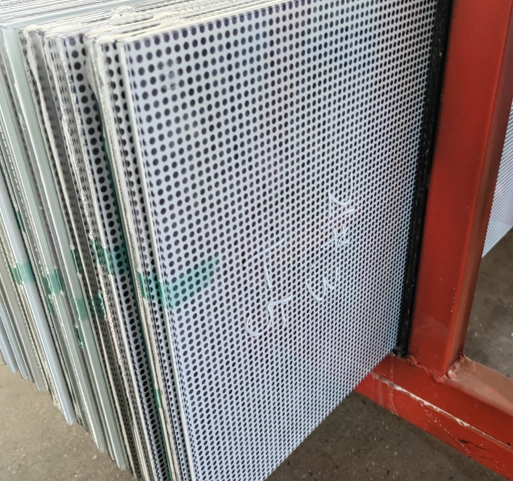
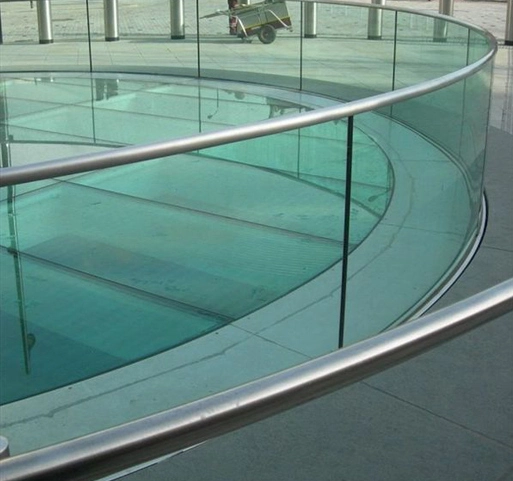


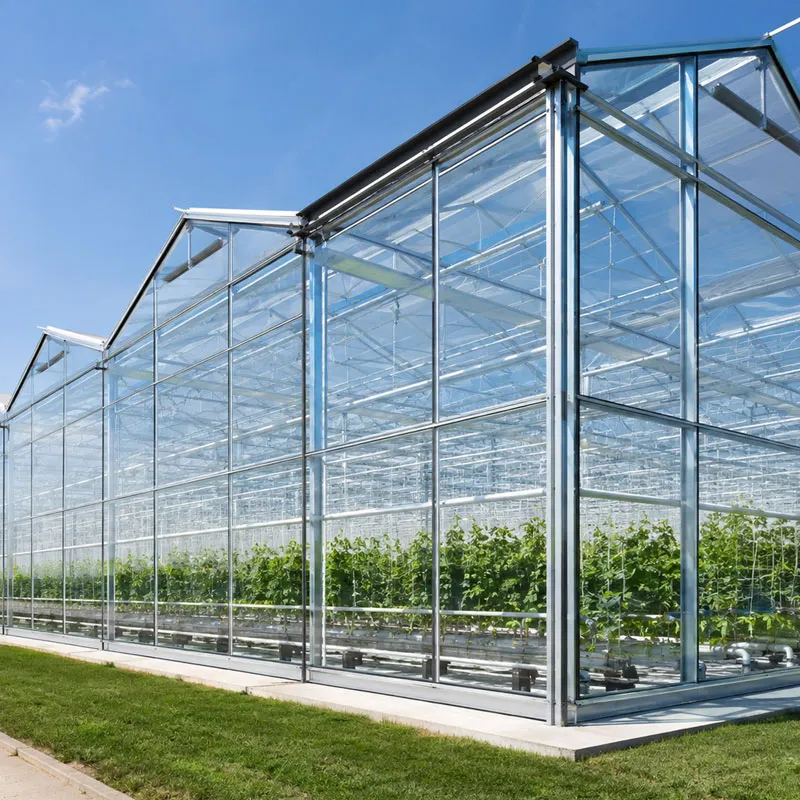
Specifying louver glass for high-rise façades, ventilation shafts, stairwells, and plant rooms is not just a design decision — it is a compliance and liability decision. The choice between tempered and annealed glass affects wind-load performance, breakage behavior, and whether your glass louvre panels will pass inspection under different international codes. This guide breaks down the safety differences, what major standards expect, and the compliance risks contractors need to manage before blades go into the frame.
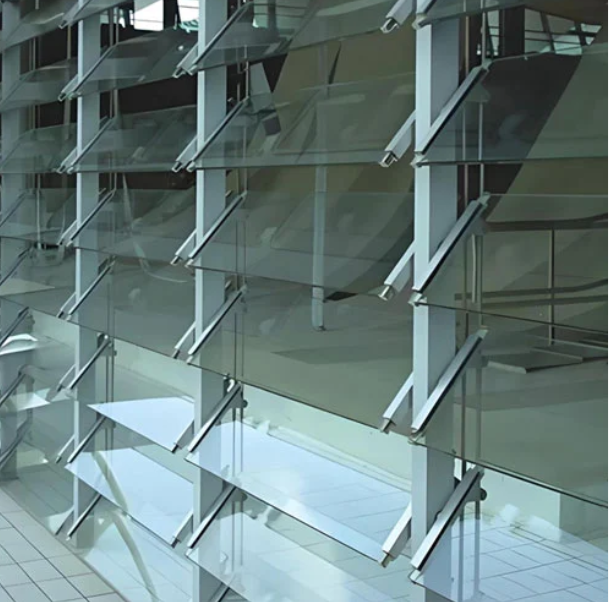
The fundamental difference between tempered and annealed louver glass is not just strength — it is the entire risk profile of the blade from installation through service life.
Key Comparison for Specifiers
| Factor | Tempered Louver Glass | Annealed Louver Glass |
|---|---|---|
| Safety classification | Safety glass — meets impact performance criteria | Standard float glass — not classified as safety glazing |
| Wind pressure resistance | Higher load resistance due to pre-stress | Lower resistance; more vulnerable to wind pressure peaks |
| Thermal stress tolerance | High — handles sun/shade temperature differential on tower elevations | Lower — vulnerable to thermal stress cracking on east/west facades |
| Breakage pattern | Small granules — reduces laceration risk | Large shards — higher injury risk |
| Typical application | Exposed façade, stairwells, high-level ventilation, occupied zones | Protected low-level applications, internal screens, low-risk locations |
When Tempered Is the Required Specification
On high-rise towers, tempered louver glass is typically the only acceptable option in locations where:
Wind loads exceed the capacity of annealed glass at the specified thickness
Thermal differentials across the blade exceed safe limits for float glass
The application falls within a "safety glazing zone" as defined by the governing code
Falling glass risk to occupied areas or public access zones exists below
Where annealed may be acceptable — typically internal, protected, low-level, or non-occupied service zones — the façade engineer and authority having jurisdiction (AHJ) make the final determination, not the supplier.
Breakage mode is the specification variable that most directly affects safety outcomes and contractor liability. For glass louvre panels at height, this is not a theoretical concern.
Breakage Pattern Comparison
| Glass Type | Break Pattern | Fragment Size | Injury Risk | Containment Need |
|---|---|---|---|---|
| Tempered | Shatters into small granules across full panel | 1–5 mm granules | Low laceration risk | Granules may still fall at height — containment screens or framing considered |
| Annealed | Cracks into large, irregular shards | Potentially large sharp pieces | High laceration and penetration risk | Shards can travel significant distances from height |
Why This Matters for High-Rise Projects
A louver blade at level 20 that fails under wind load or impact does not behave like a ground-level glazing failure. The falling-glass hazard from annealed louvre blades at height is one of the primary reasons building codes in most developed markets require safety glazing in exposed high-rise locations.
For contractors, the consequences of specifying annealed glass where tempered is required include:
Inspection rejection requiring full blade replacement before certificate of occupancy
Schedule delay during replacement procurement and installation
Potential liability exposure if a post-installation incident occurs and non-compliant glazing is identified
In some applications where even tempered granule fall presents a risk — high-traffic podium levels, covered walkways — laminated tempered glass or mesh-backed panels may be specified as an additional containment measure. This is a façade engineering decision, not a standard default.
No single global standard governs louver glass. The applicable standard set depends on the project country, the authority having jurisdiction, and the façade consultant's specification. Understanding the three most commonly referenced frameworks reduces compliance surprises.
Standards Reference Table
| Standard | Region | What It Covers | Practical Implication |
|---|---|---|---|
| AS/NZS 2208 | Australia / New Zealand | Safety glazing materials — impact performance classification and testing concepts | Tempered glass must meet defined safety classification; relevant for AU/NZ high-rise projects |
| ASTM C1048 | United States | Heat-treated flat glass specification — fully tempered and heat-strengthened | Defines mechanical properties and dimensional tolerances; referenced in U.S. building specifications |
| EN 12150 / CE marking | European Union | Toughened safety glass requirements and CE marking pathway under EU Construction Products Regulation | EN 12150-2 is the harmonized standard for CE marking; required for products placed on EU market |
Key Compliance Considerations by Market
For AU/NZ projects: confirm the glass meets AS/NZS 2208 safety glazing classification and that the supplier can provide documentation aligned to this standard.
For U.S. projects: ASTM C1048 governs the glass product specification; local building codes (IBC, state amendments) determine where safety glazing is required in the building.
For EU and UK projects: CE marking under EN 12150-2 is the expected compliance pathway for tempered safety glass placed on the European market. Post-Brexit UK projects may reference UKCA marking, though EN 12150 remains the technical reference.
For other markets: many Middle Eastern, Southeast Asian, and African projects reference one of the above standard sets, or local equivalents derived from them. Confirm with the façade consultant which standard governs before issuing a specification.
One practical note for sellers and contractors: writing "compliant with EN 12150" or "tempered to ASTM C1048" on a specification or order without confirming the supplier's supporting documentation is the most common source of inspection disputes. Standard reference on a PO is not the same as documented compliance.
Edge quality on louver glass blades receives less attention than glass type in most specifications — and causes a disproportionate share of site rejections and handling incidents.
Why Edge Quality Matters for Louvre Blades
Louver glass blades are handled differently from standard flat glass panels. They are installed individually into clip or channel systems, rotated during commissioning, and sometimes adjusted during maintenance. Unpolished or poorly arrissed edges present three distinct risks:
Handling injury during installation — chips and sharp edges on unpolished blades are a site safety hazard
Edge chips that create stress concentrations — particularly in tempered glass, where edge damage can initiate spontaneous breakage
Clip and channel damage — sharp or irregular edges cause premature wear on the support hardware
Edgework Options and When to Specify Each
| Edge Finish | Description | When to Specify |
|---|---|---|
| Arrissed / seamed | Light chamfer to remove sharp wire edge | Internal, protected, low-handling applications |
| Flat ground | Smooth flat edge, no bevel | Standard specification for most louvre blades |
| Polished | Fully smooth, reflective edge finish | Exposed edges, visible installations, high-handling environments |
| Beveled | Angled profile ground into edge | Architectural feature applications |
For exposed glass louvre panels — particularly in high-rise façade and stairwell applications — polished edges are the standard recommendation. The reasons are practical:
EN 12150 references edgework categories and notes that conditions may differ depending on edge treatment — polished edges are generally the safest choice for compliance purposes and reduce the likelihood of edge-initiated breakage in tempered blades.
Projects that specify "polished edges" in the PO reduce site rejection risk, improve clip/channel longevity, and eliminate the most common handling-related damage claims during installation.
What to Define in the Purchase Order
| Specification Field | What to State |
|---|---|
| Edge finish type | Polished / flat ground / arrissed — specify per edge |
| Corner treatment | Safety corner (blunted) vs square — confirm for exposed corners |
| Allowable edge defects | Maximum chip size (e.g., no chip exceeding 2 mm) |
| Inspection basis | Edge condition verified at despatch; photos provided |
For contractors managing façade schedules, the worst outcome is not a supplier error — it is a supplier error discovered at inspection when the replacement lead time threatens the handover date. Documentation prevents this.
What Contractors Fear Most
Non-compliance claim from building inspector or façade consultant
Replacement procurement delay when non-conforming glass is already installed
Liability exposure if an incident occurs and glazing specification is subsequently questioned
Documentation Package Checklist
| Document | Purpose | What to Confirm |
|---|---|---|
| Material specification sheet | Confirms glass type, thickness, and size tolerance | Tempered or annealed clearly stated; thickness tolerance to standard |
| Edgework statement | Confirms edge finish type on all four edges | Polished / flat ground / arrissed stated per edge; corner treatment confirmed |
| Compliance marking information | Demonstrates safety glass identification per applicable standard | EN 12150 marking practices, ASTM C1048 reference, or AS/NZS 2208 classification as applicable |
| Inspection photos | Visual evidence of edge condition and surface quality at despatch | One photo per bundle minimum; edge detail visible |
| Dimensional inspection record | Confirms blade size within tolerance | Length, width, and thickness checked per order |
| Packing specification | Confirms edge protection and separation for transit | Edge foam or cardboard interleaving; crate design for blade length |
Export Packing Requirements for Louvre Blades
Louver glass blades are vulnerable to edge chipping and surface abrasion during ocean freight due to their narrow, long format and high surface-area-to-thickness ratio.
| Packing Element | Specification |
|---|---|
| Edge protection | Foam or card tape on all four edges before bundling |
| Blade separation | Paper or foam interleave between every blade |
| Bundle wrapping | Stretch wrap or strapping to prevent blade movement |
| Crate design | Blade length supported along full length; no unsupported overhang |
| Moisture protection | Silica gel for ocean freight; sealed crate for humid climates |
| Handling labels | Fragile, This Side Up, and blade orientation clearly marked |
For high-rise projects, selecting the right louver glass is as much about managing safety and inspection outcomes as it is about ventilation and aesthetics. Aligning tempered or annealed selection with wind-load requirements, breakage risk, and the governing standard for your project market — while specifying polished edges for exposed glass louvre panels — reduces rejection risk and keeps façade schedules on track.
Q1: What is louver glass used for in high-rise buildings?
Common applications include façade ventilation blades, stairwell and plant room screening, sun shading, and airflow control where both weather protection and visibility are needed. In high-rise construction, glass louvre panels are also used for aesthetic façade articulation and natural ventilation system integration.
Q2: Is tempered louver glass always required for towers?
Not in every location, but it is frequently specified in exposed, occupied, or high-risk zones due to safety glazing requirements and wind-load performance needs. The façade engineer and authority having jurisdiction determine the requirement based on the governing building code and the specific location within the building.
Q3: Why do polished edges matter for glass louvre panels?
Polished edges reduce handling injury risk during installation, minimize edge chips that can initiate breakage in tempered glass, and improve longevity of the clip and channel hardware. For exposed applications, polished edges also reduce site rejection risk and are the standard recommendation under most façade specifications.
Q4: Which standards are most commonly referenced for tempered louver glass in global projects?
The three most commonly referenced are AS/NZS 2208 for Australia and New Zealand projects, ASTM C1048 for U.S. building specifications, and EN 12150 with CE marking for EU and EU-aligned markets. Many Middle Eastern and Southeast Asian projects reference one of these sets or a local equivalent derived from them.
Q5: What documentation should a supplier provide to confirm louver glass compliance?
A complete documentation package should include a material specification sheet confirming glass type and thickness, an edgework statement describing the finish on all edges, compliance marking information aligned to the applicable standard, inspection photographs at despatch, dimensional inspection records, and packing specification confirming edge and surface protection for transit.