English
 日本語
日本語 한국어
한국어 français
 Deutsch
 Español
 italiano
 русский
 português
 Türkçe
 العربية
Amidst the hustle and bustle of Dubai, a uniquely crafted building stands out - The Opus, designed by Zaha Hadid Architects. The use of its glass curtain wall combines rigidity and flexibility, not only showcasing the dynamic beauty of the building, but also complementing the surrounding modern urban landscape, jointly interpreting the chapter of urban prosperity.
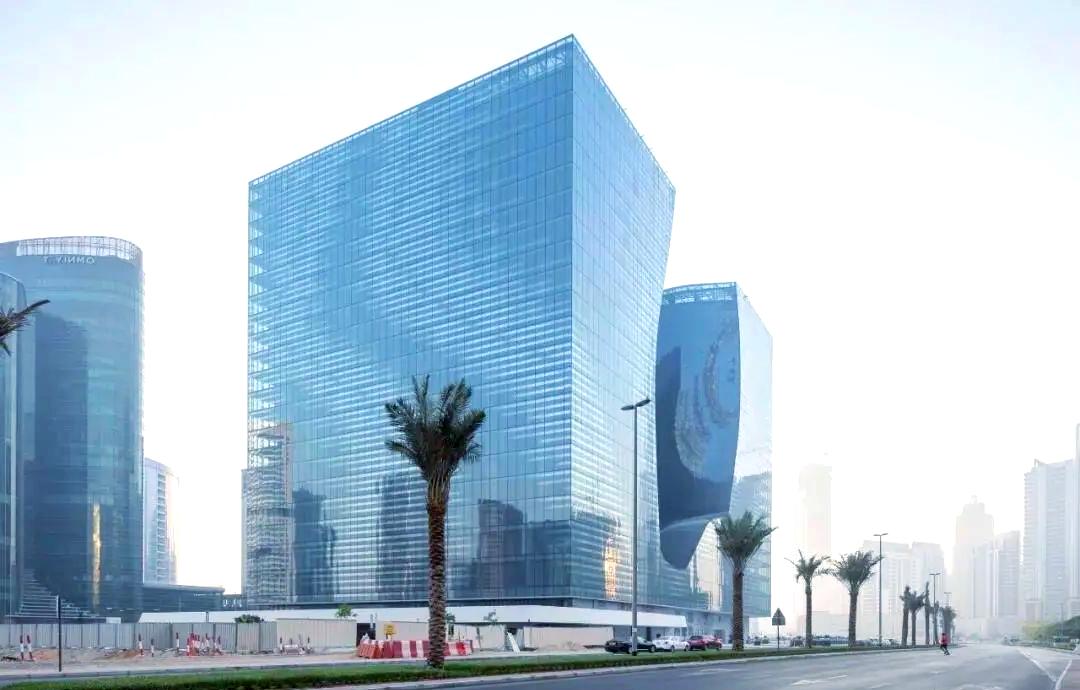
The Opus by Zaha Hadid Architects in Dubai
The hollow facade of The Opus is carefully composed of 4300 single-sided and double-sided curved glass panels, with a total area of 6000 square meters, creating a stunning glass curtain wall interior. These panels are made of 8mm Low-E glass with a window spacing of 16mm, and incorporate two layers of 6mm transparent glass and 1.52mm PVB resin laminate technology. It is worth mentioning that each panel is cleverly equipped with LED lights, achieving innovative design of dynamic lighting.

The hollow side of the Opus in Dubai.
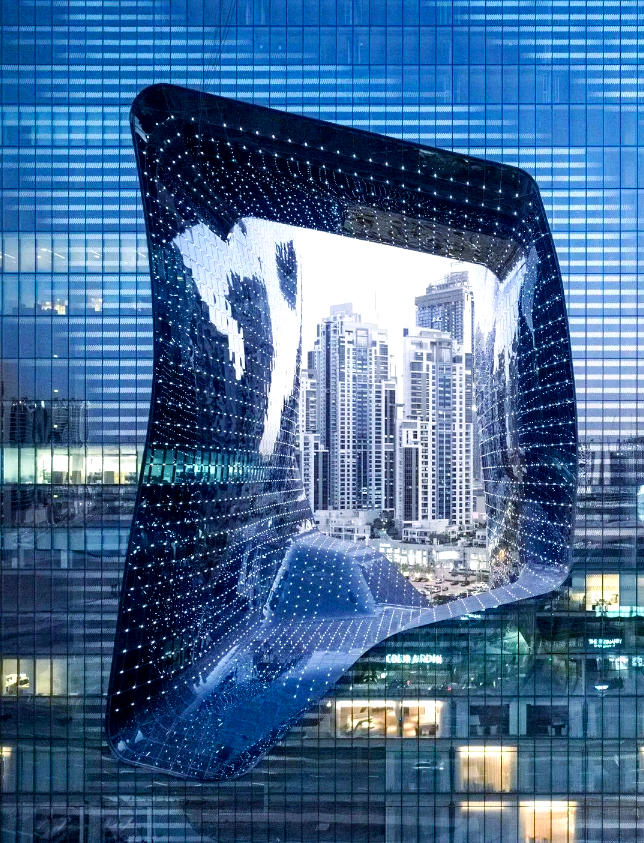
The hollow side of the Opus in Dubai.
Tokyo, Japan
In this caf é located in Tokyo, the design concept is similar to The Opus' hollowed out facade. Aoki Chun's unique craftsmanship perfectly blends simplicity and fashion, bringing guests a unique coffee experience.
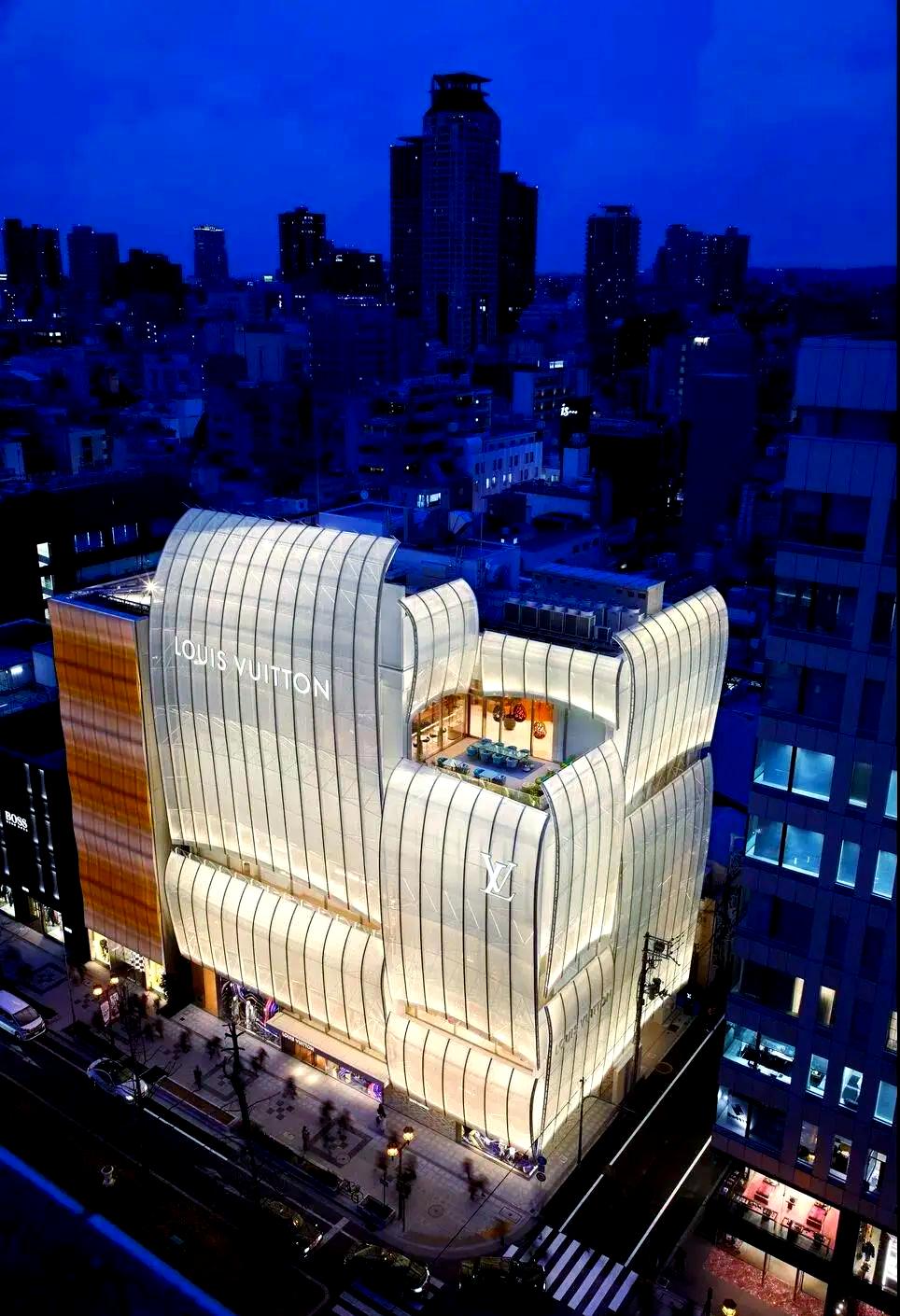
The unique facade design of LeCaf é V
The facade of this caf é is unique, consisting of ten exquisite "sails". The wings of these sails are cleverly crafted using 2D curved glass panels, which not only saves costs but also facilitates large-scale production. Each glass panel adopts a double-layer design, and the outer window pane is decorated with ceramic tiles, presenting a pure white canvas texture like snow. In the daytime, these sails can effectively filter sunlight and bring soft light to the store; At night, they will be lit up like bright lanterns, adding a brilliant color to the night sky.
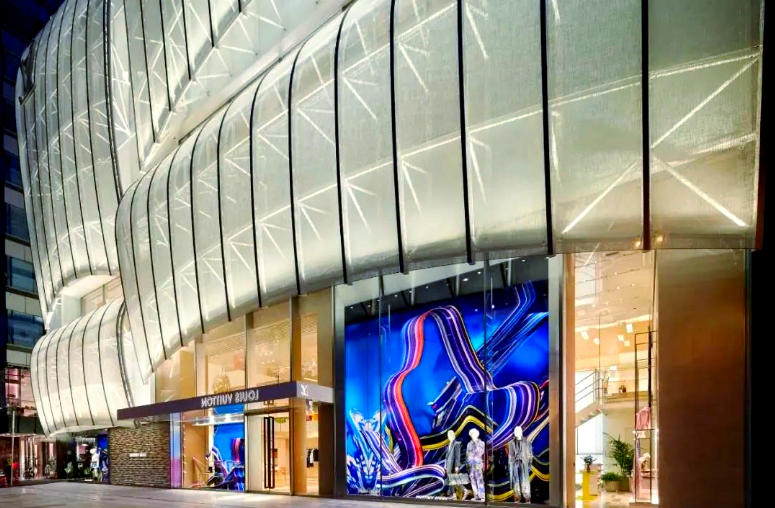
The unique facade design of LeCaf é V
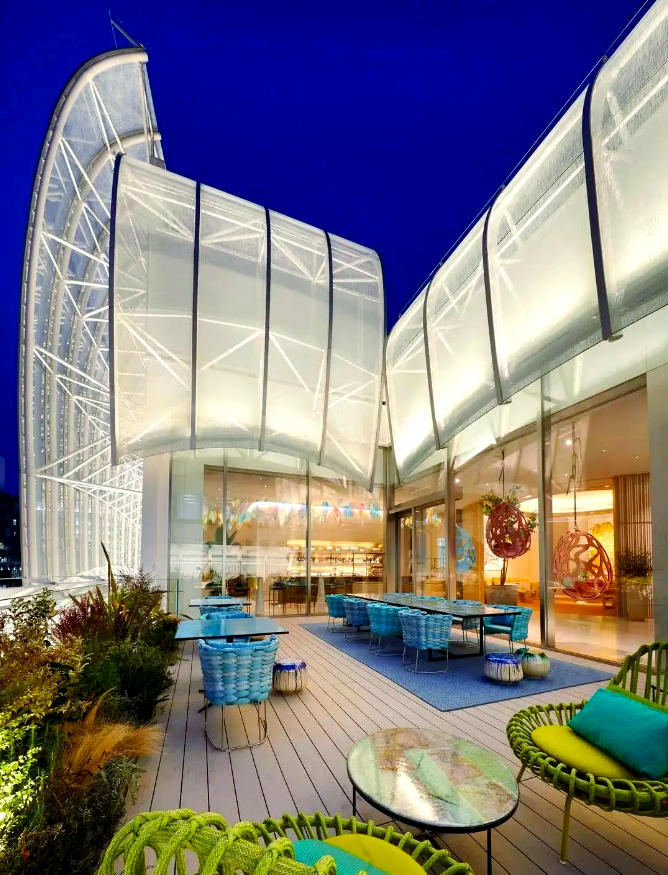
The unique facade design of LeCaf é V
This work, located in Bangkok, Thailand, showcases Foster+Partners' unique design perspective. In the busy city, it is like a dazzling palace, attracting countless gazes. The facade design is also ingenious, cleverly integrating modern technology and traditional aesthetics, bringing a unique charm to the city.
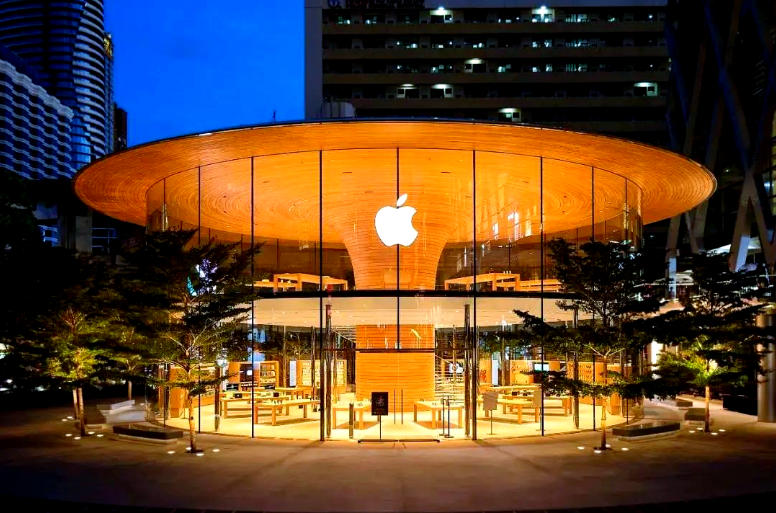
Apple Central&World Foster+Partners in Thailand
The architectural design of Apple Central World is unique, with the most striking feature being its all glass design, which is the first of its kind in architectural history. This design cleverly incorporates a cantilevered canopy roof, giving the entire building a unique visual appeal. Entering the interior of the building, you will find a spiral staircase surrounded by a wooden core that runs through two levels, providing customers with convenient access. At the same time, there is a unique cylindrical elevator with a mirror polished stainless steel shell, giving the entire elevator a fashionable and avant-garde visual impression.

Apple Central&World Foster+Partners in Thailand
The joint design of Axel Springer campus and OMA presents a unique style in Berlin, Germany.
The 45 meter high glass atrium not only provides a solid foundation for Axel Springer's transformation, but also symbolizes the leap from printing to digitization. This space is not only a transitional symbol, but also an innovative tool. Internally, a series of symmetrical terraced flooring cleverly form a digital valley, conveying innovative ideas and creating a leisure space suitable for informal gatherings.
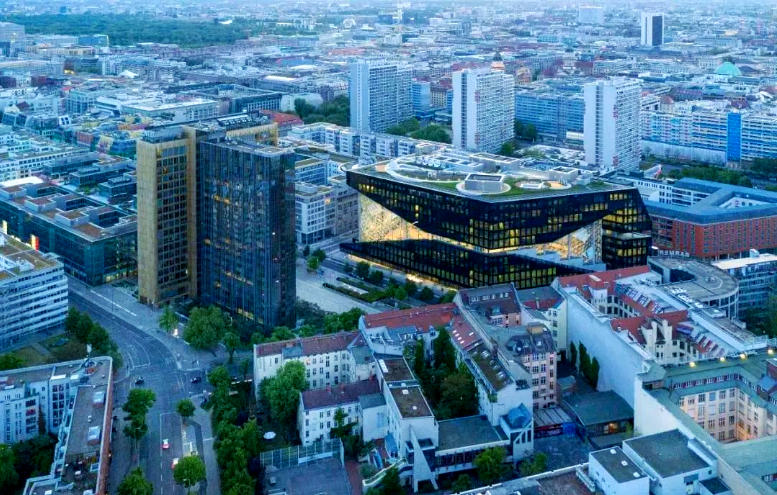
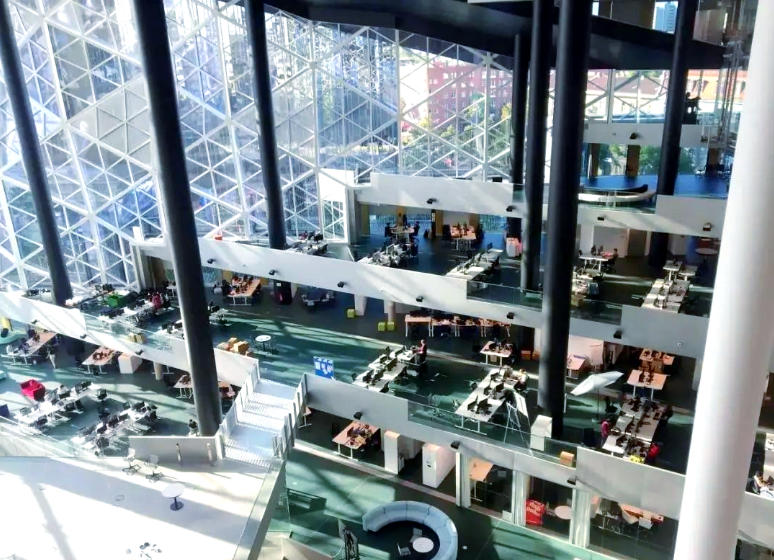
Axel Springer campus in German
It is a unique creative space. This place gathers the inspiration and creativity of numerous artists, becoming a stage for them to communicate and showcase. Its clever design blends tradition and innovation, injecting new vitality into the artistic atmosphere of Shizuoka.
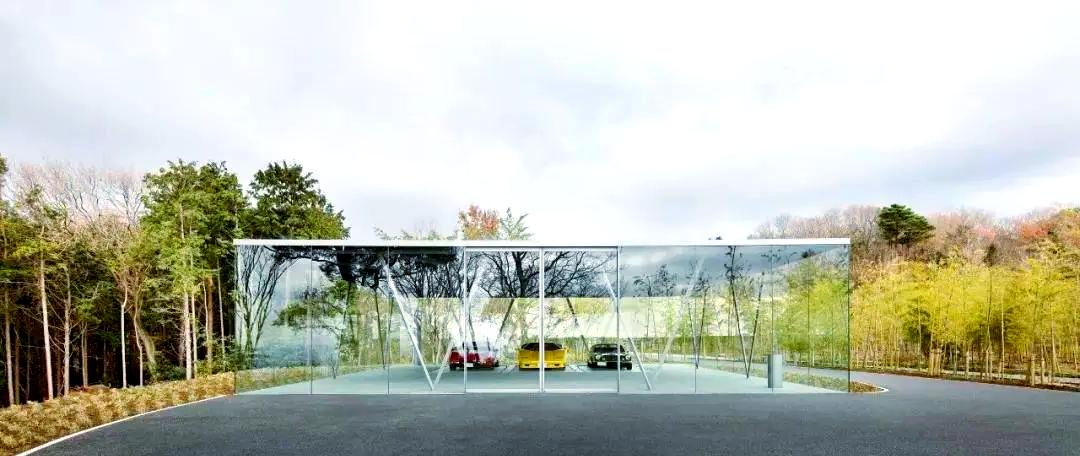
The four walls of the building are polished smooth like mirrors, and the interior is cleverly supported by ultra-thin steel structures. This design was inspired by the principle of catenary curves, which was jointly studied and applied by Franciscan priests and mathematician Pade. The famous Venetian architect Carlo Lodoli ingeniously applied this principle in the design of the small window sills in the corridors of the San Francesco della Vigna monastery in the 18th century, gradually narrowing the edges of the ribs and effectively transferring the load to the surrounding V-shaped columns. This design concept coincides with the market hall concept designed by Viollet le Duc in 1865. In addition, the columns also adopt a conical design, making the cross-section of the base appear particularly slender.
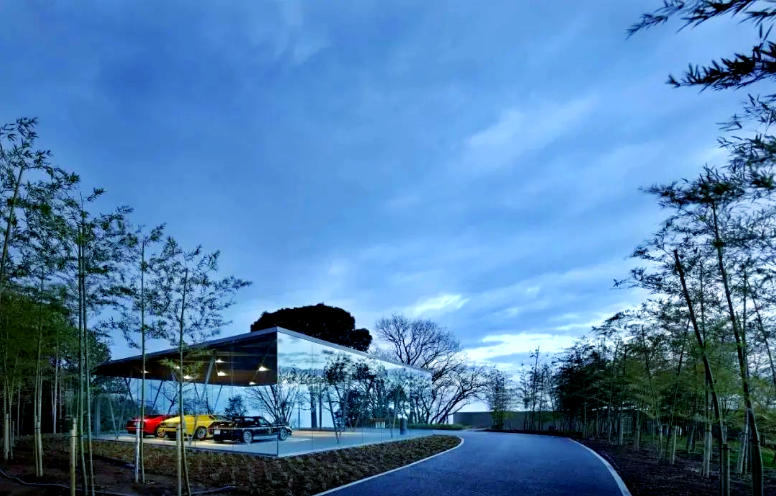
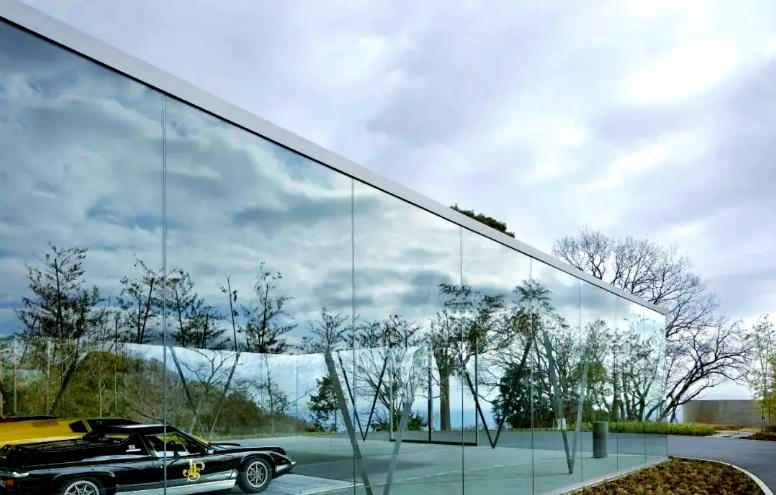
Gallery U-Villa U Annex/Satoshi Okada, Located in Shizuoka, Japan
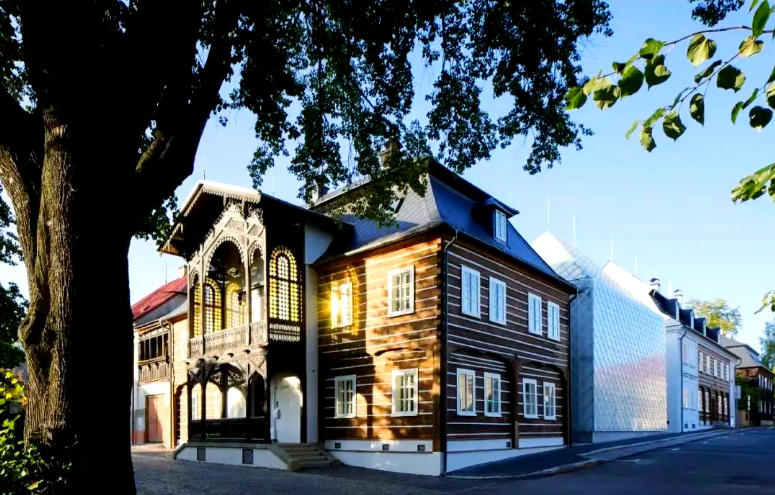
In the new building, the first batch of occupied spaces seem to be surrounded by translucent glass, creating a sense of transparency. On the ground floor, it is cleverly arranged as a fusion of an office and a caf é, while upwards is the archive area for design samples. This spacious and bright rectangular area is characterized by its unique concave dome ceiling, which is decorated with a grid pattern. It is not only beautiful and elegant, but can also be easily converted into a conference room when needed, achieving flexible functional conversion.
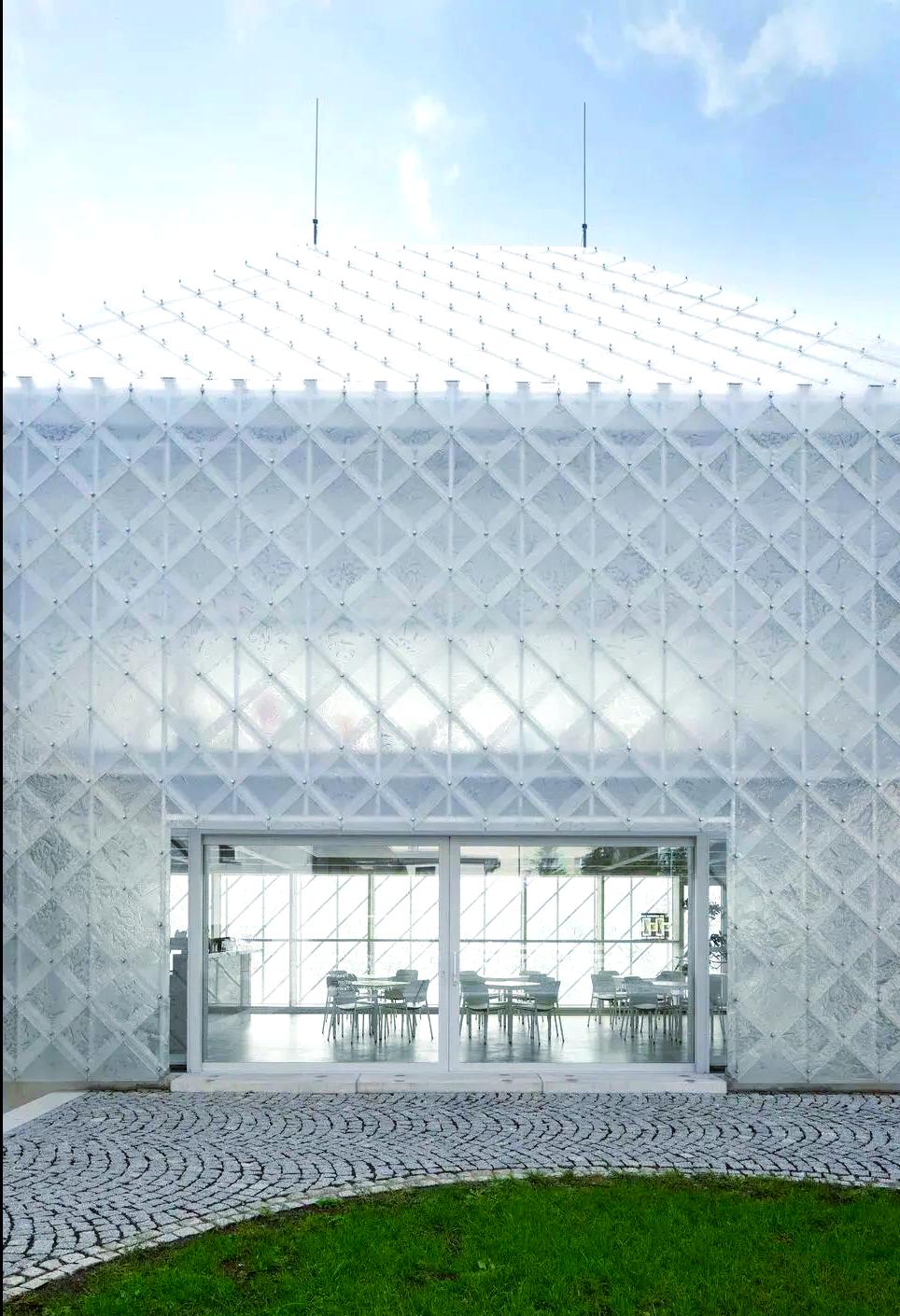
Lasvit headquarters/OV-A in The Czech Republic
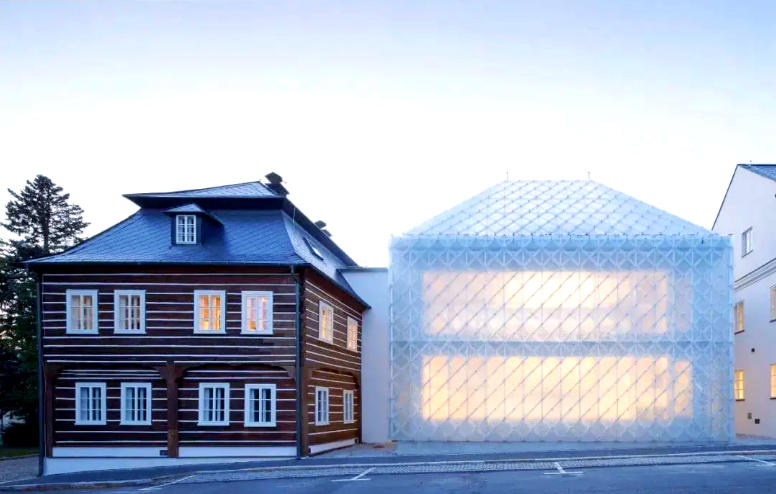
Lasvit headquarters/OV-A in The Czech Republic
Located in Berlin, Germany, designed by 3XN.
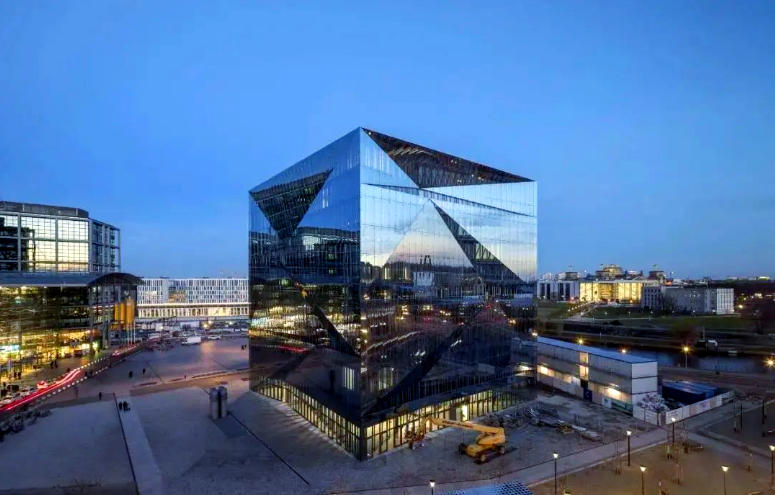
Berlin Cube Hotel
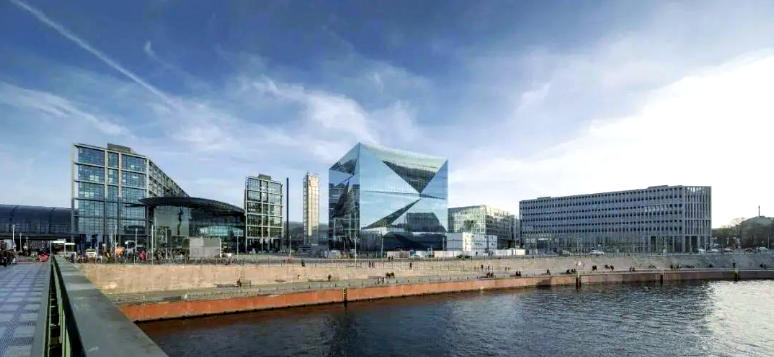
The well-known Danish construction company 3XN recently announced the grand opening of Cuber Berlin. The hotel not only cleverly integrates revolutionary intelligent office technology into sculptures and iconic buildings, but is also praised by the industry as the next generation of intelligent office models in Europe. This project is located in one of the busiest and most vibrant squares in Washington, D.C. - Washington Square. Its unique geographical location and forward thinking design concept complement each other, creating a new landmark for the city.
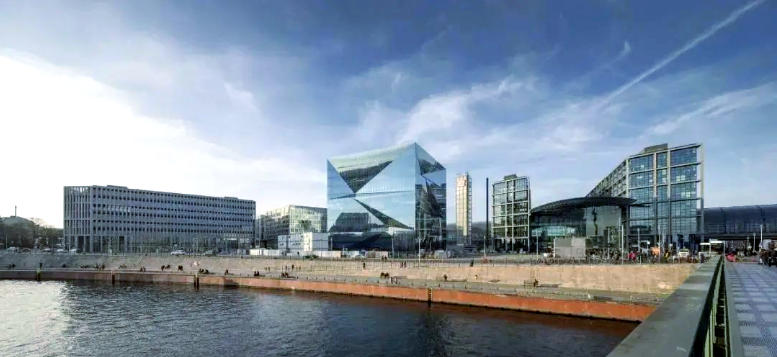
Berlin Cube Hotel
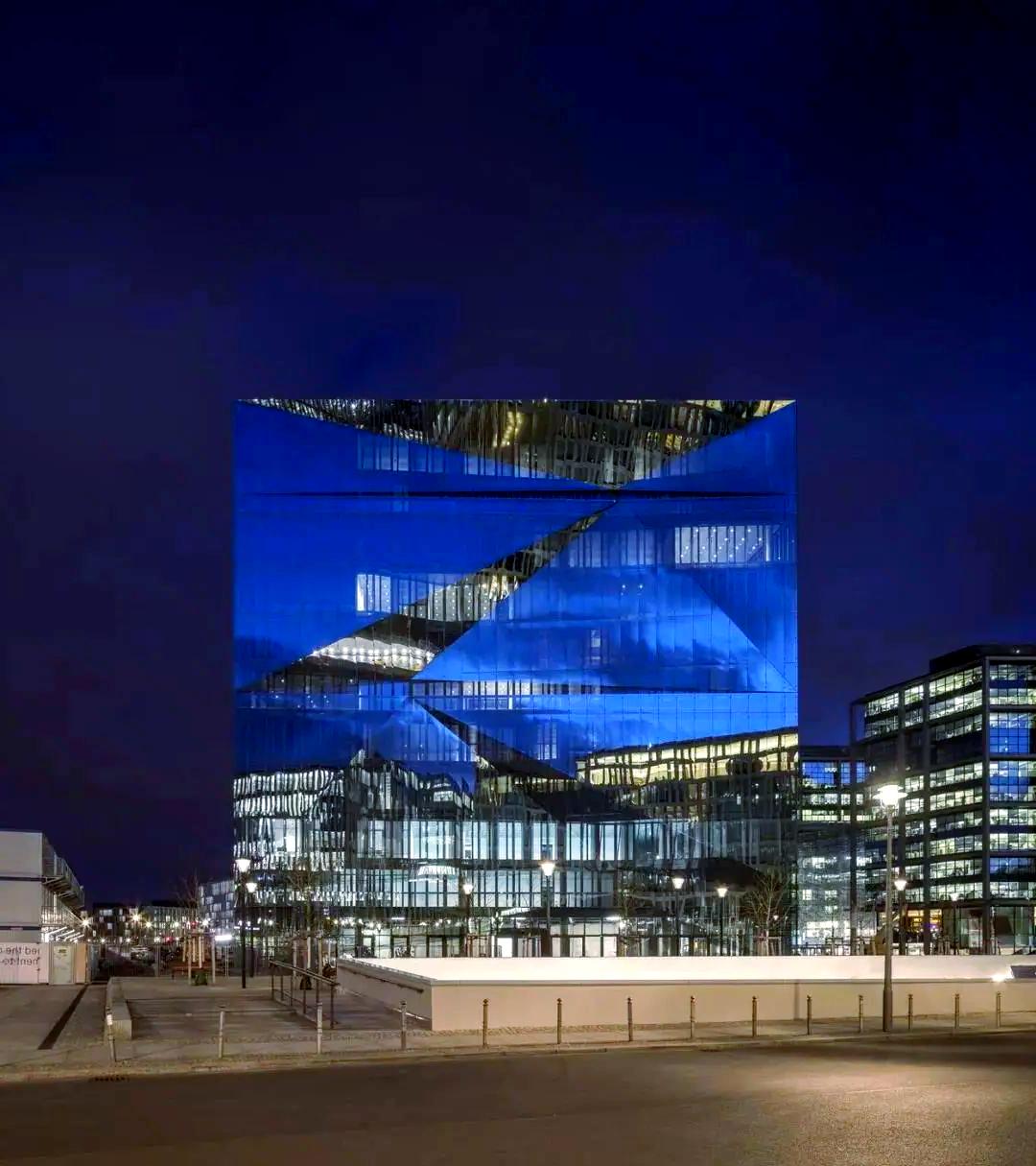
Berlin Cube Hotel
Built by Steven Holl and located in Texas, USA, its design philosophy seamlessly blends with architectural art, showcasing the unique charm of the museum.
Houston Museum of Fine Arts
Steven Holl cleverly utilized two key design elements in the design of the Houston Museum of Fine Arts in Texas, ensuring that the museum can fully utilize natural light. He designed a concave roof opening that allows light to enter softly from above, while cleverly cutting open seven spacious gardens, not only beautifying the environment but also allowing light to penetrate into the traffic corridor. These carefully designed measures not only reflect the designer's ultimate pursuit of natural light, but also create a comfortable and artistic atmosphere for the museum.
Beijing, China
In the hustle and bustle of this city, there is a quiet corner hidden - the Seven Houses Courtyard. This design studio is located in Beijing, China and attracts countless tourists with its unique architectural design and creative concepts. Here, people can escape the hustle and bustle of the city, find inner peace, and gain inspiration for their designs. Qishe He Yuan is not only a design studio, but also an ideal space that allows people to immerse themselves in the harmonious integration of art and nature.
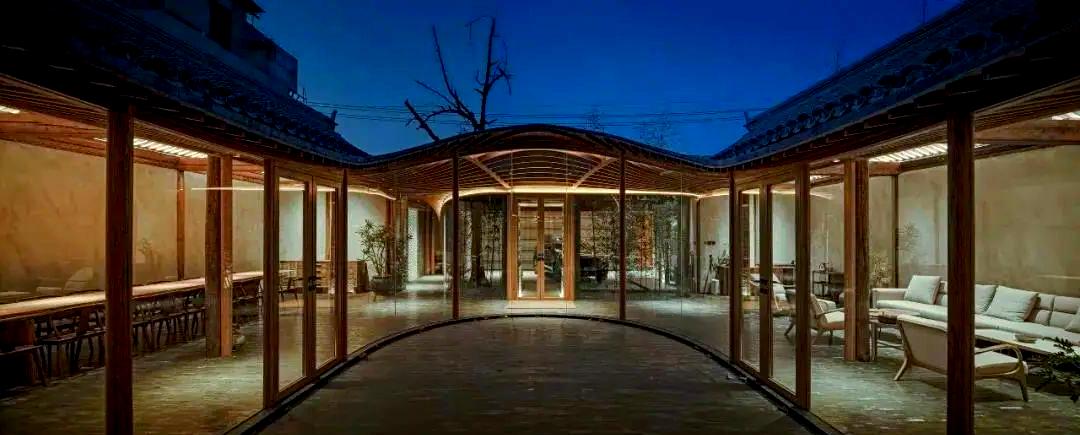
Seven houses courtyard Design Studio in Beijing
ARCHSTUDIO cleverly inserted a corridor design that winds and turns, connecting the independent areas of seven old houses in the alley. It not only plays a practical role in circular connectivity, but also brings visitors a unique walking experience. As an ancient traditional residential form in China, the quadrangle courtyard still stands in the central area of Beijing's old city, carrying the vicissitudes of history and the weight of culture.
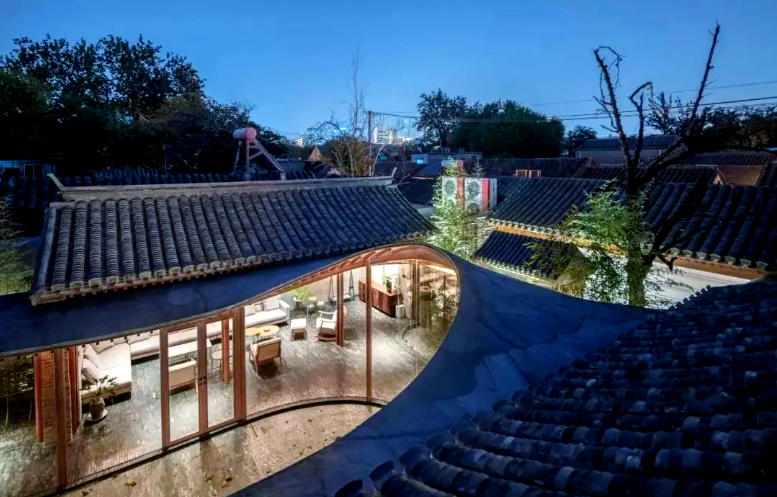
Seven houses courtyard Design Studio in Beijing
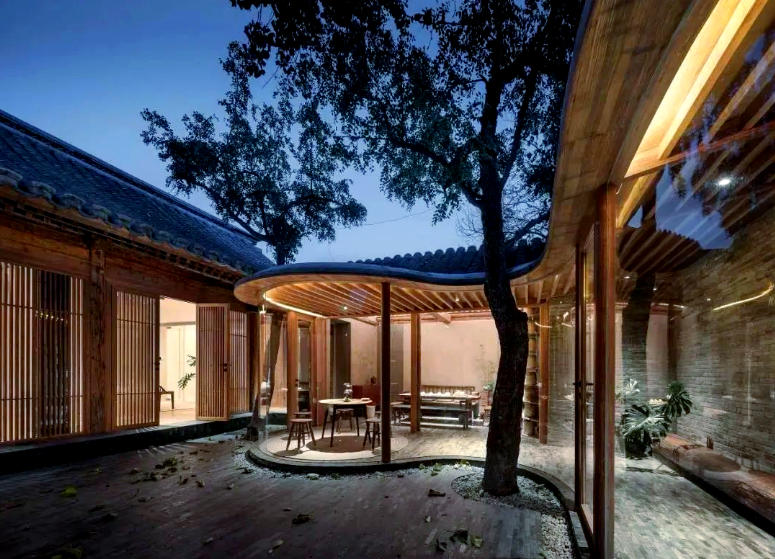
Seven houses courtyard Design Studio in Beijing
Paris, France
In this city full of artistic atmosphere, the headquarters building of Paris World newspaper attracts people's attention with its unique charm. Carefully designed by renowned architectural firm Sn ø hetta, this building not only carries the daily operations of media institutions, but also serves as a landmark showcasing the beauty of modern design and historical culture blending.
Under the ingenuity of Sn ø hetta, the headquarters building of the Paris World newspaper presents a spacious arched roof design that attracts a lot of attention. Here, 1600 employees of Le Monde Group bid farewell to their previous six dispersed office locations and gathered in the new headquarters building located in the 13th arrondissement of Paris. This building has a semi transparent exterior and spacious interior, equipped with a grand new square that not only facilitates communication between employees and the public, but is also closely connected to the surrounding public transportation infrastructure, providing a spacious and comfortable resting place for citizens and passersby.
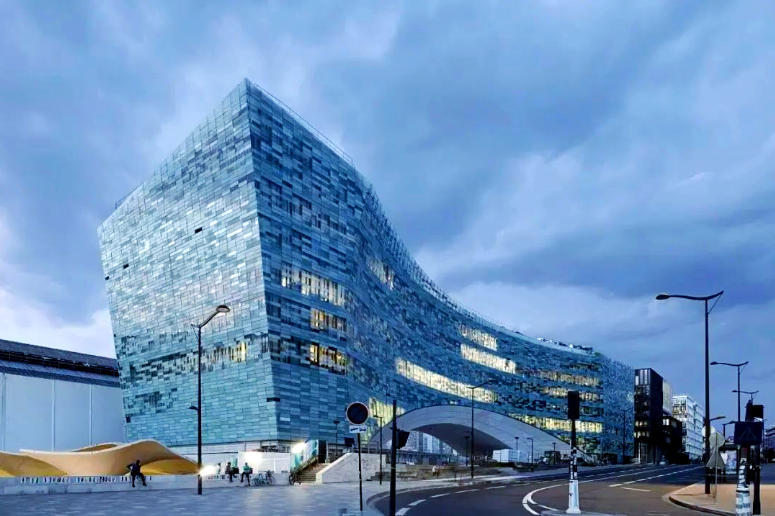
Paris World News Headquarters/Sn ø hetta
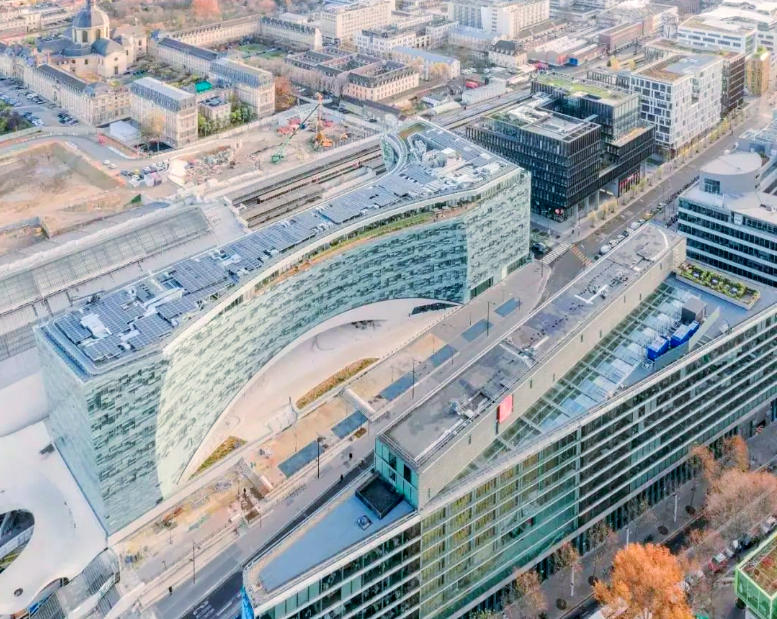
Paris World News Headquarters/Sn ø hetta