English
 日本語
日本語 한국어
한국어 français
 Deutsch
 Español
 italiano
 русский
 português
 Türkçe
 العربية
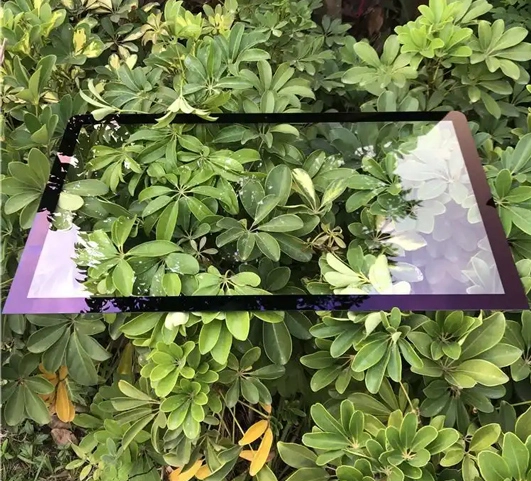


FTO glass price is not determined by thickness alone. A workable quotation depends on the electrical target, optical performance, substrate thickness, usable sheet size, cutting pattern, edge processing, heat treatment, inspection method, quantity, packing and destination. Buyers who request only “FTO glass” often receive prices that are difficult to compare because different suppliers may quote different sheet resistance ranges, glass qualities or inspection standards.
This guide is written for purchasing teams, laboratory managers, solar and display developers, appliance manufacturers, equipment builders and technical distributors. It explains how to turn an application requirement into a clear FTO glass specification, how to compare supplier offers and how to reduce the commercial risk of ordering a conductive glass that looks acceptable on paper but does not work consistently in production.
FTO glass is a transparent conductive substrate made by depositing fluorine-doped tin oxide on glass, creating a surface that can transmit visible light while conducting electricity.
The coating performs two jobs that normally conflict with each other. A thicker or more conductive layer can lower electrical resistance, while a highly transparent layer should allow more light through the substrate. The final product therefore represents a controlled balance among sheet resistance, optical transmittance, haze, uniformity, durability and process compatibility. That balance is the first reason why two pieces of the same nominal thickness can have very different prices.
In photovoltaic and optoelectronic devices, the conductive oxide often serves as an electrode through which light enters the active layers. In heated display glass, refrigeration doors or laboratory equipment, the conductive coating can form part of a controlled heating or sensing system. Each use places different limits on conductivity, transparency, coating uniformity and thermal stability. A buyer should never compare offers without confirming that the quoted material is intended for the same application and performance window.
Lanjing publishes several FTO product grades, including TEK10, TEK15, TEK35, TEK70 and TEK250. Its published data show visible light transmittance generally at or above 82–83%, coating haze around 1–1.7% or lower depending on grade, and sheet resistance ranges extending from single-digit ohms per square to several hundred ohms per square. These numbers demonstrate why “FTO glass price per square meter” is not a single universal market number.
Sheet resistance is the electrical resistance of a thin conductive film expressed in ohms per square, and it is one of the most important cost and performance variables in an FTO glass order.
The unit “ohms per square” can be confusing because it does not describe the physical size of the square. For a uniform thin film, the resistance measured across one square is theoretically similar whether the square is small or large. In practice, buyers use sheet resistance to compare coating conductivity, while device designers still need to calculate voltage drop, current density, busbar layout and active area for the real component.
Lower sheet resistance is not automatically better. A low-resistance coating may be required where current must travel across a larger distance or where the device carries higher current. A higher-resistance grade may be sufficient for small laboratory cells, sensors or applications where optical and process requirements matter more than maximum conductivity. Selecting an unnecessarily low resistance can increase cost without improving the finished device.
Published Lanjing ranges illustrate the differences. TEK10 is listed around 8.0–9.5 ohms before tempering and around 9.0–10 ohms after tempering. TEK15 is listed around 12–14 ohms, while TEK35, TEK70 and TEK250 cover progressively higher ranges. The exact acceptable tolerance should be written into the order because a nominal grade name alone may not define the distribution across every sheet or cut part.
For quotation comparison, ask each supplier to state the test equipment, number of measurement points, edge exclusion area, allowable average and allowable maximum/minimum. A price based on a single center-point reading is not equivalent to a price based on a mapped sheet with a defined uniformity limit.
FTO glass price drivers are the technical and commercial variables that change the supplier’s material yield, processing time, inspection effort, rejection risk and logistics cost.
| Price Driver | Why It Matters | What the Buyer Should Specify |
|---|---|---|
| Sheet resistance | Lower or tighter resistance may require a more controlled coating grade and stricter sorting. | Target range, tolerance, measurement method and mapping points. |
| Visible light transmittance | Higher optical requirements can limit acceptable coating and substrate combinations. | Minimum VLT, wavelength range and whether the value includes the substrate. |
| Haze and reflectance | Low haze is important for displays and optical devices, while some photovoltaic processes may value controlled scattering. | Maximum haze, reflectance limit and test standard. |
| Glass thickness | Thin substrates can be more difficult to handle and pack; thick substrates increase weight and freight. | Nominal thickness, tolerance, flatness and edge quality. |
| Sheet or cut size | Small parts can create cutting loss and inspection labor; large sheets affect packing and breakage risk. | Finished dimensions, quantity per size and nesting file. |
| Heat treatment | Tempering can change sheet resistance and requires sufficient size and edge-processing margins. | Whether tempering is required and the accepted post-tempering resistance. |
| Patterning or edge deletion | Laser scribing, masking or coating removal adds process steps and quality checks. | Drawing, deleted area, line width and positional tolerance. |
| Inspection and documentation | Mapped electrical data, optical reports and traceability increase inspection effort. | Certificate format, batch data, samples and retention requirements. |
| Packing and destination | FTO surfaces require protection from scratches, moisture and movement during transport. | Incoterm, destination, crate limits, separator material and orientation. |
Order volume changes price, but volume should be evaluated together with yield. A thousand identical rectangular pieces can be more efficient than a smaller order containing many irregular sizes. Buyers should provide a complete cutting list rather than asking for a generic square-meter price and later adding complex shapes.
For projects that need both standard stock sheets and custom processed pieces, a supplier such as Lanjing can quote the two categories separately. This makes it easier to see whether the cost difference comes from the conductive substrate or from cutting, polishing, drilling, tempering and packing.
FTO conductive glass selection is the process of matching electrical, optical, mechanical and thermal requirements to a coating grade and glass configuration.
For laboratory research, buyers often prioritize repeatability, clean handling, small cut sizes and documentation. A narrow resistance range and clear identification of the conductive side can be more valuable than the lowest possible unit price. Researchers should also confirm whether the surface has been cleaned, whether protective film is allowed and what cleaning method is recommended before deposition.
For perovskite, dye-sensitized or other thin-film solar work, the transparent conductive oxide forms part of the device stack. The choice should account for the deposition temperature of subsequent layers, the expected current path and compatibility with scribing or masking. National laboratory research regularly describes FTO or ITO as typical transparent conductors used on glass before active layers are deposited. The correct grade still depends on the actual device architecture.
For heated refrigerator doors, display cabinets and appliance glass, uniform heating and long-term stability become central. The resistance, busbar design, supply voltage and heated area must be engineered as a system. The glass fabricator should not be expected to determine the safe electrical design from a generic request. The buyer should provide electrical drawings or work with a qualified system engineer.
For touch, sensing and optoelectronic equipment, haze, reflectance, surface defects and pattern accuracy may be more critical than in a basic heating application. Samples should be evaluated under the real illumination and viewing conditions. A coating that passes a general transmittance requirement may still show unacceptable visual non-uniformity in a high-contrast display.
Buyers can review Lanjing’s fto conductive glass specifications when preparing an application-specific request. This internal product page lists available resistance grades, transmittance ranges, thicknesses and stock sheet dimensions.
An FTO glass comparison should evaluate the complete performance window rather than ranking grades only from lowest to highest resistance.
| General Resistance Range | Typical Selection Logic | Potential Advantage | Primary Question |
|---|---|---|---|
| Single-digit to about 15 ohms/sq | Higher-current paths, larger active areas or applications requiring lower voltage drop. | Higher conductivity. | Is the optical and process performance still acceptable after all downstream steps? |
| About 15–70 ohms/sq | Balanced laboratory, sensing, display or device applications. | Flexible balance of conductivity, transparency and cost. | What uniformity range is required across each finished part? |
| Above about 70 ohms/sq | Applications with lower current demand, smaller paths or specific optical/process needs. | May fit specialized designs without paying for unnecessary conductivity. | Will the final electrode geometry create excessive voltage drop? |
These ranges are a purchasing framework, not an electrical design rule. The final choice must be calculated using device dimensions, current, voltage, electrode pattern and temperature. A supplier can confirm material capability, but the device owner remains responsible for system-level validation.
Another common comparison is FTO versus ITO. FTO is often selected where thermal and chemical stability are important, while ITO is widely used where very low resistance and optical quality are priorities. However, the result depends on the deposition method, film thickness, substrate and downstream process. A simple “FTO is cheaper” or “ITO is better” statement is not adequate for a production decision.
FTO glass processing constraints are the limits imposed by coated-surface protection, cutting yield, edge finishing, drilling, heat treatment and handling.
Lanjing lists thicknesses from approximately 2.1 mm through 8 mm and standard stock sheet sizes such as 2140 × 3300 mm, 2250 × 3210 mm, 1830 × 2440 mm and 1830 × 2200 mm. Availability can vary by coating grade, so buyers should confirm that the required resistance is available on the required thickness and stock dimension.
Large stock sheets can reduce material cost for high-volume cutting, but they also require appropriate unloading, storage and cutting equipment. Small laboratories may benefit from pre-cut pieces even when the per-square-meter price is higher, because breakage, contamination and handling risk are reduced.
Edge processing should be defined with practical tolerances. A seamed edge, ground edge and polished edge do not have the same cost or visual result. Holes, notches and internal cutouts may require larger edge distances or may not be compatible with every tempering plan. Coating orientation must be marked on drawings and packaging so that downstream operators do not process the wrong surface.
When tempering is required, the buyer should define the acceptable resistance after heat treatment. Published Lanjing data show that some grades change slightly after tempering. The supplier should confirm the expected range and provide sample validation if the electrical tolerance is tight.
Comparing FTO glass supplier quotations means normalizing every offer to the same technical scope, inspection level, usable quantity and delivery term.
Start by separating substrate performance from processing. One quotation may include polished edges, individual resistance labels and export crates, while another may cover raw cut pieces in basic packaging. A lower total is not necessarily a lower price for the same product.
Ask for a quotation table that includes product grade, resistance range, transmittance, haze, thickness, finished size, quantity, accepted defects, processing, documentation, packing, Incoterm, production lead time and validity. If a field is blank, treat it as an unresolved commercial risk rather than assuming the most favorable interpretation.
Buyers evaluating a broader project can also review Lanjing’s special glass range to determine whether anti-reflective, self-cleaning or other functional glass must be coordinated with the conductive components.
Supplier capability should be verified through samples and process evidence. Useful evidence includes measurement records, photographs of conductive-side marking, packing procedures, inspection equipment, batch traceability and examples of comparable export orders. Certificates should be relevant to the actual processed product; a general company certificate does not replace a product test report.
FTO glass quality inspection is the verification of electrical, optical, dimensional, visual and packaging requirements before the order leaves the factory.
A practical inspection plan begins with incoming coated-glass identification and continues after cutting and any heat treatment. Electrical checks should use a defined instrument and pattern. Optical checks should identify the test standard and whether values are measured on the stock sheet or final part. Visual inspection should specify lighting, viewing distance and the treatment of scratches, coating marks, chips and contamination.
Dimensional inspection should include length, width, thickness, squareness, edge finish, holes, notches and coating-side orientation. For parts that fit into a frame or fixture, the drawing tolerance must be achievable by the selected processing method. Overly tight tolerances can raise cost and rejection without improving device performance.
Packaging inspection is equally important. Conductive surfaces should be separated with compatible material, protected from rubbing and clearly marked. Crates should control movement without applying concentrated pressure to the glass edges. Desiccant, moisture protection and shock indicators may be appropriate for long routes or high-value parts.

An FTO glass RFQ checklist is a structured list of technical and logistics data that allows suppliers to quote the same requirement without hidden assumptions.
State the final application and whether the glass is for laboratory trials, pilot production or serial production.
Define target sheet resistance, tolerance and acceptable post-tempering change.
Define minimum visible light transmittance, maximum haze and any reflectance requirement.
Provide glass thickness, finished size, quantity per size and annual forecast if available.
Mark the conductive side and any coating deletion, scribing, busbar or patterned area on the drawing.
Specify edge finish, holes, notches, tempering, cleaning, labeling and protective film requirements.
List inspection reports, samples, traceability and certificate needs.
Provide destination, Incoterm, preferred crate weight and unloading limitations.
State the required delivery date and whether partial shipment is acceptable.
Ask the supplier to identify exclusions, assumptions and the quotation validity period.
A complete RFQ helps Lanjing or any qualified supplier recommend the closest standard grade before considering a custom specification. This reduces the risk of paying for unnecessary performance or discovering after production that a key requirement was never included.
Common FTO glass buying mistakes are specification gaps that make quotations incomparable or cause failure during downstream processing.
Buying by thickness only: two 3.2 mm sheets can have very different resistance, haze and coating uniformity.
Using nominal resistance without tolerance: the average can meet the target while local areas fall outside the device requirement.
Ignoring post-tempering performance: electrical values can change after heat treatment.
Not defining the conductive side: incorrect orientation can disrupt coating, printing or assembly.
Comparing raw sheets with processed parts: cutting yield, polishing, inspection and packing can dominate the final price.
Skipping sample validation: optical appearance and process compatibility should be tested in the real device stack.
Assuming the supplier designs the electrical system: material supply and system engineering are different responsibilities.
For projects that combine conductive glass with architectural fabrication, an experienced architectural glass supplier can coordinate cutting, tempering, insulating and export packing, but the technical specification must still be owned by the buyer’s design team.
Lanjing’s FTO glass service combines conductive substrates with in-house glass processing, dimensional preparation, heat treatment and export packing.
The company publishes multiple resistance grades, several substrate thicknesses and large stock sheet dimensions. It also lists a monthly FTO output capability of up to 500,000 square meters. Capacity figures should always be reconfirmed for the required grade and delivery month, but the published range indicates an ability to support both sample cutting and commercial-volume supply.
Lanjing was established from a glass-processing operation in 2008 and states that its current company operates glass cutting, CNC processing, tempering, laminating, insulating and heat-soak equipment. This broader processing base is useful when FTO glass must be delivered as finished components rather than untouched stock sheets.
The best way to obtain a meaningful price is to send Lanjing the application, resistance, optical target, thickness, dimensions, quantity, processing drawing and destination. The response can then separate standard-grade options from custom requirements and identify any technical points that need sample confirmation.
There is no reliable universal FTO glass price because the quotation changes with sheet resistance, transmittance, substrate thickness, size, processing, quantity, inspection and packing. Buyers should request a price against a complete specification rather than use a generic online number.
Lower resistance often requires a different coating grade and can increase cost, but the final price also depends on optical targets, size, yield and processing. A higher-resistance grade can still be expensive when it requires unusual thickness, tight uniformity or complex cutting.
Some FTO-coated glass can be tempered, but the supplier must confirm compatibility for the specific grade, thickness and size. The accepted sheet resistance should be defined after tempering because published data show that electrical values may shift.
The correct resistance depends on cell area, current density, electrode geometry, deposition process and device architecture. Laboratory teams should validate more than one grade when the design is still being optimized rather than assuming the lowest resistance is automatically best.
Panels should be separated to protect the conductive surface, immobilized in strong crates, protected from moisture and clearly marked for coating orientation. Crate weight and unloading method should be agreed before production.
Lanjing needs the application, sheet resistance, optical requirement, thickness, finished dimensions, quantity, processing, inspection documents, destination and delivery term. A drawing and cutting list will produce a more accurate quotation than a square-meter request.
FTO glass price should be treated as the result of a defined performance and processing package, not as a commodity number based only on square meters. The most important purchasing step is to align sheet resistance, optical properties, substrate dimensions, downstream temperature, inspection method and packaging with the real device requirement.
A disciplined RFQ lets buyers compare suppliers fairly, reduces sample iterations and protects production schedules. Lanjing can support the process with published FTO grades, glass processing and export preparation. Send a complete specification and ask for both the closest standard option and any custom alternative so that cost and performance can be evaluated transparently.